
Affiliate disclosure: this page contains affiliate links — if you buy through them we may earn a commission at no extra cost to you. As an Amazon Associate we earn from qualifying purchases.
LPCAMM2 memory is the emerging standard that will transform laptop upgradability. For years, laptop manufacturers have soldered RAM directly to the motherboard, making it impossible to upgrade. A few OEMs resisted this trend, using industry-standard SO-DIMM slots that let users upgrade. Now, LPCAMM2 (Low-Power Coupled Memory Module 2) offers a modern alternative: memory modules that are upgradeable like SO-DIMM but superior in every way — faster, more power-efficient, more compact, and future-proof. This guide explains what LPCAMM2 is, how it differs from SODIMM, which laptops use it, and why it matters for the future of portable computing.
The laptop industry faces a fundamental tension: users want upgradeable memory, but manufacturers want thin, light machines with maximum battery life. Soldered RAM solved the thickness and battery problem but eliminated upgradability. LPCAMM2 aims for the best of both worlds: comparable thinness and power efficiency to soldered RAM, but with full user upgradability. It’s the future — and it’s arriving now in 2026.
What Is LPCAMM2 Memory?
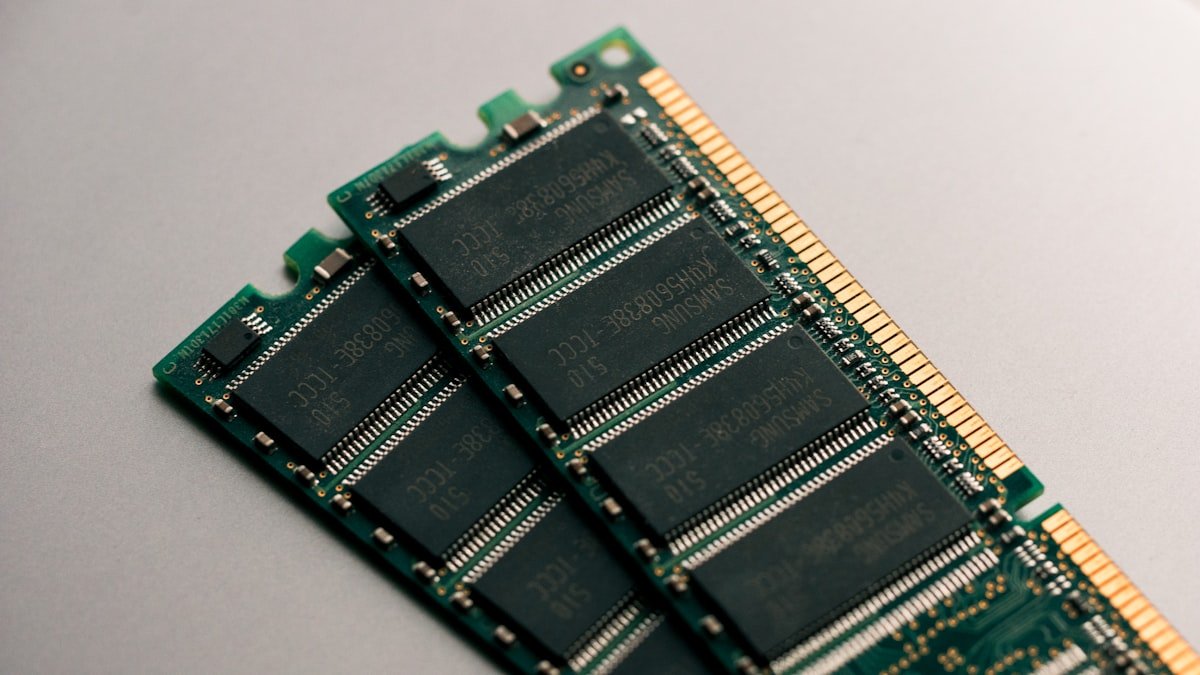
The Standard Explained
LPCAMM2 (Low-Power Coupled Memory Module 2) is a new memory standard developed by JEDEC (the organisation that sets memory standards) in partnership with major manufacturers. It’s designed specifically for mobile and thin devices where space and power are critical.
LPCAMM2 modules are small rectangular chips that mount directly onto the motherboard, similar to soldered RAM. The key difference: they use a standardised connector that allows removal and replacement. You can upgrade by unclipping the module and plugging in a new one — similar to changing a SO-DIMM, but with better engineering.
The “CAMM” part stands for “Coupled Asynchronous Memory Module,” referring to the direct coupling to the memory controller. The “2” indicates it’s the second generation (first-gen CAMM was proprietary to a few OEMs and rarely seen).
Physical Characteristics
LPCAMM2 modules are extremely compact — about 70mm × 30mm, smaller than a SO-DIMM and comparable to a postage stamp. This compact form factor is essential for ultra-thin laptops (under 1cm thick) where traditional SO-DIMM slots don’t fit.
The modules clip directly onto the motherboard with a keyed connector that prevents mis-insertion. Installation and removal are straightforward, though some devices may require removing the motherboard or disassembling the device — it depends on the specific laptop design.
LPCAMM2 vs SO-DIMM: Technical Comparison
| Aspect | SO-DIMM (Current Standard) | LPCAMM2 (New Standard) |
|---|---|---|
| Form factor | 67mm × 30mm | 70mm × 30mm (slightly larger profile, smaller stack height) |
| Height on PCB | 3-3.5cm (includes stand-off height) | Less than 1cm from PCB surface |
| Suitable for | Standard/gaming laptops, some ultra-books | Ultra-thin laptops, MacBook Air-style devices |
| Power consumption | Standard (3.3V typical) | Low (direct coupling to power plane, more efficient) |
| Maximum capacity | 64GB per stick (DDR5) | 64GB+ per module (future extensible) |
| Speed support | DDR5 up to 7200 MT/s | DDR5 speeds, DDR6 ready for future |
| Installation difficulty | Very easy (lever clips, user-replaceable) | Easy (lever clips, requires opening laptop but straightforward) |
| Cost per GB | Standard market price | Slightly premium (new, less competition) |
| Availability | Thousands of configurations | Growing; mainly Dell, Lenovo, Framework (2026) |
Key Advantages of LPCAMM2
- Ultra-thin laptop compatibility: LPCAMM2’s minimal stack height enables designs under 1cm thick while maintaining upgradeable memory. SO-DIMM slots don’t fit in these ultra-thin devices.
- Better power efficiency: Direct coupling to the power plane reduces power loss through connectors. This extends battery life slightly (2-5%) compared to SO-DIMM.
- Future-proof: LPCAMM2 can support DDR6 and future standards. SO-DIMM tops out at DDR5.
- Cleaner motherboard design: No need for protruding slots, allowing for better internal space utilisation.
- Improved thermal design: Direct coupling to the PCB allows better heat dissipation than SO-DIMM modules with air gaps.
Key Advantages of SO-DIMM (Still Relevant)
- Massive ecosystem: Decades of compatibility, thousands of configurations available.
- Better accessibility: Easy user replacement without disassembly on many devices.
- Cheaper: Mature manufacturing and competition drive lower prices.
- No learning curve: Users already understand SO-DIMM installation.
Soldered RAM vs LPCAMM2 vs SO-DIMM: The Full Picture
| Aspect | Soldered RAM | LPCAMM2 | SO-DIMM |
|---|---|---|---|
| Upgradeable? | No (impossible) | Yes (with device disassembly) | Yes (usually easy) |
| Ultra-thin laptop compatible? | Yes | Yes | No (slots too tall) |
| Thickness | Integrated, minimal | Minimal (under 1cm stack) | 3-3.5cm stack height |
| Power efficiency | Best (no connector loss) | Excellent (direct coupling) | Good (connector loss) |
| Battery life impact | 1-3% better than SO-DIMM | Similar to soldered (only 0.5-1% worse) | Baseline |
| Cost of upgrade | Buy new laptop | Cost of module + potential repair labour | Cost of module (usually DIY) |
| Longevity | Fixed at purchase; stuck with choice for 5+ years | Upgradeable if device lasts; future-proofs better than soldered | Fully upgradeable |
The trend is clear: manufacturers are moving from soldered RAM (no upgradability) to LPCAMM2 (upgradeable but integrated) rather than SO-DIMM (upgradeable but bulky). For ultra-thin devices, this is the best compromise.
Which Laptops Use LPCAMM2 in 2026?
Dell Precision Series
Dell Precision 5670, 5770, 7670 (2024+) introduced LPCAMM2 for professional workstations. These are high-end mobile workstations for engineers, architects, and video editors. Starting in 2026, Dell’s entire Precision line is shifting to LPCAMM2.
Upgrading LPCAMM2 in Dell Precision laptops requires opening the device (removing the bottom panel), but the modules are easily accessible and simple to replace.
Lenovo ThinkPad Series
Lenovo ThinkPad X1 Extreme (2025+) and upcoming ultra-premium ThinkPad models are adopting LPCAMM2. Lenovo targets LPCAMM2 for their thinnest, most premium models.
AccessInternet to memory is straightforward on ThinkPad devices — removing the bottom panel provides access to LPCAMM2 modules.
Framework Laptop
Framework Laptop (2025+) is pioneering LPCAMM2 adoption in consumer ultra-portables. Framework’s design philosophy emphasises repairability and upgradability, making LPCAMM2 a perfect fit. Users can upgrade memory easily by removing the bottom panel.
Apple MacBook Air (Potentially 2027+)
Apple has adopted LPCAMM2 for future MacBook designs (rumoured for 2026-2027 models). This would finally allow MacBook Air users to upgrade memory — a major shift for Apple, which has offered only soldered RAM for years.
Other Manufacturers
HP, ASUS, and others are evaluating LPCAMM2. Expect broader adoption across premium and ultra-thin models by 2027. Budget laptops will likely stick with SO-DIMM for cost reasons.
LPCAMM2 Memory Specifications
DDR5 LPCAMM2 (Current Standard)
Current LPCAMM2 modules support DDR5 speeds:
- Base speed: 4800 MT/s
- Maximum speed: 7200 MT/s
- Latency: CL30-40 (typical)
- Voltage: 1.1V (lower than SO-DIMM’s 1.25V, improving efficiency)
- Capacities: 16GB, 32GB, 48GB modules (64GB on the horizon)
DDR6 LPCAMM2 (Future)
LPCAMM2 is designed with DDR6 in mind. By 2027-2028, we’ll see DDR6 LPCAMM2 modules:
- Expected speeds: 9600 MT/s and higher
- Backward compatible? Unlikely; DDR6 will require DDR6-ready laptops
- Power consumption: Further reduced compared to DDR5
How to Check If Your Laptop Has LPCAMM2
Check Your Device Specification
Manufacturers explicitly list LPCAMM2 in specifications. If the spec sheet says “upgradeable LPCAMM2 memory,” you have it.
Physical Inspection
Open the bottom panel of your laptop (consult the service manual). Look for memory modules:
- Small clips directly on motherboard: Likely LPCAMM2.
- Tall slots with lever clips: SO-DIMM.
- No removable modules, just circuits on motherboard: Soldered RAM.
Use CPU-Z (Windows)
Run CPU-Z. Go to the “Memory” tab. It may identify the module type, though CPU-Z doesn’t always distinguish LPCAMM2 from soldered RAM clearly.
Check Your Device Manual
The official service manual will explicitly state the memory type and whether it’s upgradeable.
Upgrading LPCAMM2 Memory
Compatibility Considerations
Same speed and type required. If your laptop came with DDR5-5600 LPCAMM2, buy the same. Mixing speeds may cause the system to downclock to the slower speed.
Same capacity modules recommended. While asymmetrical configurations (32GB + 16GB) work, matching capacities is ideal for optimal dual-channel performance.
Same generation (e.g., all LPCAMM2, not mixing with SO-DIMM). Laptops with LPCAMM2 can only use LPCAMM2 modules. You cannot fit SO-DIMM into LPCAMM2 slots.
Installation Difficulty
Easy for technical users, moderate for beginners. You’ll need to:
- Power off and unplug the laptop.
- Remove the battery (if removable).
- Remove the bottom panel (usually 4-8 screws).
- Locate the LPCAMM2 modules (small rectangular clips on the motherboard).
- Gently unclip and remove the old module.
- Insert the new module and secure the clip.
- Reassemble and power on.
Most laptops require no tools beyond a Phillips screwdriver. Framework Laptop is designed for consumer self-service — the modules are easily accessible without removing the motherboard.
Cost of Upgrades
LPCAMM2 modules are new, so prices are premium. Expect to pay 10-20% more than equivalent SO-DIMM. As manufacturing scales and competition increases (post-2026), prices will converge.
Example pricing (2026):
- 32GB DDR5-5600 LPCAMM2: £120-150
- 32GB DDR5-5600 SO-DIMM: £100-120
- Expected 2027+ price: £100-120 for LPCAMM2
LPCAMM2 vs Soldered RAM: Which Is Better?
This is the key question for manufacturers deciding on 2026-2027 laptop designs.
Soldered RAM Advantages
- Slightly better power efficiency (1-3% battery life advantage).
- Lower manufacturing cost (no special connector).
- Maximum thermal integration.
Soldered RAM Disadvantages
- Zero upgradability. Users are locked in at purchase.
- Shorter device lifespan. Once you outgrow the RAM capacity, you must buy a new laptop.
- Bad for environment and sustainability.
- Creates customer frustration (can’t add RAM to extend device life).
LPCAMM2 Advantages
- Full upgradability. Extend device lifespan by adding more RAM years later.
- Better sustainability. Users can upgrade rather than replacing the entire device.
- Future-proof architecture (supports DDR6+).
- Good for repairability and right-to-repair movement.
- Power efficiency nearly identical to soldered RAM.
LPCAMM2 Disadvantages
- Slightly more complex manufacturing.
- Small cost premium (diminishing as scale increases).
- Requires device disassembly (not user-accessible like SO-DIMM).
The verdict: LPCAMM2 is the obvious winner for the laptop industry. It offers near-soldered-RAM efficiency with full upgradability. Manufacturers choosing soldered RAM in 2026+ are choosing cost savings and obsolescence planning over customer value and sustainability. We expect a gradual shift from soldered RAM to LPCAMM2 across all premium devices by 2028.
Future of LPCAMM2
2026 Outlook
LPCAMM2 adoption accelerates. Major OEMs (Dell, Lenovo, Framework) expand LPCAMM2 to more product lines. HP and ASUS join the push. Apple potentially announces LPCAMM2 for 2027 MacBook models.
2027-2028 Outlook
LPCAMM2 becomes standard on all premium/ultra-thin laptops. SO-DIMM remains on budget and gaming laptops (where thinness is less critical). DDR6 LPCAMM2 modules arrive, supporting future devices.
2029+ Outlook
LPCAMM2 approaches ubiquity. Soldered RAM relegated to budget segments only. Third-party LPCAMM2 module manufacturers proliferate, driving prices to parity with SO-DIMM. DDR6 LPCAMM2 mainstream.
DDR6 LPCAMM2 Considerations
Expect DDR6 LPCAMM2 modules around 2027-2028. Devices will be DDR6-only (can’t retrofit DDR6 into DDR5-ready slots). This is fine because devices typically have 5-7 year lifespans, and DDR6 will be standard by then anyway.
Recommended Products (When Available)
| Product | Specs | Notes | Link |
|---|---|---|---|
| Kingston Fury Beast LPCAMM2 | DDR5-5600 32GB | Kingston is expanding into LPCAMM2; excellent quality when available | View on Amazon → |
| Crucial LPCAMM2 | DDR5-5600 32GB | Crucial entering LPCAMM2 market; excellent reliability | View on Amazon → |
| Corsair LPCAMM2 | DDR5-5600 32GB | Corsair LPCAMM2 modules expected 2026; currently most modules are proprietary | View on Amazon → |
| Lenovo OEM LPCAMM2 | Various specs | Buy from Lenovo directly for maximum compatibility with ThinkPad models | View on Amazon → |
Prices and availability may vary. LPCAMM2 modules are currently limited in availability; check with your device manufacturer or authorised retailers.
Related Guides
- DDR4 vs DDR5: Which RAM Should You Buy?
- Laptop RAM Compatibility Guide
- How to Install Laptop RAM (Step-by-Step Guide)
- Dell Laptop Upgrades and Compatibility
- Lenovo Laptop Upgrades and Compatibility
Try Our Free Compatibility Checker
Not sure what upgrades your laptop supports? Use our free Laptop Upgrade Compatibility Checker to find compatible RAM, SSD, and other upgrades for your specific model.
Frequently Asked Questions
What is LPCAMM2 and why does it matter?
LPCAMM2 is a new memory standard that allows upgradeable memory in ultra-thin laptops. It’s as efficient as soldered RAM but fully user-upgradeable. This is the future for premium laptops — it combines the best aspects of soldered RAM (thinness, power efficiency) with user upgradability.
Can I upgrade LPCAMM2 memory myself?
Yes, but it requires opening your laptop (removing the bottom panel). It’s easier than soldered RAM but less convenient than SO-DIMM slots. Most users can do it with a Phillips screwdriver and basic technical knowledge. Framework Laptop is designed for consumer self-service; other devices may require more disassembly.
How do LPCAMM2 modules differ from SO-DIMM?
LPCAMM2 is smaller (lower stack height, suitable for ultra-thin devices), more power-efficient, and designed for direct motherboard coupling. SO-DIMM uses removable slots and works on standard laptops. LPCAMM2 is the future; SO-DIMM is the current standard.
Which laptops use LPCAMM2 in 2026?
Dell Precision series (professional workstations), Lenovo ThinkPad X1 Extreme and premium models, Framework Laptop, and select HP/ASUS ultra-premium models. Broader adoption across all premium laptops expected by 2027-2028.
Can I use SO-DIMM in LPCAMM2 slots?
No. LPCAMM2 uses a different connector and form factor. SO-DIMM modules will not fit LPCAMM2 slots. You must buy the correct module type for your laptop.
Is LPCAMM2 better than soldered RAM?
Yes, for consumers. LPCAMM2 offers nearly identical power efficiency and thinness to soldered RAM but maintains full upgradability. The only reason to stick with soldered RAM is marginal cost savings in manufacturing. LPCAMM2 is better for repairability, longevity, and sustainability.
When will DDR6 LPCAMM2 arrive?
DDR6 LPCAMM2 modules are expected in 2027-2028. They will be backward compatible only with DDR6-ready laptops (devices in that era). Don’t worry about DDR6 compatibility unless you’re planning a laptop purchase for 2028+.
Recommended upgrades
As an Amazon Associate we earn from qualifying purchases. Prices & availability shown on Amazon.
For laptops and mini PCs that use DDR5 SO-DIMM
For laptops and mini PCs that use DDR4 SO-DIMM
How we verify this guide
We cross-reference compatibility figures against manufacturer specifications where available, official service manuals, and the standards that govern fit — memory type and speed (DDR4 / DDR5 / LPDDR5), maximum supported capacity and slot count, SSD form factor and interface (M.2 2280, NVMe PCIe vs SATA, keying), and charger wattage and connector (USB-C Power Delivery, GaN). We’re explicit about soldered or non-upgradeable parts, prioritise primary sources over retailer listings, and re-verify the data on a regular cycle. More on our method →