
Affiliate disclosure: this page contains affiliate links — if you buy through them we may earn a commission at no extra cost to you. As an Amazon Associate we earn from qualifying purchases.
No, you cannot use DDR5 RAM in a DDR4 slot. DDR5 and DDR4 memory are physically incompatible due to different notch positions, pin counts, voltage requirements, and mechanical designs. Attempting to force DDR5 into a DDR4 slot will damage both the memory and the motherboard. This guide explains the differences and why compatibility is impossible.
Quick Answer
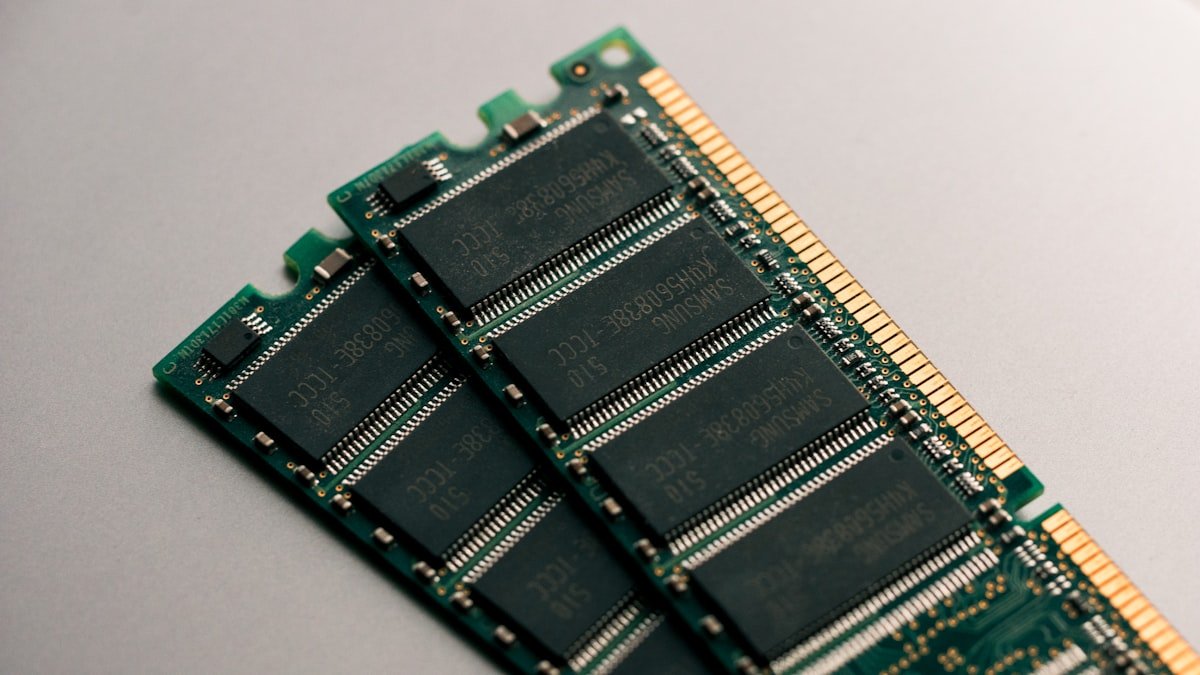
DDR5 and DDR4 RAM are completely incompatible. DDR5 has 288 pins with a different notch position, operates at 1.1V (vs. DDR4’s 1.2V), and uses a different physical design. You cannot install DDR5 in a DDR4 motherboard slot, and vice versa. Forcing them together will cause permanent damage to both components.
Why DDR5 and DDR4 Are Incompatible
Pin Layout Differences: DDR4 modules have 288 pins, while DDR5 modules also have 288 pins—but the notch (the physical key that prevents incorrect insertion) is in a completely different position. On DDR4, the notch is positioned near pin 93. On DDR5, it’s moved to prevent physical insertion into DDR4 slots. This is an intentional mechanical safeguard to prevent accidental damage.
Voltage Requirements: DDR4 operates at 1.2V, while DDR5 operates at 1.1V. If you somehow managed to insert DDR5 into a DDR4 slot, the motherboard would supply incorrect voltage, immediately damaging the memory module and potentially damaging the motherboard’s memory controller.
Electrical Signaling: DDR5 uses a completely different signaling protocol and clock speeds (4800 MHz to 6400+ MHz minimum) compared to DDR4 (3000 MHz to 4800 MHz). The motherboard’s memory controller is hardwired for one or the other—mixing them is electrically incompatible at the hardware level.
Motherboard Architecture: DDR4 motherboards (Intel 12th gen and earlier, AMD Ryzen 5000 series and earlier) have DDR4 controller chipsets. DDR5 motherboards (Intel 13th gen Raptor Lake and newer, AMD Ryzen 7000 series and newer) have completely different memory controller logic. The two generations cannot work together because the underlying architecture is fundamentally different.
How to Check Your RAM Type
Step 1: Check Your Motherboard Manual — The easiest way is to look up your motherboard model on the manufacturer’s website or check the manual you received at purchase. It will explicitly state “DDR4” or “DDR5” support.
Step 2: Check Your CPU Generation — If you know your processor model, you can determine RAM compatibility: Intel 13th gen Core i5/i7/i9 (Raptor Lake) and newer = DDR5. Intel 12th gen (Alder Lake) and older = DDR4. AMD Ryzen 7000 series (Zen 4) and newer = DDR5. AMD Ryzen 5000 series and older = DDR4.
Step 3: Use CPU-Z — Download CPU-Z (free utility) and run it. Under the “Memory” tab, it will display your current RAM type, speed, and whether your system supports DDR4 or DDR5.
Step 4: Visually Inspect Your RAM (if already installed) — DDR5 modules are slightly taller and have a more pronounced notch. If you already have RAM installed, you can see the notch position and module height to distinguish DDR4 from DDR5.
What to Do Instead
If you need to upgrade your RAM, you must match your motherboard’s supported type. Check your motherboard or CPU to determine if you need DDR4 or DDR5, then purchase the corresponding memory type. If you’re building a new system or planning a significant upgrade, consider DDR5 for future-proofing, as DDR4 is being phased out for new motherboards.
| Your Situation | Solution | Notes |
|---|---|---|
| Have DDR4 motherboard, want to upgrade RAM | Buy DDR4 memory only | Check speed compatibility (3000–4800 MHz typical) |
| Have DDR5 motherboard, want to upgrade RAM | Buy DDR5 memory only | Check speed compatibility (4800–6400+ MHz minimum) |
| Building new system | Choose DDR5-capable CPU/motherboard | Future-proofing; DDR4 motherboards are being discontinued |
| Already have DDR4 RAM, switched to DDR5 build | Sell old RAM, buy new DDR5 | DDR4 RAM will not work in DDR5 system |
Related Questions
Is DDR5 Worth Upgrading to from DDR4?
For gaming and most productivity tasks, DDR5 provides only marginal performance gains (5–10% in real-world scenarios). However, DDR5 is now the standard for new systems, and DDR4 motherboards are being phased out. If you’re upgrading CPUs anyway, DDR5 is worth considering for future-proofing, but don’t upgrade to DDR5 just for RAM alone.
Can You Mix DDR5 Brands?
Yes, you can mix different DDR5 brands (e.g., Corsair + Kingston) in the same system as long as they have the same speed, latency, and capacity. However, matching pairs are recommended for optimal stability and performance.
Does RAM Speed Matter for DDR5?
DDR5 speeds range from 4800 MHz to 6400+ MHz. Higher speeds provide marginal gains for gaming (3–5%) but more noticeable improvements for professional workloads (rendering, simulation). Standard DDR5 (4800–5600 MHz) is sufficient for most users.
What Is the Fastest DDR5 RAM Available?
As of 2026, DDR5 speeds go up to 6400+ MHz (premium overclocked modules). Standard retail DDR5 is typically 4800–5600 MHz. Faster modules are expensive and provide minimal real-world benefit for gaming or productivity.
Need more help? Check our complete Laptop RAM Compatibility Guide or browse DDR5 RAM options on Amazon.
Recommended upgrades
As an Amazon Associate we earn from qualifying purchases. Prices & availability shown on Amazon.
For laptops and mini PCs that use DDR5 SO-DIMM
For laptops and mini PCs that use DDR4 SO-DIMM
How we verify this guide
We cross-reference compatibility figures against manufacturer specifications where available, official service manuals, and the standards that govern fit — memory type and speed (DDR4 / DDR5 / LPDDR5), maximum supported capacity and slot count, SSD form factor and interface (M.2 2280, NVMe PCIe vs SATA, keying), and charger wattage and connector (USB-C Power Delivery, GaN). We’re explicit about soldered or non-upgradeable parts, prioritise primary sources over retailer listings, and re-verify the data on a regular cycle. More on our method →