Affiliate disclosure: this page contains affiliate links — if you buy through them we may earn a commission at no extra cost to you. As an Amazon Associate we earn from qualifying purchases.
DDR5 has been available since late 2021, and by 2026 it has matured into the clear successor to DDR4. But does that mean DDR4 is obsolete? This comprehensive comparison breaks down the real-world differences to help you decide.
Technical Differences
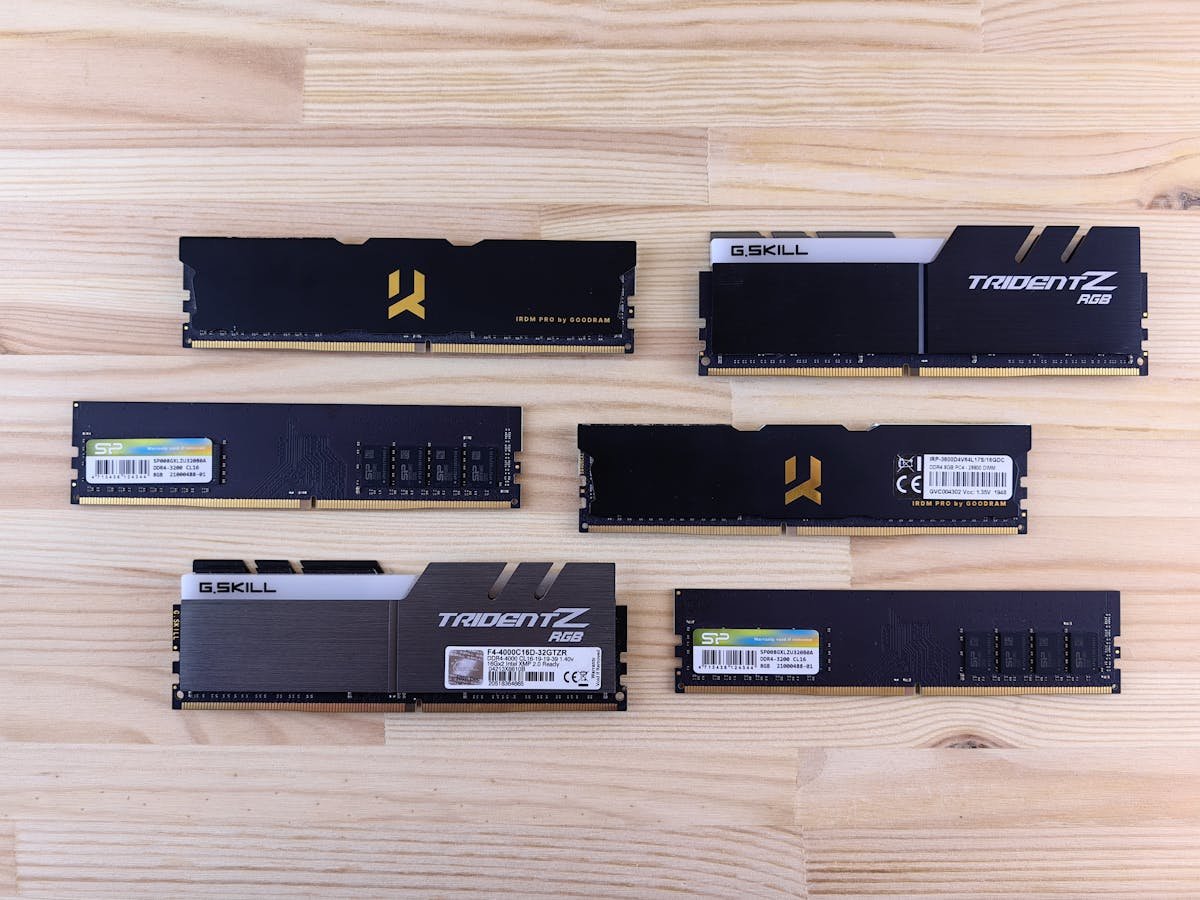
DDR5 offers higher base speeds (4800MHz vs DDR4’s 2133MHz), increased bandwidth, better power efficiency (1.1V vs 1.2V), and on-die ECC for improved reliability. DDR5 modules also feature dual 32-bit channels per DIMM instead of a single 64-bit channel, improving access efficiency. The maximum module density has increased from 64GB to 256GB per DIMM.
Real-World Performance
In productivity workloads like video rendering, compression, and scientific computing, DDR5-6000 typically outperforms DDR4-3600 by 15-30%. In gaming, the advantage is smaller — around 5-10% at 1080p, diminishing at higher resolutions where the GPU becomes the bottleneck. The difference is most noticeable in CPU-bound scenarios and memory-intensive tasks.
Pricing in 2026
DDR5 prices have dropped dramatically. A 32GB (2x16GB) DDR5-5600 kit now costs around £50-60, compared to £35-45 for an equivalent DDR4-3200 kit. The 15-25% premium is well worth paying for new builds given DDR5’s performance and future-proofing advantages.
Which Should You Choose?
For new builds: DDR5 is the clear choice. All current-gen platforms (AM5, LGA 1851) are DDR5-only. For existing systems: stick with DDR4. Switching to DDR5 requires a new motherboard and CPU, making it impractical as a standalone upgrade. For budget LGA 1700 builds: DDR4 B660/H670 boards still offer excellent value.
Frequently Asked Questions
Can I use DDR5 RAM in a DDR4 motherboard?
No. DDR4 and DDR5 use different physical connectors and are not interchangeable. You need a DDR5-compatible motherboard.
Is DDR4 still good in 2026?
Yes, DDR4 remains perfectly capable for gaming and productivity. It is not worth upgrading to DDR5 unless you are building a new system.
What DDR5 speed should I buy?
DDR5-6000 offers the best price-to-performance ratio in 2026, especially for AMD Ryzen systems where it matches the infinity fabric clock.
Recommended upgrades
As an Amazon Associate we earn from qualifying purchases. Prices & availability shown on Amazon.
For laptops and mini PCs that use DDR5 SO-DIMM
For laptops and mini PCs that use DDR4 SO-DIMM
How we verify this guide
We cross-reference compatibility figures against manufacturer specifications where available, official service manuals, and the standards that govern fit — memory type and speed (DDR4 / DDR5 / LPDDR5), maximum supported capacity and slot count, SSD form factor and interface (M.2 2280, NVMe PCIe vs SATA, keying), and charger wattage and connector (USB-C Power Delivery, GaN). We’re explicit about soldered or non-upgradeable parts, prioritise primary sources over retailer listings, and re-verify the data on a regular cycle. More on our method →