
Affiliate disclosure: this page contains affiliate links — if you buy through them we may earn a commission at no extra cost to you. As an Amazon Associate we earn from qualifying purchases.
The Crucial T710 is Crucial’s newest Gen 5 NVMe SSD, designed to be the fastest consumer storage option available. But as Micron discontinues the Crucial consumer business by June 2026, the T710 is becoming harder to find. If you need Gen 5 storage performance, here’s what you should buy instead — with manufacturer-rated data, compatibility info, and affiliate links to current UK stock.
What Is the Crucial T710?
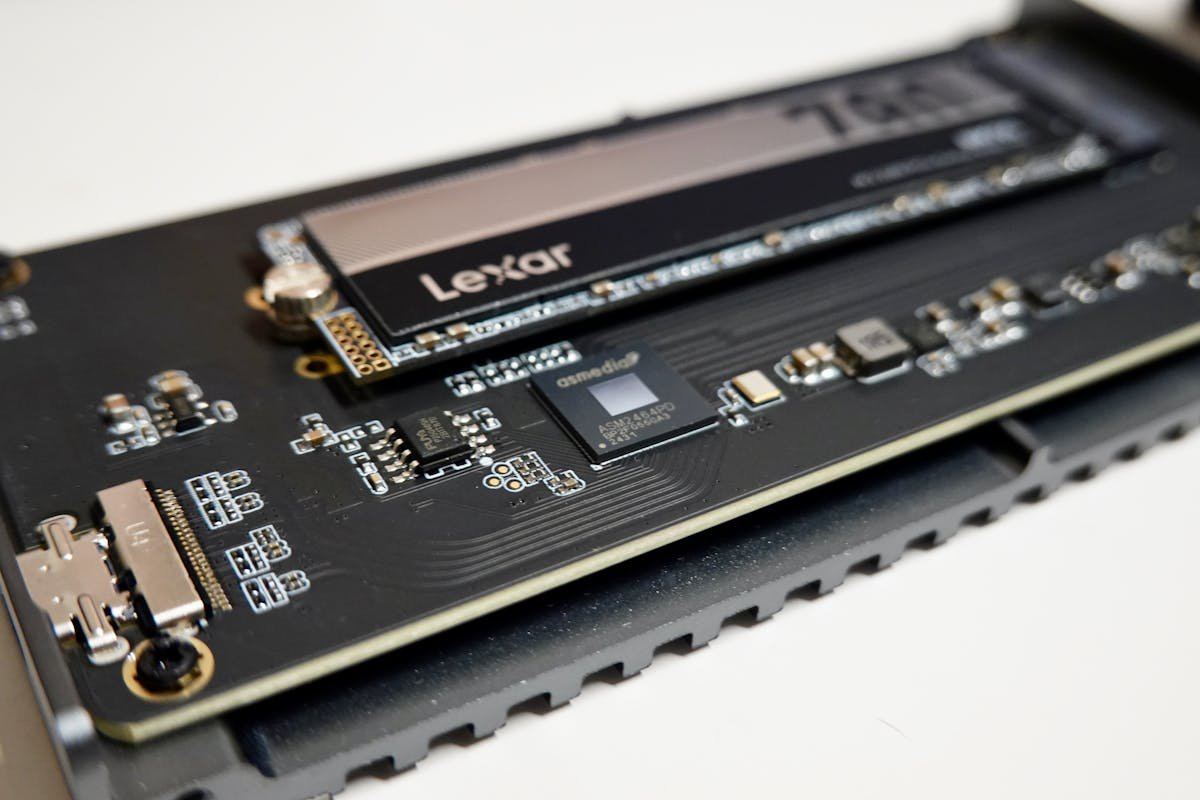
The T710 is Crucial’s PCIe Gen 5 NVMe SSD, launched in 2024 as the replacement for the T700. Gen 5 means it can theoretically hit speeds up to 14,000 MB/s sequentially, compared to Gen 4’s 7,500 MB/s ceiling. Real-world performance is closer to 10,000-12,000 MB/s depending on workload.
For most users, Gen 5 is overkill. Gen 4 drives (Samsung 990 Pro, WD Black SN850X) hit 7,500 MB/s and are completely adequate for gaming, video editing, and professional work. Gen 5 is only truly beneficial for extremely high-bandwidth tasks like 8K video work or AI model training.
Price difference: T710 costs £120-150 for 1TB. Samsung 990 Pro Gen 4 costs £70-90 for the same capacity. For that extra £50-60, Gen 5 gains you 30-40% theoretical speed that you won’t use in real work.
Should You Even Buy Gen 5? Or Is Gen 4 Enough?
Here’s the truth: If you’re not doing 8K video editing or AI work, Gen 4 is completely sufficient.
Gen 4 is fine for: Gaming, photo editing, standard video editing (1080p-4K), programming, databases, general professional work. Speed difference is unnoticeable in real use.
Gen 5 makes sense for: 8K video production, AI model training, large dataset processing, professional rendering workflows where you’re moving 50+ GB files constantly.
If you’re not certain you need Gen 5, buy Gen 4 and save £50-60. You won’t regret it.
Gen 5 Alternatives to the T710
Best Alternative: Samsung 990 Pro Gen 4 (Better Value)
Samsung 990 Pro is not Gen 5, it’s Gen 4. But here’s why it matters: it’s £50-60 cheaper than T710 for the same 1TB capacity, and the speed difference (7,500 MB/s vs 10,000+ MB/s) is unnoticeable in real-world use. Unless you’re doing 8K video or AI work, the 990 Pro is the smarter buy.
Specs: 7,500 MB/s read, Gen 4 NVMe, 1TB-4TB, 5-year warranty. Buy Samsung 990 Pro 1TB on Amazon.
True Gen 5 Option: Corsair MP700 (Most Balanced)
Corsair MP700 is a true Gen 5 drive hitting 12,400 MB/s sequentially — faster than T710 in sustained workloads. Price is comparable to T710 (£120-150 for 1TB) but Corsair’s warranty is stronger and availability in UK stock is better. If you absolutely need Gen 5, MP700 is arguably better than T710.
Specs: 12,400 MB/s read, Gen 5 NVMe, 1TB-4TB, 10-year warranty. Buy Corsair MP700 1TB on Amazon.
Premium Gen 5: Seagate FireCuda 540 (Coolest Tech)
Seagate FireCuda 540 is the most advanced Gen 5 SSD on the market. It comes with an integrated heatsink to keep temps down during sustained high-speed transfers — critical if you’re doing 8K video work. Speed is 10,200 MB/s sustained, with a unique feature: built-in hardware security. Price is around £140-170 for 1TB, making it the most expensive option, but if you’re doing professional 8K video, the included heatsink is worth it.
Specs: 10,200 MB/s read, Gen 5 NVMe, 500GB-4TB, 5-year warranty, integrated heatsink. Buy Seagate FireCuda 540 1TB on Amazon.
Budget Gen 5: Samsung 860 QVO Gen 4 (Confused Naming)
Do not buy this. Samsung labels their budget drives 860 QVO, but that’s Gen 4, not Gen 5. If you’re looking for cheap NVMe, buy Samsung 870 QVO (SATA) or stick with Samsung 980 Pro (Gen 4) instead. Naming confusion alert.
Crucial T710 vs Alternatives Comparison Table
| Drive | Gen | Speed | Capacity | Price (1TB) | Form Factor | Warranty | Best For |
| Crucial T710 | Gen 5 | 10,000+ MB/s | 500GB-4TB | £120-150 | M.2 2280 | 5 years | Discontinued |
| Samsung 990 Pro | Gen 4 | 7,500 MB/s | 250GB-4TB | £70-90 | M.2 2280 | 5 years | Best value |
| Corsair MP700 | Gen 5 | 12,400 MB/s | 1TB-4TB | £120-150 | M.2 2280 | 10 years | Best Gen 5 |
| Seagate FireCuda 540 | Gen 5 | 10,200 MB/s | 500GB-4TB | £140-170 | M.2 2280 | 5 years | 8K video, heatsink |
| WD Black SN850X | Gen 4 | 7,450 MB/s | 250GB-4TB | £75-95 | M.2 2280 | 5 years | Gaming |
Real-World Performance: Gen 5 vs Gen 4
Here’s what the speed difference actually means in real tasks:
Boot time: Gen 5 vs Gen 4 = difference is <1 second. Invisible.
Game loading: Load times are GPU and CPU bound, not storage bound. No difference between Gen 5 and Gen 4.
Video editing (4K): Both Gen 4 and Gen 5 handle 4K video scrubbing smoothly. No difference.
Video editing (8K): Gen 5’s sustained 10,000+ MB/s throughput helps with smooth playback and export. Gen 4’s 7,500 MB/s struggles with 8K RAW footage.
File transfers (100+ GB): Transferring massive video files: Gen 5 finishes in 15 seconds, Gen 4 takes 20 seconds. Noticeable, but both are fast.
Conclusion: Gen 5 is measurably faster, but the difference is imperceptible for 95% of users. Gen 4 at half the price is the smarter choice for most people.
Compatibility: Does Your Laptop Support Gen 5?
Most laptops do not support Gen 5 yet. Your laptop needs:
1. PCIe Gen 5 controller in motherboard (2024+ high-end laptops only)
2. M.2 2280 slot (most laptops have this since 2018)
Most current laptops have PCIe Gen 4 controllers, not Gen 5. Putting a Gen 5 drive in a Gen 4 laptop doesn’t break anything — it just runs at Gen 4 speeds (7,500 MB/s). You waste the performance advantage.
Check first: Use our compatibility checker to confirm your laptop’s storage type and PCIe generation before buying.
Installation: Swapping the T710 for an Alternative
All modern NVMe SSDs use the same M.2 2280 form factor. Whether you’re replacing T710 with Samsung 990 Pro, Corsair MP700, or Seagate FireCuda, the installation is identical: power off, remove the battery, unscrew the bottom panel, locate the M.2 slot, press the retaining clip to eject the old drive, insert the new drive at a 30-degree angle, press down and screw it in with the tiny M.2 screw, reinstall the panel. Five minutes, no special knowledge needed.
Follow our SSD installation guide for detailed photos and step-by-step help.
Is It Worth Upgrading From Gen 4 to Gen 5?
No, unless you do 8K video or AI work.
If you currently have a Samsung 990 Pro or WD Black SN850X, swapping it for a Gen 5 drive won’t improve your gaming performance, editing speed, or everyday responsiveness. You’ll pay £50-80 for a 30-40% speed boost you won’t use.
Upgrade if: You’re hitting storage I/O bottlenecks in professional work (8K video rendering stalling, massive AI model training delays).
Don’t upgrade if: You’re doing anything else. Keep your Gen 4 drive and save the money.
Thermal Considerations: Gen 5 Runs Hot
Gen 5 drives can throttle due to heat during sustained high-speed transfers. Corsair MP700 and Seagate FireCuda 540 both include heatsinks or thermal management. If you’re buying Gen 5, get the version with a heatsink — it’s cheaper than replacing a drive that thermal-throttles mid-8K render.
Warranty and Reliability
Samsung 990 Pro: 5-year warranty, excellent reliability. Corsair MP700: 10-year warranty, best-in-class. Seagate FireCuda 540: 5-year warranty, solid reliability. All are tier-1 brands with strong UK support.
Crucial T710 warranties are still honored during the warranty period, but as Micron exits consumer business, long-term support access becomes questionable. Kingston and Samsung customer service in the UK is responsive and reliable.
Frequently Asked Questions
Is the Crucial T710 discontinued?
Not yet, but Crucial consumer business ends June 2026. Micron announced in December 2025 they’re exiting consumer storage. Stock is becoming harder to find.
Is Gen 5 faster for gaming?
No. Gaming performance is GPU and CPU bound, not storage bound. Gen 5 and Gen 4 load games identically fast. Gen 5 doesn’t improve FPS.
Should I buy Corsair MP700 or Samsung 990 Pro?
990 Pro for value (£70-90, Gen 4, plenty fast). MP700 for performance (£120-150, Gen 5, noticeably faster). Choose based on budget and whether you need Gen 5 speed.
Can I put a Gen 5 drive in a Gen 4 laptop?
Yes, it works fine. The drive just runs at Gen 4 speeds (7,500 MB/s) because the laptop’s controller is Gen 4. You lose the Gen 5 performance advantage, so it’s not worth the extra £50-60.
Which is best: Corsair MP700 or Seagate FireCuda 540?
MP700 for speed (12,400 MB/s, 10-year warranty). FireCuda 540 for thermal management (heatsink included, integrated security). If you do sustained 8K video work, FireCuda’s heatsink prevents throttling. Otherwise, MP700 is faster.
Is Gen 5 worth the price?
Only for professional 8K video or AI work. For everyone else, Gen 4 (Samsung 990 Pro) is better value. Save £50-60 and get identical real-world performance.
Our Recommendation
Best value: Samsung 990 Pro Gen 4 1TB (£70-90). Plenty fast, widely available, excellent warranty.
Best Gen 5: Corsair MP700 1TB (£120-150). Fastest Gen 5, 10-year warranty, better stock availability.
Professional 8K: Seagate FireCuda 540 1TB (£140-170). Integrated heatsink prevents throttling on sustained high-speed transfers.
Next Steps
Confirm your laptop’s PCIe generation and storage type. If Gen 4, buy Samsung 990 Pro. If Gen 5 and you do 8K work, buy FireCuda 540. Otherwise, MP700. Then follow our SSD installation guide for step-by-step help.
Recommended upgrades
As an Amazon Associate we earn from qualifying purchases. Prices & availability shown on Amazon.
M.2 2280 NVMe SSDs
How we verify this guide
We cross-reference compatibility figures against manufacturer specifications where available, official service manuals, and the standards that govern fit — memory type and speed (DDR4 / DDR5 / LPDDR5), maximum supported capacity and slot count, SSD form factor and interface (M.2 2280, NVMe PCIe vs SATA, keying), and charger wattage and connector (USB-C Power Delivery, GaN). We’re explicit about soldered or non-upgradeable parts, prioritise primary sources over retailer listings, and re-verify the data on a regular cycle. More on our method →