
Affiliate disclosure: this page contains affiliate links — if you buy through them we may earn a commission at no extra cost to you. As an Amazon Associate we earn from qualifying purchases.
RAM (Random Access Memory) is one of the most important components inside your computer, yet many people don’t fully understand what it does or why it matters. Whether you’re buying a new laptop, upgrading an old one, or simply trying to understand why your computer feels slow, this complete guide explains everything you need to know about RAM in plain English — no technical jargon required.
Table of Contents
- What is RAM?
- How Does RAM Work?
- Types of RAM Explained
- How Much RAM Do You Need in 2026?
- Can You Upgrade Your RAM?
- How to Check Your Current RAM
- RAM vs Storage: Understanding the Difference
- Recommended Products
- Frequently Asked Questions
What is RAM?
RAM stands for Random Access Memory. It’s a type of ultra-fast temporary storage that your computer uses to hold the data it’s actively working with right now. Think of it like a desk — the bigger your desk, the more documents, books, and tools you can spread out and work with simultaneously.
Your hard drive or SSD stores everything permanently (files, programs, photos), but accessing data from storage is relatively slow. RAM acts as a high-speed middle ground between your processor (CPU) and your storage drive, holding the data your computer needs instant access to.
When you open a program, your computer copies the necessary data from storage into RAM. When you close the program, that data is cleared from RAM. This is why RAM is called ‘volatile’ memory — it loses all its data when the computer shuts down.
How Does RAM Work?
Every time you perform an action on your computer — opening a browser tab, editing a document, loading a game — your processor needs data to work with. RAM provides that data at incredibly high speeds, measured in millions of transfers per second.
Here’s a simplified breakdown: Your CPU requests data, the system checks if it’s in RAM, if yes it’s delivered almost instantly, if no it’s loaded from your slower storage drive first. This is why having more RAM generally makes your computer feel faster — more data can be kept readily available.
Modern RAM operates at speeds between 2,400 MHz and 8,000+ MHz, with newer DDR5 memory reaching the highest speeds. The two key specifications that matter most are capacity (measured in gigabytes) and speed (measured in MHz or MT/s).
Types of RAM Explained
| RAM Type | Used In | Max Speed | Status |
|---|---|---|---|
| DDR4 | Most current laptops/desktops | 3,200-5,333 MHz | Still widely used |
| DDR5 | Newer systems (2022+) | 4,800-8,400+ MHz | Current standard |
| LPDDR5/5X | Ultrabooks, MacBooks | 6,400-8,533 MHz | Soldered (not upgradeable) |
| DDR3 | Older PCs (pre-2017) | 1,066-2,133 MHz | Legacy/end of life |
| ECC RAM | Servers, workstations | Varies | Error-correcting |
DDR stands for Double Data Rate. Each new generation brings faster speeds, lower power consumption, and higher maximum capacities. Importantly, DDR generations are not interchangeable — a DDR4 slot cannot accept DDR5 RAM, and vice versa.
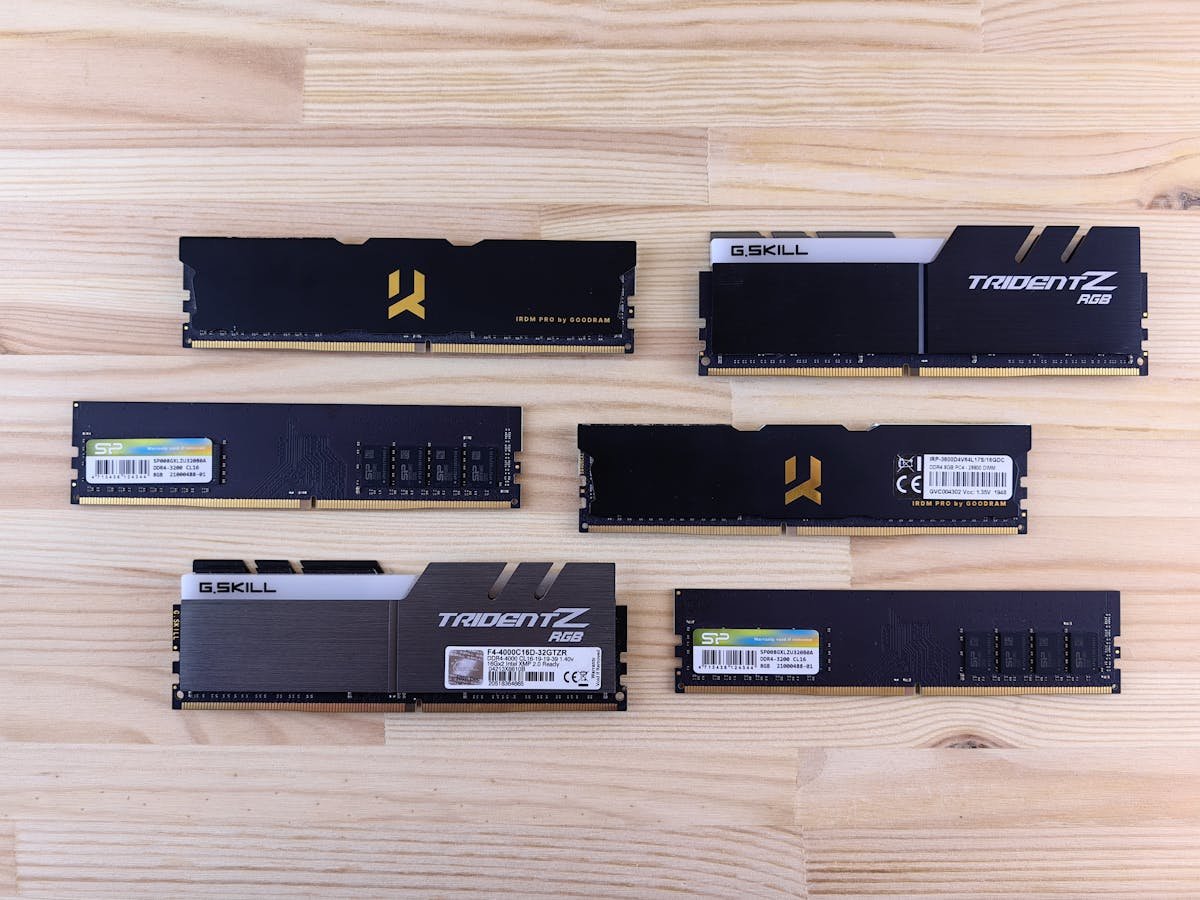
SODIMM is the smaller form factor used in laptops, while DIMM is the full-size version used in desktop PCs. When buying RAM, always check whether your device uses SODIMM or DIMM modules.
How Much RAM Do You Need in 2026?
| Usage | Recommended | Why |
|---|---|---|
| Basic browsing, email | 8 GB | Handles everyday tasks |
| Multitasking, light creative | 16 GB | Sweet spot for most users |
| Gaming, video editing | 32 GB | Future-proof for demanding work |
| AI/ML, 3D rendering | 64 GB+ | Professional workloads |
In 2026, 16 GB is the recommended minimum for most users. Windows 11 and macOS both use more RAM than their predecessors, and modern web browsers can easily consume 4-8 GB on their own with multiple tabs open.
If your computer currently has 4 GB RAM, upgrading to 8 or 16 GB will make one of the biggest performance differences you’ll ever experience — often more noticeable than upgrading your processor.
Can You Upgrade Your RAM?
Whether you can upgrade depends on your specific device. Most desktop PCs have 2-4 RAM slots and are easily upgradeable. Many laptops also have accessible RAM slots, though some modern ultrabooks solder RAM directly to the motherboard.
Before buying RAM, always check your specific laptop model’s compatibility. Our free Laptop Compatibility Checker can tell you exactly what type, speed, and maximum capacity your device supports.
How to Check Your Current RAM
On Windows: Press Ctrl + Shift + Esc to open Task Manager, click the Performance tab, then Memory. You’ll see total installed RAM, speed, form factor, and how many slots are used.
On Mac: Click the Apple menu then About This Mac. For more detail, go to System Information then Memory.
On Linux: Open a terminal and type ‘free -h’ for a quick summary, or ‘sudo dmidecode -t memory’ for detailed module information.
RAM vs Storage: Understanding the Difference
RAM is temporary working memory — fast but volatile. Storage (HDD or SSD) is permanent but slower. When someone says their laptop has ’16 GB RAM and 512 GB SSD’, the 16 GB is working memory and 512 GB is permanent storage.
A common misconception is that deleting files will free up RAM. Deleting files only frees storage space. If your computer is slow due to low RAM, you need to close programs or add more RAM.
Recommended Products
Ideal laptop upgrade kit — compatible with most DDR4 laptops. Lifetime warranty.
From £28 · Check Price on Amazon →
Great DDR5 laptop upgrade for newer systems with DDR5 SODIMM slots.
From £35 · Check Price on Amazon →
Premium DDR5 kit for power users needing maximum performance.
From £75 · Check Price on Amazon →
Budget single stick for older laptops needing a cost-effective boost.
From £14 · Check Price on Amazon →
Frequently Asked Questions
What does RAM do in simple terms?
RAM is your computer’s short-term memory. It temporarily holds data for whatever programs you’re currently using, allowing your processor to access them instantly rather than loading from the slower hard drive each time.
Is 8GB RAM enough in 2026?
8 GB is sufficient for basic tasks like web browsing and email. However, 16 GB is now the recommended standard as modern operating systems and browsers use more memory than ever. For multitasking or creative software, aim for 16 GB or more.
Does more RAM make my computer faster?
More RAM significantly improves performance if your computer is currently running out of memory. Signs include slow tab switching, programs freezing, and sluggishness with multiple apps open. If you already have enough RAM, adding more won’t help.
Can I mix different RAM brands?
Technically yes, but not recommended. Mixing brands, speeds, or capacities can cause stability issues or force all modules to run at the slowest stick’s speed. For best results, buy a matched kit from the same manufacturer.
What happens when RAM is full?
Your operating system starts using storage drive space as virtual memory. Since storage drives are much slower than RAM, this causes noticeable slowdowns, sluggish programs, and potential unresponsiveness.
How long does RAM last?
RAM modules typically last 10-20 years under normal use. RAM has no moving parts and is one of the most reliable computer components. Most people upgrade for capacity long before modules actually fail.
Final Thoughts
RAM is one of the simplest and most cost-effective upgrades you can make to improve your computer’s performance. Understanding what it does, how much you need, and whether your device supports upgrades puts you in control. If your computer feels slow, checking RAM usage should be one of the first things you do.
Check Your Laptop’s Compatibility
Use our free tool to find compatible RAM and SSD upgrades for your specific laptop model.
Launch Compatibility Checker →Recommended upgrades
As an Amazon Associate we earn from qualifying purchases. Prices & availability shown on Amazon.
For laptops and mini PCs that use DDR5 SO-DIMM
For laptops and mini PCs that use DDR4 SO-DIMM
How we verify this guide
We cross-reference compatibility figures against manufacturer specifications where available, official service manuals, and the standards that govern fit — memory type and speed (DDR4 / DDR5 / LPDDR5), maximum supported capacity and slot count, SSD form factor and interface (M.2 2280, NVMe PCIe vs SATA, keying), and charger wattage and connector (USB-C Power Delivery, GaN). We’re explicit about soldered or non-upgradeable parts, prioritise primary sources over retailer listings, and re-verify the data on a regular cycle. More on our method →