Affiliate disclosure: this page contains affiliate links — if you buy through them we may earn a commission at no extra cost to you. As an Amazon Associate we earn from qualifying purchases.
Choosing between an SSD and an HDD is one of the most important decisions when buying or upgrading a computer. While SSDs have become the default in new systems, HDDs still have their place for certain use cases. This comprehensive comparison covers speed, reliability, price, capacity, and which you should choose for your specific needs in 2026.
Table of Contents
- SSD vs HDD: The Key Differences at a Glance
- Speed Comparison: How Much Faster is an SSD?
- Reliability and Lifespan
- Price Comparison in 2026
- When to Choose an SSD
- When an HDD Still Makes Sense
- How to Upgrade from HDD to SSD
- Recommended Products
- Frequently Asked Questions
SSD vs HDD: The Key Differences at a Glance
| Feature | SSD (Solid State Drive) | HDD (Hard Disk Drive) |
|---|---|---|
| Speed | 500-7,000 MB/s | 80-160 MB/s |
| Boot Time | 10-20 seconds | 30-90 seconds |
| Noise | Completely silent | Audible clicking/spinning |
| Durability | No moving parts, shock resistant | Fragile moving parts |
| Power Use | 2-5 watts | 6-15 watts |
| Weight | Under 50g (M.2) | ~100g (2.5″) / ~700g (3.5″) |
| Price per TB | £50-70 per TB | £15-25 per TB |
| Max Capacity | Up to 8 TB (consumer) | Up to 24 TB |
| Lifespan | 5-10 years typical | 3-5 years typical |
Speed Comparison: How Much Faster is an SSD?
The speed difference between SSDs and HDDs is enormous and immediately noticeable in everyday use. Even the slowest SATA SSD is roughly 3-5 times faster than the fastest HDD for sequential reads. NVMe SSDs can be 30-50 times faster.
| Task | HDD | SATA SSD | NVMe SSD |
|---|---|---|---|
| Windows boot | 45-90 sec | 15-25 sec | 8-15 sec |
| Open Office suite | 15-30 sec | 2-4 sec | 1-2 sec |
| Copy 10 GB file | 2-3 min | 20-30 sec | 3-8 sec |
| Game load time | 30-60 sec | 8-15 sec | 3-8 sec |
The most noticeable improvements are in boot times, program loading, and file copying. Even basic tasks like opening File Explorer, searching for files, and switching between programs feel significantly snappier on an SSD.
Reliability and Lifespan
SSDs have a significant reliability advantage because they have no moving parts. An HDD’s spinning platters and moving read/write head make it vulnerable to mechanical failure, especially from drops, bumps, or vibrations. This makes SSDs particularly better suited for laptops that get moved around frequently.
Modern SSDs are rated for hundreds of terabytes of writes (TBW). A typical 1 TB SSD rated at 600 TBW could handle writing 100 GB per day for over 16 years. For most users, the SSD will outlast the computer it’s installed in.
HDDs typically last 3-5 years under normal use, though many last longer. The mechanical components do wear over time, and HDDs are particularly vulnerable to failure if subjected to physical shocks while spinning.
Price Comparison in 2026
SSD prices have fallen dramatically over the past few years. In 2026, the price gap between SSDs and HDDs has narrowed considerably, especially at lower capacities.
| Capacity | SSD (NVMe) | SSD (SATA) | HDD |
|---|---|---|---|
| 500 GB | £30-45 | £28-40 | £20-25 |
| 1 TB | £50-75 | £48-65 | £30-40 |
| 2 TB | £90-150 | £85-120 | £45-55 |
| 4 TB | £200-350 | £180-280 | £70-90 |
HDDs still win on pure price-per-terabyte, particularly at higher capacities. This makes them suitable for bulk storage of large media files. However, for your primary system drive, the speed benefits of an SSD are worth the small extra cost.
When to Choose an SSD
Choose an SSD as your primary drive in virtually every scenario. The performance benefits are too significant to ignore for your operating system and main applications. Specifically, an SSD is essential for: your Windows or macOS boot drive, gaming (modern games often require SSD storage), video editing and content creation, programming and software development, and any laptop where battery life and durability matter.
In 2026, there are very few reasons to use an HDD as your primary system drive. Even budget laptops now ship with SSDs.
When an HDD Still Makes Sense
HDDs remain relevant for specific use cases where massive storage capacity at low cost is the priority. These include: NAS (Network Attached Storage) for home media servers, backup and archival storage, CCTV and security camera recording systems, and bulk storage for large photo/video libraries where you don’t need fast access speeds.
A popular and practical approach is to use an SSD for your operating system and programs, alongside an HDD for mass storage of files you don’t access frequently.
How to Upgrade from HDD to SSD
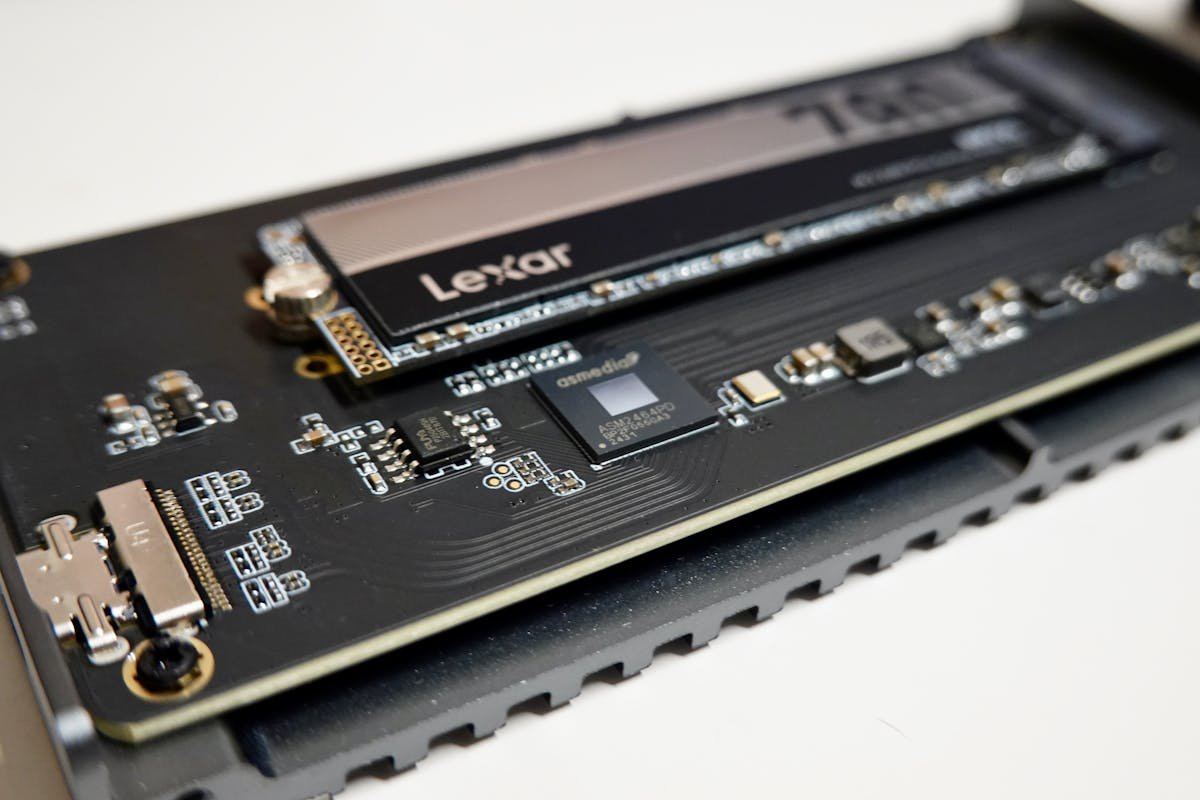
Upgrading from an HDD to an SSD is one of the easiest and most rewarding computer upgrades. The basic steps are: Check what type of SSD your computer supports (2.5-inch SATA or M.2 NVMe), purchase the correct SSD, clone your existing drive or do a fresh install of your operating system, physically swap the drives, and boot up your newly fast computer.
Many SSDs come with free cloning software, or you can use tools like Macrium Reflect Free. For a step-by-step guide specific to your laptop model, check our detailed laptop upgrade guides.
Recommended Products
Best all-round NVMe SSD for most users. Up to 5,000 MB/s reads, excellent reliability.
From £65 · Check Price on Amazon →
Best SATA SSD for HDD-to-SSD upgrades. Drop-in replacement for any 2.5-inch hard drive.
From £55 · Check Price on Amazon →
Excellent value NVMe drive with consistent performance. Great for everyday computing.
From £52 · Check Price on Amazon →
Best value for bulk storage. Ideal for NAS, backups, and media libraries where speed isn’t critical.
From £75 · Check Price on Amazon →
Frequently Asked Questions
Is an SSD really worth it over an HDD?
For your primary system drive, absolutely yes. The speed difference is transformative — everything from booting up to opening programs to browsing files becomes dramatically faster. The small price premium over an HDD is one of the best value upgrades in computing.
Can I replace my laptop’s HDD with an SSD?
In most cases, yes. If your laptop has a 2.5-inch HDD, you can replace it with a 2.5-inch SATA SSD. Many modern laptops also have M.2 slots for even faster NVMe SSDs. Check your specific model’s compatibility before purchasing.
Do SSDs fail like hard drives?
SSDs can fail, but they fail differently. HDDs typically fail mechanically (motor, heads, platters). SSDs degrade gradually as NAND cells wear out from writes, but modern SSDs are rated for far more writes than most users will ever perform. Overall, SSDs have lower failure rates than HDDs.
Should I get a SATA or NVMe SSD?
If your system supports NVMe, go NVMe — it is significantly faster. If your system only has SATA connections, a SATA SSD is still an enormous upgrade over an HDD. Both are dramatically better than any hard drive.
How do I know if my laptop supports NVMe?
Check your laptop’s specifications or use our free Laptop Compatibility Checker. Most laptops made after 2017 have at least one M.2 NVMe slot. Older laptops typically only support 2.5-inch SATA drives.
Will an SSD improve gaming performance?
SSDs dramatically reduce game load times and can eliminate texture pop-in during gameplay. Some modern games require SSD storage. While an SSD won’t increase frame rates (that’s your GPU’s job), the overall gaming experience is much smoother.
Final Thoughts
In 2026, the SSD vs HDD debate is largely settled for primary system storage — SSDs win on virtually every metric except raw capacity per pound. For the best of both worlds, use an SSD for your operating system and frequently used applications, and consider an HDD only for bulk file storage where speed isn’t essential.
Check Your Laptop’s Compatibility
Use our free tool to find compatible RAM and SSD upgrades for your specific laptop model.
Launch Compatibility Checker →Recommended upgrades
As an Amazon Associate we earn from qualifying purchases. Prices & availability shown on Amazon.
M.2 2280 NVMe SSDs
How we verify this guide
We cross-reference compatibility figures against manufacturer specifications where available, official service manuals, and the standards that govern fit — memory type and speed (DDR4 / DDR5 / LPDDR5), maximum supported capacity and slot count, SSD form factor and interface (M.2 2280, NVMe PCIe vs SATA, keying), and charger wattage and connector (USB-C Power Delivery, GaN). We’re explicit about soldered or non-upgradeable parts, prioritise primary sources over retailer listings, and re-verify the data on a regular cycle. More on our method →