Affiliate disclosure: this page contains affiliate links — if you buy through them we may earn a commission at no extra cost to you. As an Amazon Associate we earn from qualifying purchases.
The RAM question comes down to one thing: how much of your laptop’s memory are you actually using right now, and how much will you use in 2–3 years? This guide walks through real-world memory consumption, shows you exactly when 16GB hits its limits, and helps you decide if 32GB is future-proofing or wasteful spending.
Baseline: Windows 11 and macOS Idle Memory Usage
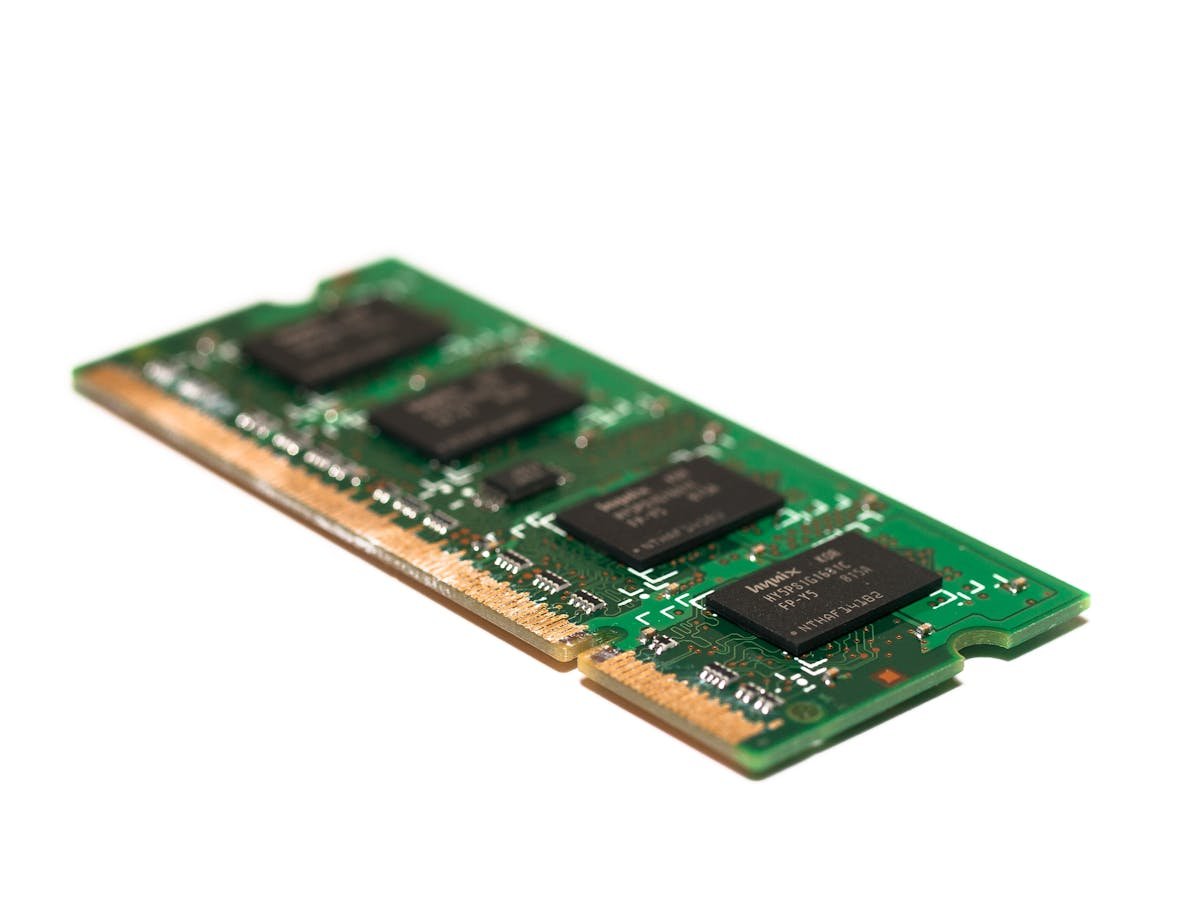
Before you open a single application, your operating system is already using RAM:
- Windows 11 (idle): 4–6 GB
- macOS Monterey/Ventura (idle): 3–4 GB
- Linux (Ubuntu): 1–2 GB
On a 16 GB laptop, you have 10–12 GB remaining for applications. On a 32 GB laptop, you have 26–29 GB remaining. The difference compounds quickly once you start working.
Real-World Memory Consumption by Task
| Application / Workload | Typical RAM Usage | Peak RAM Usage | Notes |
|---|---|---|---|
| Google Chrome (per tab, idle) | 150–250 MB | 500 MB (with video/animation) | 10 tabs = 1.5–2.5 GB, 20 tabs = 3–5 GB |
| Firefox | 120–180 MB/tab | 400 MB/tab (heavy sites) | Slightly more efficient than Chrome |
| Microsoft Word | 200–400 MB | 600 MB (large document + images) | Negligible unless document is huge (1000+ pages) |
| Microsoft Excel | 300–500 MB | 2–8 GB (large dataset) | Highly dependent on spreadsheet size; 100k+ rows uses significant RAM |
| Outlook (with 10+ GB mailbox) | 500–800 MB | 1.5–2 GB | Large corporate mailboxes can spike usage |
| Photoshop (small image) | 400–600 MB | 2–4 GB (mid-size image) | High-resolution images use 8+ GB; 4K image can use 12+ GB |
| Photoshop (4K image) | – | 8–15 GB | Merging layers, smart objects amplify usage |
| Premiere Pro (4K timeline) | 1–2 GB | 6–12 GB | RAW 4K clips and effects push demand; scrubbing can spike RAM |
| Visual Studio Code | 150–300 MB | 400–600 MB | With extensions, can reach 1 GB; highly efficient for development |
| Visual Studio (full IDE) | 800 MB–1.5 GB | 2–4 GB (compiling large project) | .NET project builds can spike significantly |
| Docker Desktop (idle) | 400–600 MB | 2–4 GB per running container | Running 4 containers simultaneously = 8–16 GB usage |
| Virtual Machine (VirtualBox/Hyper-V) | 1–2 GB (assigned) | 4–8 GB (2–4 VMs running) | Each VM gets allocated RAM; simultaneous VMs compound usage |
| Slack + Teams + Discord | 100–150 MB each | 300 MB each (with active video) | 3 communication apps = 300–450 MB total |
| Spotify/Music Streaming | 50–100 MB | 100–200 MB | Negligible |
Now let’s look at actual user scenarios.
Real Usage Scenarios: 16GB vs 32GB Breakdown
Scenario 1: Office Worker
Typical Setup: Windows 11 + Outlook + 2x Word documents + 1x Excel spreadsheet + Chrome (15 tabs) + Slack + Teams
- OS: 5 GB
- Outlook: 0.8 GB
- Word (2x): 0.8 GB
- Excel (small): 0.5 GB
- Chrome (15 tabs): 2.5 GB
- Slack + Teams: 0.4 GB
- Total: 10.0 GB
16 GB Result: 6 GB free (comfortable headroom)
32 GB Result: 22 GB free (overkill)
Verdict: 16 GB is plenty. Upgrade to 32 GB only if you frequently max RAM or anticipate heavy multitasking.
Scenario 2: Web Developer
Typical Setup: macOS + VS Code + Chrome (30 tabs, dev tools open) + Terminal (multiple windows) + Docker (2 containers running) + Slack + Terminal
- OS: 4 GB
- VS Code + Extensions: 0.6 GB
- Chrome (30 tabs with dev tools): 5 GB
- Terminal: 0.3 GB
- Docker (2 containers): 4 GB
- Slack: 0.3 GB
- Total: 14.2 GB
16 GB Result: 1.8 GB free (tight, potential slowdown if another app opens)
32 GB Result: 17.8 GB free (very comfortable)
Verdict: 16 GB is borderline uncomfortable. 32 GB prevents slowdown and frustration during intensive development sessions with many containers running.
Scenario 3: Content Creator (Photo/Video)
Typical Setup: macOS + Photoshop (3K image open) + Premiere Pro (4K timeline) + Chrome (10 tabs) + Slack + Music streaming
- OS: 4 GB
- Photoshop (3K image): 6 GB
- Premiere Pro (4K with effects): 10 GB
- Chrome (10 tabs): 1.5 GB
- Slack + Music: 0.3 GB
- Total: 21.8 GB
16 GB Result: Maxed out, system is paging to disk (slow, frustrating, unusable)
32 GB Result: 10.2 GB free (comfortable working headroom)
Verdict: 16 GB is insufficient for professional content creation. 32 GB is the minimum; 64 GB is better for RAW 4K editing.
Scenario 4: Casual Gamer
Typical Setup: Windows 11 + Game (AAA title) + Chrome (10 tabs) + Discord + Spotify
- OS: 5 GB
- Game (loaded): 10 GB
- Chrome (10 tabs): 1.5 GB
- Discord: 0.3 GB
- Spotify: 0.1 GB
- Total: 16.9 GB
16 GB Result: Close to maxed out; game may stutter if you alt-tab frequently or have background apps
32 GB Result: 15.1 GB free (plenty of headroom for alt-tabbing and background tasks)
Verdict: 16 GB is adequate for gaming alone. 32 GB eliminates stutter from alt-tabbing and background apps.
Scenario 5: Data Scientist / ML Engineer
Typical Setup: Ubuntu + Jupyter Notebook (pandas + numpy processing 10 GB dataset) + VS Code + Terminal (model training) + Chrome (documentation)
- OS: 2 GB
- Jupyter (with 10 GB dataset in memory): 12 GB
- Model training (TensorFlow): 6 GB
- VS Code + Terminal: 0.8 GB
- Chrome: 1 GB
- Total: 21.8 GB
16 GB Result: Maxed out, OOM (out of memory) errors, Python crashes, workflow breaks
32 GB Result: 10.2 GB free (able to work, but still tight for large datasets)
Verdict: 16 GB is unworkable for serious data science. 32 GB is the minimum; 64 GB is better.
Memory Consumption Over Time
RAM requirements grow. Consider what you’ll be doing in 2–3 years:
- Operating systems get heavier. Windows 12 (rumored 2025) will likely use 6–7 GB idle; current Windows 11 uses 4–6 GB.
- Applications demand more. Photoshop 2027 will likely need more RAM than 2025 version; same for Premiere Pro, browsers, IDEs.
- Browser tabs accumulate. You use more tabs in 2027 than in 2024.
- Workloads expand. A developer working with 2 Docker containers in 2024 might need 5 in 2027.
The question: Do you invest in 32 GB now to avoid replacement in 3 years, or stick with 16 GB and upgrade if it becomes tight?
The Cost-Benefit Analysis
| Configuration | Cost (March 2026) | Cost Difference | Useful Lifespan |
|---|---|---|---|
| 16 GB DDR4 | £600–800 | Baseline | 3–4 years |
| 32 GB DDR4 | £630–850 | +£30–50 | 4–5 years |
| 16 GB DDR5 | £650–850 | +£50–250 (DDR5 itself) | 5–6 years |
| 32 GB DDR5 | £700–950 | +£100–350 | 5–7 years |
For casual users, 16 GB is only £30–50 cheaper than 32 GB over the laptop’s lifespan—a rounding error. For a £1,200 laptop, that’s 2–4% of total cost. The investment in 32 GB pays for itself in reduced frustration and extended lifespan.
For professionals (video, data science, development), the calculus is even clearer: 32 GB today saves you from buying a new laptop in 2–3 years when 16 GB becomes insufficient. The £50–100 difference is cheap insurance.
When 16GB is Enough (Honestly)
- You browse the web, watch YouTube, use Office, and stream music.
- You run at most one heavy application at a time (e.g., Photoshop OR Premiere, not both simultaneously).
- You don’t run VMs or Docker containers.
- You don’t work with datasets larger than 2–4 GB.
- You don’t plan to keep the laptop beyond 3 years.
- You’re on a strict budget and every pound counts.
When 32GB Makes Sense
- You’re a professional (video editor, developer, data scientist, designer).
- You run multiple heavy applications simultaneously (Photoshop + Premiere, or VS Code + Docker).
- You work with large datasets or high-resolution media.
- You plan to keep the laptop 4–5+ years.
- You multitask heavily (many browser tabs, many open applications).
- You run VMs or containers regularly.
- You want to future-proof against increasingly demanding software.
Upgrade Path: Can You Add RAM Later?
This depends on your laptop:
- Desktop Replacement (15–17″ laptop): Usually upgradeable. Most models from ASUS, Dell (Inspiron, XPS 15), MSI allow SODIMM upgrades. Cost: £40–80 per 16 GB module.
- Ultrabook (13–14″ laptop): Often soldered. MacBook Pro, Dell XPS 13, ASUS VivoBook often have soldered RAM—no upgrade possible. Check your model before buying.
- Gaming Laptop: Almost always upgradeable. ROG, Alienware, MSI typically have accessible memory slots.
If your laptop has soldered RAM (check the spec sheet), your only option is buying the right capacity upfront. This tips the scales toward 32 GB, since you can’t upgrade later.
Related guides on RAM compatibility:
- Laptop RAM Compatibility: Which Modules Work in Which Laptops
- DDR4 vs DDR5 — Is Upgrading Worth It?
- Best Laptop RAM Upgrade Options
The Honest Bottom Line
For the average person, 16 GB is fine in 2026. For professional users or anyone planning to keep a laptop beyond 3 years, 32 GB is the sensible choice. The £30–100 price difference over a laptop’s lifespan is negligible compared to the peace of mind and productivity gains.
Think of it like insurance: you probably don’t need 32 GB today, but you might in 2–3 years when software gets heavier. For £50, that’s cheap insurance. Most users will never max out 32 GB, and that’s fine—it’s better to have capacity you don’t need than to hit the ceiling and suffer slowdown.
The only reason to stay at 16 GB is if your laptop’s RAM is soldered (non-upgradeable) AND you’re confident you’ll keep it less than 3 years AND you’re on a tight budget. Otherwise, 32 GB is the pragmatic choice for longevity.
Where to Buy
Looking for compatible components? Check current prices and availability:
Recommended Products
These are the products we recommend based on this guide. All links go to Amazon where you can check current prices and availability.
| Product | Why We Recommend It | Amazon |
|---|---|---|
| Corsair Vengeance DDR4 SO-DIMM 32GB (2×16GB) 3200MHz | Best overall DDR4 upgrade kit | View on Amazon |
| Kingston Fury Impact DDR4 SO-DIMM 32GB (2×16GB) 3200MHz | Reliable alternative with tight latency | View on Amazon |
| Corsair Vengeance DDR5 SO-DIMM 32GB (2×16GB) 5600MHz | Top-rated DDR5 kit for gaming & productivity | View on Amazon |
| Kingston Fury Impact DDR5 SO-DIMM 32GB (2×16GB) 5600MHz | Excellent DDR5 alternative with XMP support | View on Amazon |
| Samsung 990 Pro 2TB NVMe M.2 2280 | Fastest consumer NVMe — ideal for gaming & editing | View on Amazon |
| WD Black SN850X 2TB NVMe | Excellent Gen4 speed with heatsink option | View on Amazon |
| Crucial P5 Plus 1TB NVMe | Great value Gen4 SSD | View on Amazon |
| Kingston NV2 1TB NVMe | Budget-friendly with solid reliability | View on Amazon |
Prices and availability may vary. As an Amazon Associate, we earn from qualifying purchases.
Related Guides
- Dynabook Laptop Upgrades
- Huawei Laptop Upgrades
- Ram Compatibility
- Ssd Compatibility
- Best Ddr5 Laptop Ram
Recommended upgrades
As an Amazon Associate we earn from qualifying purchases. Prices & availability shown on Amazon.
For laptops and mini PCs that use DDR5 SO-DIMM
For laptops and mini PCs that use DDR4 SO-DIMM
How we verify this guide
We cross-reference compatibility figures against manufacturer specifications where available, official service manuals, and the standards that govern fit — memory type and speed (DDR4 / DDR5 / LPDDR5), maximum supported capacity and slot count, SSD form factor and interface (M.2 2280, NVMe PCIe vs SATA, keying), and charger wattage and connector (USB-C Power Delivery, GaN). We’re explicit about soldered or non-upgradeable parts, prioritise primary sources over retailer listings, and re-verify the data on a regular cycle. More on our method →