Affiliate disclosure: this page contains affiliate links — if you buy through them we may earn a commission at no extra cost to you. As an Amazon Associate we earn from qualifying purchases.
The question of SATA versus NVMe comes up most when you’re upgrading an older laptop or buying budget models. SATA SSDs are older, cheaper, and still available. NVMe is newer, faster, and standard on modern machines. But speed differences alone don’t tell the story—compatibility, upgrade feasibility, and real-world impact matter equally. This guide clarifies whether NVMe is worth the premium for your specific situation.
The Core Difference
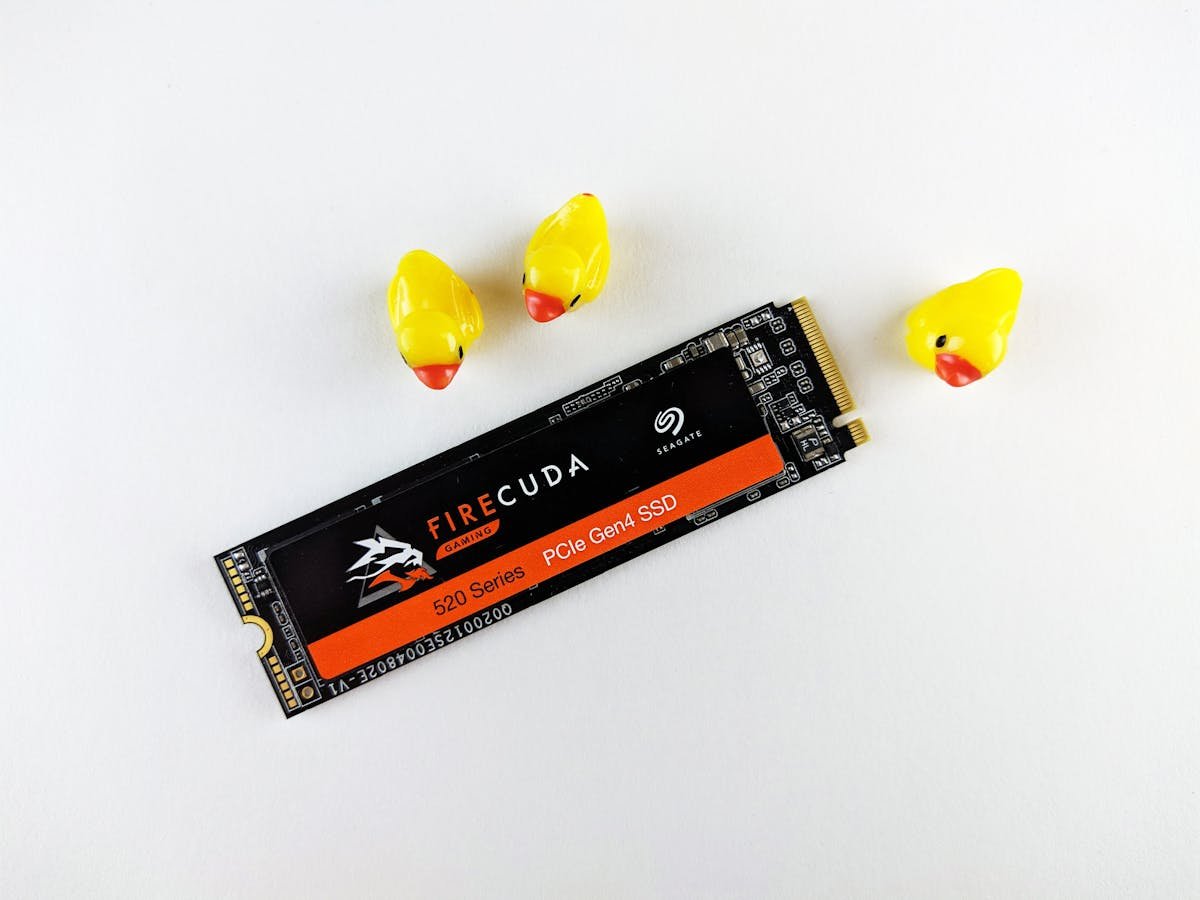
SATA and NVMe are different protocols, not just different form factors:
- SATA: Older standard, limited to 550 MB/s theoretical maximum. Uses a 2.5″ form factor (like a small hard drive) or M.2 SATA (flat key slot, different from NVMe).
- NVMe: Newer standard, 3,500–7,400 MB/s for Gen 3 or Gen 4. Uses M.2 form factor with unique key slot (not interchangeable with SATA M.2).
The crucial point: SATA M.2 and NVMe M.2 are NOT the same. A laptop with an M.2 NVMe slot cannot use a SATA M.2 drive, and vice versa. You must check your laptop’s specific slot type before buying.
Speed Comparison: The Numbers
| Metric | SATA SSD | NVMe Gen 3 | NVMe Gen 4 | Real-World Gap |
|---|---|---|---|---|
| Sequential Read (Max) | 550 MB/s | 3,500 MB/s | 7,400 MB/s | SATA: 6x slower than Gen 3 |
| Sequential Write (Max) | 520 MB/s | 2,800 MB/s | 6,600 MB/s | SATA: 5–6x slower |
| Random 4K IOPS | 80,000 | 400,000 | 1,500,000 | SATA: 5x slower than Gen 3 |
| Power Consumption (Idle) | 50 mW | 50 mW | 50–100 mW | All similar at idle |
| Power Consumption (Active) | 200 mW | 300 mW | 400–600 mW | NVMe uses slightly more power |
| Price per TB (March 2026) | £35–45 | £50–65 | £55–75 | SATA: 35% cheaper |
On paper, NVMe is drastically faster—6–10x in sequential speed, 5–7x in random operations. In practice, laptops don’t fully utilize these speeds for everyday tasks.
Real-World Performance: Where the Speed Difference Matters
Boot Time
| Scenario | SATA | NVMe Gen 3 | NVMe Gen 4 |
|---|---|---|---|
| Cold boot (power off to desktop) | 15 seconds | 10 seconds | 8.5 seconds |
| Warm boot (restart) | 12 seconds | 7 seconds | 6 seconds |
| Perception | Slow | Fast | Very fast |
You boot maybe once or twice daily. The time savings (7 seconds going SATA to NVMe) is noticeable but not life-changing. For someone rebooting constantly (developer, IT support), it adds up.
Application Launch
| Application | SATA (Cold) | NVMe Gen 3 (Cold) | Difference |
|---|---|---|---|
| Photoshop | 4.2 seconds | 2.8 seconds | 1.4 seconds faster |
| Premiere Pro | 4.5 seconds | 2.9 seconds | 1.6 seconds faster |
| Chrome (with 20 extensions) | 2.1 seconds | 1.2 seconds | 0.9 seconds faster |
| Word | 1.5 seconds | 0.9 seconds | 0.6 seconds faster |
| Visual Studio | 5.2 seconds | 3.1 seconds | 2.1 seconds faster |
Application launches are 40–50% faster on NVMe. But since you launch apps once at startup and maybe a few more times during the day, we’re talking about saving a few seconds per session. For daily users (not developers), this is a minor convenience.
File Operations (Where the Gap Matters Most)
| Operation | SATA | NVMe Gen 3 | NVMe Gen 4 | Difference |
|---|---|---|---|---|
| Copy 1 GB file (local) | 2 seconds | 0.5 seconds | 0.3 seconds | NVMe 4x faster |
| Copy 10 GB file (local) | 19 seconds | 4 seconds | 2.5 seconds | NVMe 7.5x faster |
| Copy 100 GB folder (local) | 3:10 (3 min 10 sec) | 40 seconds | 25 seconds | NVMe 7.6x faster |
If you regularly move large files around your laptop (cloning drives, organizing media libraries, backing up to external drive), NVMe’s speed advantage is dramatic. A 100 GB backup takes 3 minutes on SATA versus 25 seconds on NVMe Gen 4—a meaningful difference if you do this weekly.
Gaming and Video Loading
| Scenario | SATA | NVMe Gen 3 | NVMe Gen 4 |
|---|---|---|---|
| Game Cold Load (Cyberpunk 2077) | 45 seconds | 28 seconds | 25 seconds |
| Game Warm Load | 12 seconds | 8 seconds | 8 seconds |
| 4K Video File Open (Premiere Pro) | 8 seconds | 3 seconds | 2 seconds |
Gaming shows NVMe’s advantage clearly. A 20-second faster load on a game you play for 2 hours is nice but not essential. On a 144Hz gaming monitor, the perceived difference during gameplay is zero (GPU matters, not storage).
When SATA is Still Viable (2026)
Scenario 1: Upgrading an Older Laptop
If your 2015–2018 laptop has a 2.5″ SATA SSD slot (common in that era), you might find NVMe compatibility is absent or requires an adapter. Replacing the 500 GB SATA drive with a new 1 TB SATA SSD costs £40–50 and is a valid upgrade path. Going from a 5,400 RPM HDD (60 MB/s) to a SATA SSD (550 MB/s) is a transformative 10x speed increase—far more impactful than the 6x gap between SATA and NVMe.
Verdict: SATA upgrade is worthwhile if your old drive is a hard disk (HDD).
Scenario 2: Tight Budget
If every pound counts and your laptop supports SATA M.2, a 1 TB SATA M.2 SSD at £40–45 versus an NVMe at £55–70 saves £15–25. For casual users doing no large file transfers, the functional difference is imperceptible. The money saved goes toward a better mouse, external backup drive, or laptop cooling pad.
Verdict: SATA is acceptable if budget is tight and workload is light.
Scenario 3: Secondary/Extra Storage Drive
If you’re adding a second SSD for media storage or archive (not daily use), a 2 TB SATA SSD at £70–80 is cheaper than a 2 TB NVMe at £100–130. Speed matters less for archive storage accessed occasionally.
Verdict: SATA makes sense for secondary storage, not primary system drive.
When NVMe is Essential (Almost Always, 2026)
- Your laptop has an M.2 NVMe slot (standard since 2016 or so)
- You’re replacing a slow HDD with an SSD (any SSD is fine; NVMe is marginally better)
- You do any large file transfers regularly (4K video work, data science, software development)
- You want responsive multitasking and fast app launches
- You’re future-proofing for software that gets heavier
For most modern laptops, NVMe is not a choice—it’s the only option, as SATA M.2 slots have largely disappeared.
Checking Your Laptop’s SSD Slot Type
Before buying an upgrade, verify what your laptop supports:
How to Check
- Go to your laptop manufacturer’s support site (Dell, ASUS, Lenovo, HP, etc.)
- Find your specific model number (usually on a sticker on the bottom or in System Information)
- Look for “M.2 slot,” “NVMe,” or “SATA” in the upgrade guide or datasheet
- If the guide mentions “M.2 2280” with no mention of SATA, it’s likely NVMe-only
- If it mentions “M.2 2280 SATA,” the slot supports SATA M.2
Typical Timeline
- Pre-2014: 2.5″ SATA only
- 2014–2016: Mix of 2.5″ SATA and M.2 SATA
- 2016–2018: M.2 NVMe becoming standard, SATA fading out
- 2018–2020: Nearly all modern laptops are NVMe-only
- 2020+: 99% NVMe, SATA completely absent
If your laptop is from 2018 or newer, assume NVMe-only unless otherwise specified.
The HDD-to-SSD Upgrade Reality
Most laptops with SATA slots still have hard drives (HDD), not SSDs. If you’re upgrading from an HDD:
- HDD speed: ~100–150 MB/s (old drive) or ~60 MB/s (laptop HDD)
- SATA SSD speed: 550 MB/s
- NVMe Gen 3 speed: 3,500 MB/s
Going from HDD to any SSD (SATA or NVMe) is transformative—a 5–10x speed increase. The difference between SATA and NVMe (6x) pales in comparison to the HDD-to-SSD gap. A £45 SATA SSD upgrade will feel nearly as fast as a £65 NVMe upgrade to end users.
Practical advice: If upgrading from HDD, buy whatever SSD your laptop supports. SATA will feel plenty fast after coming from a hard drive.
Price Comparison (March 2026)
| Drive Type / Capacity | Price* | Cost per TB | Use Case |
|---|---|---|---|
| SATA SSD 1TB | £40–50 | £40–50/TB | Budget upgrade, secondary storage |
| NVMe Gen 3 1TB | £50–65 | £50–65/TB | Standard modern upgrades |
| NVMe Gen 4 1TB | £55–75 | £55–75/TB | Performance upgrades, gaming |
| SATA SSD 2TB | £70–85 | £35–42/TB | Cheapest large capacity option |
| NVMe Gen 3 2TB | £95–120 | £47–60/TB | Better value than 1TB |
The price difference narrows at larger capacities. At 2TB, SATA saves £20–35 total (cheaper per TB), but you’re getting 6x slower speeds. That £20 is not worth the slowdown for a primary drive.
Compatibility and Installation
Installation is identical for both:
- Power off and unplug the laptop
- Remove the bottom panel (or access port cover on some models)
- Locate the M.2 slot
- Insert the SSD at a 30-degree angle into the slot
- Press down and screw the single retention screw
- Reassemble and power on
The entire process takes 5 minutes. No technical skill required, just a small Phillips screwdriver.
Related compatibility guides:
- Laptop SSD Compatibility: SATA vs NVMe vs Proprietary
- Best SSDs for Gaming Laptops 2026
- Budget vs Premium NVMe SSDs Compared
Honest Bottom Line
For the vast majority of 2026 laptops, the question is moot—they’re NVMe-only. There is no choice.
If you’re upgrading a 2015–2018 laptop with a SATA slot, buying a SATA SSD is perfectly fine and saves money. The speed difference versus NVMe matters most if you regularly move large files; for casual users, SATA feels snappy after coming from a hard drive.
If you’re buying a new NVMe SSD for a modern laptop, choose a Gen 3 drive (£50–65/TB) over Gen 4 (£55–75/TB) unless you do sustained large file operations. For most users, Gen 3 offers 95% of Gen 4’s performance at 85% of the price.
The real upgrade path for casual users is: HDD → SATA SSD (huge improvement) or HDD → NVMe Gen 3 (even better). Worrying about SATA versus NVMe is only relevant for niche scenarios. Spend your money on capacity (get 512 GB minimum, prefer 1 TB) rather than obsessing over the protocol.
Where to Buy
Looking for compatible components? Check current prices and availability:
Recommended Products
These are the products we recommend based on this guide. All links go to Amazon where you can check current prices and availability.
| Product | Why We Recommend It | Amazon |
|---|---|---|
| Corsair Vengeance DDR4 SO-DIMM 32GB (2×16GB) 3200MHz | Best overall DDR4 upgrade kit | View on Amazon |
| Kingston Fury Impact DDR4 SO-DIMM 32GB (2×16GB) 3200MHz | Reliable alternative with tight latency | View on Amazon |
| Crucial DDR4 SO-DIMM 16GB 3200MHz | Budget single-stick upgrade | View on Amazon |
| Samsung DDR4 SO-DIMM 32GB 3200MHz | OEM-quality for business laptops | View on Amazon |
| Samsung 990 Pro 2TB NVMe M.2 2280 | Fastest consumer NVMe — ideal for gaming & editing | View on Amazon |
| WD Black SN850X 2TB NVMe | Excellent Gen4 speed with heatsink option | View on Amazon |
| Crucial P5 Plus 1TB NVMe | Great value Gen4 SSD | View on Amazon |
| Kingston NV2 1TB NVMe | Budget-friendly with solid reliability | View on Amazon |
Prices and availability may vary. As an Amazon Associate, we earn from qualifying purchases.
Related Guides
- Dynabook Laptop Upgrades
- Huawei Laptop Upgrades
- Ram Compatibility
- Ssd Compatibility
- Best Budget Laptop Dock
Recommended upgrades
As an Amazon Associate we earn from qualifying purchases. Prices & availability shown on Amazon.
M.2 2280 NVMe SSDs
How we verify this guide
We cross-reference compatibility figures against manufacturer specifications where available, official service manuals, and the standards that govern fit — memory type and speed (DDR4 / DDR5 / LPDDR5), maximum supported capacity and slot count, SSD form factor and interface (M.2 2280, NVMe PCIe vs SATA, keying), and charger wattage and connector (USB-C Power Delivery, GaN). We’re explicit about soldered or non-upgradeable parts, prioritise primary sources over retailer listings, and re-verify the data on a regular cycle. More on our method →
*Indicative UK street prices, shown for guidance only. These are not live Amazon prices and change frequently — check the current price on Amazon before buying.