
8 Common Laptop Upgrade Mistakes to Avoid

Upgrading a laptop is straightforward, but it’s easy to make costly mistakes. Buy the wrong RAM and it won’t even fit in the slot. Forget to ground yourself and static electricity silently kills components. Take shortcuts and your data vanishes. This guide covers the 8 most common upgrade mistakes and how to avoid each one. Follow this and you’ll save money, frustration, and the risk of breaking your laptop.

Table of Contents

Mistake 1: Buying DDR4 RAM for a DDR5 Laptop (or Vice Versa)
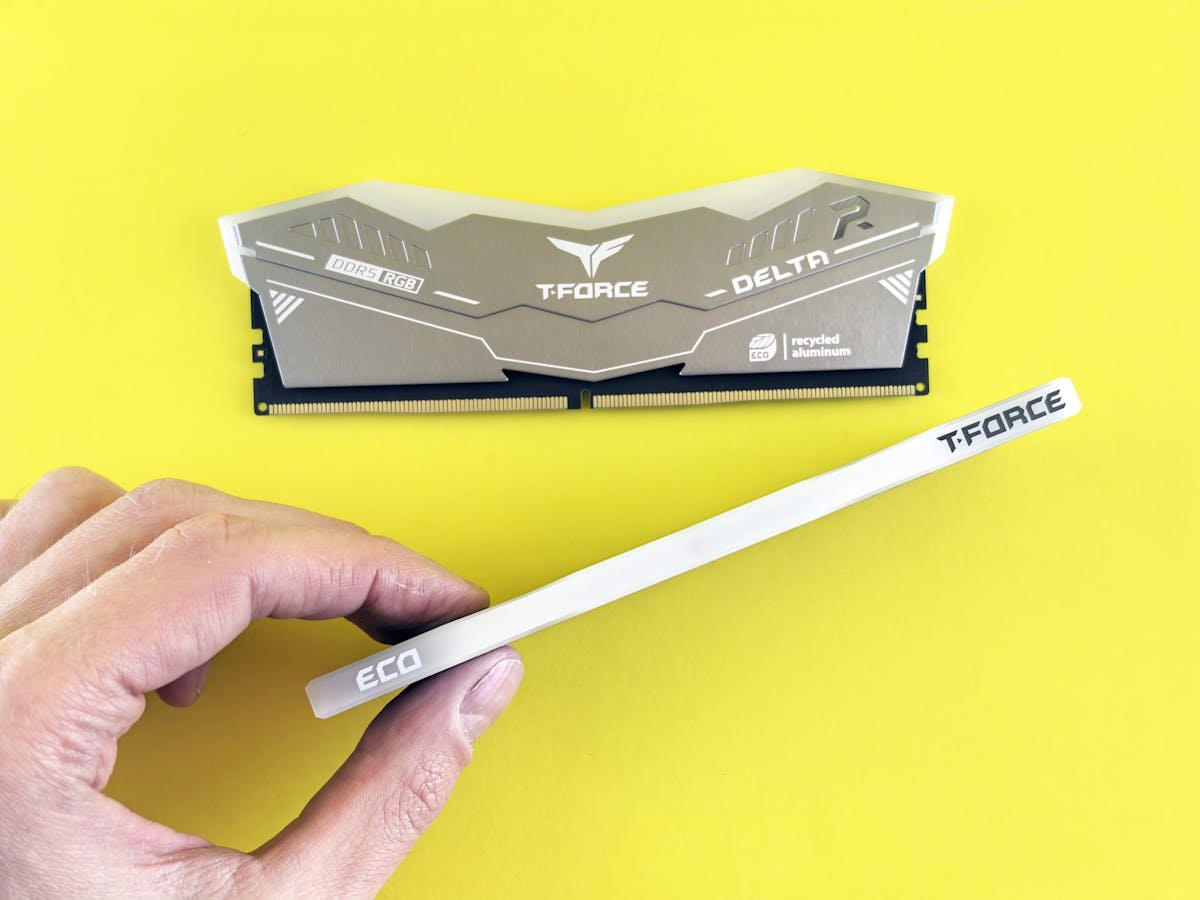
What happens: DDR4 and DDR5 RAM look similar but are completely different. They use different slots, different voltages, and have different notches. Inserting the wrong type won’t even fit — the module physically won’t slide into the slot. You’ll realize the mistake immediately but won’t get a refund if you’ve opened the box.

How to avoid it:

  • Check your current RAM type first. Use our specs checking guide or Task Manager (Windows) → Performance → Memory to see if you have DDR4 or DDR5.
  • Check your laptop’s manual. Manufacturer specifications will list “DDR4” or “DDR5” explicitly.
  • Search your laptop model + “RAM upgrade.” You’ll find articles confirming the type.
  • Verify before buying. Product listings on Amazon will clearly state “DDR4” or “DDR5” — read the title and product description.
  • Buy from Amazon or Curry’s (easy returns). If you accidentally buy the wrong type, these retailers have no-questions-asked returns.

Cost of mistake: £0 (if caught before opening) to £80 (cost of wrong RAM if you can’t return it).


Mistake 2: Getting the Wrong SSD Form Factor

What happens: SSDs come in different form factors (physical sizes): 2280, 2242, 2230, or 2.5″ SATA. Your laptop’s slot only accepts one specific size. Buy a 2280 SSD for a laptop that needs 2242, and it physically won’t fit — the drive is too long and will hit the side of the case or neighboring components.

Real example: New Microsoft Surface models use 2242 form factor. Searching “SSD upgrade” and buying a standard 2280 (most common size) results in a drive that doesn’t fit.

How to avoid it:

  • Check your current SSD’s physical size. Open your laptop (see our SSD upgrade guide) and measure or look at the drive directly. Note how long it is.
  • Check your laptop’s manual. Spec sheets list “M.2 2280” or “M.2 2242” or whatever your slot accepts.
  • Use a compatibility checker. Crucial or Kingston have online tools — enter your laptop model and they’ll tell you the exact form factor.
  • Measure the M.2 slot physically. If uncertain, measure the distance from the drive connector to the mount screw on your current drive. That’s the length you need.
  • Verify the product listing. Amazon will list “2280 form factor” or similar. Read it carefully.

Cost of mistake: £50–120 (cost of incompatible SSD) if you can’t return it, or time spent organizing a return.


Mistake 3: Ignoring Soldered RAM — Trying to Upgrade What Isn’t Upgradeable

What happens: You buy a new laptop with “32 GB RAM” and think you can upgrade it later. You don’t realize the RAM is soldered (permanently attached to the motherboard). When you decide to upgrade in a few years, you discover it can’t be upgraded — you’re locked into that 32 GB forever.

Real example: MacBook Air M3 comes with 8 GB or 16 GB soldered RAM. You can’t upgrade it. Ever. If you need 32 GB, you had to buy it configured at purchase time for £1,500+ instead of £1,100 base price.

How to avoid it:

  • Check upgradeability BEFORE buying. Before purchasing, verify whether RAM is upgradeable using our brand compatibility pages. Search “[laptop model] RAM upgrade” — if the answer is “soldered,” don’t buy if you want upgrade flexibility.
  • Look for “SO-DIMM” in specs. If the manual says “SO-DIMM,” it’s upgradeable. If it says “soldered” or “unified memory,” it’s not.
  • Choose wisely when configuring at purchase. If buying a laptop with soldered RAM, configure it with the maximum RAM you might ever need. It’s much cheaper to buy the high-RAM config upfront (£100 extra) than regret it later.
  • Prioritize repairable brands. Framework and ThinkPad have upgradeable RAM. MacBook, Microsoft Surface, and premium ultrabooks often don’t.

Cost of mistake: Potentially £500–1,000 (you buy a new laptop because you can’t upgrade the old one).


Mistake 4: Not Matching RAM Speed to Your Laptop’s Supported Speed

What happens: Your laptop supports DDR4-3200 (3200 MHz). You buy DDR4-3600 RAM thinking “faster is better.” It installs fine, but your laptop runs it at 3200 MHz anyway (defaults to slowest speed), so you’ve wasted money on faster RAM you can’t use.

Less common version: Some older laptops are picky about RAM speed. DDR4-4000 in a DDR4-3200 slot might not boot or cause stability issues (rare, but possible).

How to avoid it:

  • Check your laptop’s max supported RAM speed. Manufacturer’s specification sheet will list “DDR4-3200” or “DDR5-5600” or similar.
  • Buy matching speed or slower. If max is 3200 MHz, buy 3200 MHz or 3000 MHz RAM. Don’t overspend on 3600 MHz.
  • Faster is fine but won’t help. If you buy faster RAM (3600 MHz for a 3200 MHz slot), it’s not harmful — it just runs at the slower speed. You paid extra for nothing.
  • Understand the practical difference. In real-world use, the difference between 3200 MHz and 3600 MHz RAM is 1–2% performance. Not worth overspending.

Cost of mistake: £10–30 (overpaying for faster RAM you don’t need).


Mistake 5: Replacing SSD Without Backing Up or Cloning Your Data

What happens: You buy a new SSD, remove the old one, install the new one, and boot your laptop. Windows won’t start — there’s no operating system on the new drive because you didn’t clone the old one. All your files (documents, photos, everything) are on the old drive, which is now disconnected. You’ve lost access to your data.

Even worse: You wipe the old drive to clear space and then realize the new SSD didn’t clone properly. Your data is gone.

How to avoid it:

  • ALWAYS clone or back up before swapping SSDs. See our SSD upgrade guide for step-by-step cloning instructions.
  • Use an external M.2 enclosure to clone. Buy a USB M.2 enclosure (£10–20), install your new SSD in it, plug it into your laptop, and use Macrium Reflect Free to clone the old drive to new one.
  • Keep the old SSD after cloning. Don’t reuse it immediately. Keep it for 1–2 weeks to ensure the new SSD is working properly. Then either wipe it for reuse or keep as backup.
  • Alternative: Clean Windows install. If you’re comfortable, you can do a fresh Windows install instead of cloning. But this means reinstalling all your software. Cloning is easier for most people.

Cost of mistake: Potentially £0–unlimited (depends on data recovery difficulty; professional data recovery costs £300–1,000+).


Mistake 6: Using a Higher-Wattage Charger Than Specified

What happens: Your laptop needs a 65 W charger. You find a USB-C charger that outputs 100 W. You think “more power, faster charging.” You plug it in and… usually, nothing bad happens. USB Power Delivery is designed to negotiate power safely. Your laptop will charge normally.

But sometimes: Older or cheaper laptops don’t negotiate properly. A 100 W charger on a 45 W laptop might overheat the charging port or battery. Very rare, but possible.

How to avoid it:

  • Match or exceed, but don’t go crazy. A charger with the same or higher wattage is fine. 65 W laptop + 100 W charger = OK. 45 W laptop + 45 W charger = OK. 45 W laptop + 20 W charger = PROBLEM (too weak).
  • Exceeding by 50% is generally safe. 45 W laptop + 65 W charger = safe. 65 W laptop + 100 W charger = safe.
  • Check your laptop’s manual if concerned. High-end business laptops often have strict power requirements listed. Consumer laptops are more forgiving.
  • Avoid massive overkill. A 45 W laptop with a 200 W charger is pushing it. Stay within 1.5x the rated power.

Cost of mistake: Usually £0 (works fine), but risk of £50–150 charging port damage (rare).


Mistake 7: Buying RAM/SSD from Sketchy No-Brand Sellers

What happens: You find a DDR4-3200 16 GB RAM kit on eBay or AliExpress for £30 (normally £60). “Great deal!” you think. You buy it. It arrives, you install it, and the laptop boots fine for a week. Then, without warning, your laptop crashes. The RAM was defective or counterfeit. Now you’re troubleshooting a failed upgrade, and the seller won’t refund because you’ve “used” the product.

Even worse: You buy a fake Kingston SSD. It looks identical but is actually 64 GB internally, despite claiming 512 GB. You clone your 250 GB drive to it, thinking you’re safe. A month later, you realize data is corrupting because the drive can’t hold that much.

How to avoid it:

  • Buy from established brands only. Corsair, Kingston, Samsung, Crucial, Micron — these are reputable. Avoid “VIVO” or “MAXGREEN” or other unknown brands.
  • Buy from reputable retailers. Amazon UK, Curry’s, or Newegg have buyer protection and easy returns. Avoid eBay sellers with no ratings or AliExpress.
  • Read reviews. Before buying, check Amazon reviews or Google the exact product name + “fake” or “review.” You’ll quickly learn if it’s sketchy.
  • Don’t fall for deals that seem too good. Branded RAM for 50% off retail is suspicious. Brands don’t discount that much unless it’s a closeout or special promotion.
  • Spend an extra £10–20 for peace of mind. A genuine Kingston RAM from Amazon (£60) is worth far more than a risky off-brand deal (£30) if the latter fails.

Cost of mistake: £30–80 (lost to fake component) + time spent troubleshooting + risk of data loss.


Mistake 8: Buying Screws the Laptop Doesn’t Need (Or Wrong Size)

What happens: You open your laptop to upgrade RAM. You remove 6 screws from the bottom panel — but they’re different sizes. You mix them up during the installation. When reassembling, you screw one of the large M3 screws into a small M2 hole. It threads in fine, but you’ve stripped the hole. Later, the screw falls out or the panel vibrates loose.

Less common: Your laptop uses proprietary screws (Torx, pentalobe, tri-point) that standard Phillips screwdrivers won’t fit. You strip the head trying to force a Phillips driver on a pentalobe screw. Now the screw is damaged and won’t come out without professional help.

How to avoid it:

  • Label screws as you remove them. Take a photo of the screws laid out on paper, labeled by location (“Left panel, top,” “Center bottom,” etc.). Or use masking tape with notes.
  • Use the right screwdriver size. Most laptop bottom panels use Phillips #0 or #1. Check before you start. If a screw doesn’t turn easily, STOP — you have the wrong size.
  • Check for proprietary screw types. Search your laptop model + “service manual” online. The manual will show what screwdriver is needed (Phillips, Torx, pentalobe, etc.). Buy the right one.
  • Don’t force screws. If a screw won’t turn, don’t push harder. You’re using the wrong screwdriver or there’s a fastener stuck underneath (like a sticker covering a screw). Check first.
  • Magnetic screwdriver tip is your friend. A magnetic Phillips head prevents dropping tiny screws into your laptop’s internals.

Cost of mistake: £0 (if caught) to £50–100 (professional repair to strip/replace a damaged screw hole).


Bonus: Static Electricity — The Silent Killer

While not a “mistake” you make while shopping, forgetting to ground yourself against static is the most damaging mistake during installation.

What happens: You touch a RAM module. Static electricity from your body passes through the module and fries a capacitor on the circuit board. The module still looks fine and might even work in the shop, but fails after a week without warning.

How to avoid it:

  • Ground yourself before touching components. Touch a bare metal part of the laptop chassis (not plastic) before handling RAM or SSD. This drains static charge.
  • Don’t wear socks on carpet. Carpet + socks = static buildup. Work on a tile or wooden floor, or wear conductive shoes.
  • Use an anti-static wrist strap (optional). £2–5 on Amazon UK. Clamp one end to the laptop chassis, wear the other on your wrist. Guarantees no static damage.
  • Don’t touch gold connector pins. Handle RAM and SSDs by the edges, not the gold connectors. Even careful handling can build static.

Cost of mistake: £50–120 (dead RAM or SSD module) + frustration.


Pre-Upgrade Checklist

Before you buy anything, use this checklist to avoid all 8 mistakes:

  • □ Checked current RAM type (DDR4 vs DDR5) — Used our specs guide or Task Manager
  • □ Verified max RAM speed supported — Checked manufacturer manual; won’t overspend on faster RAM
  • □ Confirmed RAM is upgradeable — Checked if it’s SO-DIMM (good) or soldered (bad)
  • □ Measured current SSD form factor — 2280, 2242, or 2230? Confirmed size before buying replacement
  • □ Confirmed SSD is user-replaceable — Not soldered (check manual or brand page)
  • □ Checked charger wattage — Noted current charger specs; won’t exceed 1.5x power
  • □ Researched brand reputation — Buying from Corsair, Kingston, Samsung, Crucial only; avoiding unknowns
  • □ Verified return policy — Buying from Amazon or major retailer with easy returns
  • □ Have correct tools — Phillips #0 screwdriver, anti-static wrist strap or grounding plan
  • □ Have backup/clone plan — For SSD upgrade, will either clone old drive or do fresh Windows install


Recommended Products

These are the products we recommend based on this guide. All links go to Amazon UK where you can check current prices and availability.

ProductWhy We Recommend ItAmazon UK
Corsair Vengeance DDR4 SO-DIMM 32GB (2×16GB) 3200MHzBest overall DDR4 upgrade kitView on Amazon UK
Kingston Fury Impact DDR4 SO-DIMM 32GB (2×16GB) 3200MHzReliable alternative with tight latencyView on Amazon UK
Corsair Vengeance DDR5 SO-DIMM 32GB (2×16GB) 5600MHzTop-rated DDR5 kit for gaming & productivityView on Amazon UK
Kingston Fury Impact DDR5 SO-DIMM 32GB (2×16GB) 5600MHzExcellent DDR5 alternative with XMP supportView on Amazon UK
WD SN770M 1TB M.2 2230 NVMeBest 2230 SSD for Dell, Surface, Steam DeckView on Amazon UK
Sabrent Rocket 2230 1TBFast 2230 alternativeView on Amazon UK
Samsung PM991a 1TB 2230OEM-grade 2230 at good pricesView on Amazon UK
Samsung 990 Pro 2TB NVMe M.2 2280Fastest consumer NVMe — ideal for gaming & editingView on Amazon UK

Prices and availability may vary. As an Amazon Associate, we earn from qualifying purchases.

Related Guides

Related Guides

Leave a Comment

Your email address will not be published. Required fields are marked *