
Affiliate disclosure: this page contains affiliate links — if you buy through them we may earn a commission at no extra cost to you. As an Amazon Associate we earn from qualifying purchases.
Not all laptops are created equal when it comes to upgrades. Some machines have everything user-replaceable, while others are completely sealed with no upgrade paths. This guide explains our upgradeability rating system — the 1–5 star scores you’ll see on every laptop model page on computercompatibility.com. Understanding these ratings helps you make smarter buying decisions and know exactly what you can and can’t upgrade before you purchase.
The Four Upgrade Categories We Rate
We rate each laptop on four key upgrade dimensions:
- RAM: Can you upgrade memory? Is it easy? Can you add multiple modules?
- SSD: Can you replace or add storage? What form factors fit?
- Charger: Is the charger proprietary or standard USB-C? Can you use third-party chargers?
- Overall: Combined rating across all categories — your quick guide to repairability.
Each category is rated on a 5-star scale. Here’s what each star level means.
RAM Upgradeability Ratings: 1 to 5
| Rating | What It Means | Examples | Can You Upgrade? |
|---|---|---|---|
| 1 | RAM is completely soldered. Zero upgrade path. You’re stuck with what comes in the box. | MacBook Air M1–M3, MacBook Pro M1–M3, Microsoft Surface Laptop 7 | No |
| 2 | Very limited: one SO-DIMM slot upgradeable, one soldered. Or uses proprietary RAM format. | Some Dell XPS 13 models, ASUS ZenBook models | Partially |
| 3 | One upgradeable SO-DIMM slot. Good if you start with 8 GB, but maxes out at 24–32 GB total. | ThinkPad E-series, HP Pavilion 15, ASUS Vivobook | Yes, limited |
| 4 | Dual SO-DIMM slots, both upgradeable. Can reach 48–64 GB total RAM on modern laptops. | ThinkPad T-series, ThinkPad P-series, HP EliteBook | Yes, good |
| 5 | Dual or more SO-DIMM slots, both fully upgradeable, standard modules. Maximum flexibility. | Framework Laptop, ThinkPad X-series high-end models, many business laptops | Yes, excellent |
What “Soldered” Means
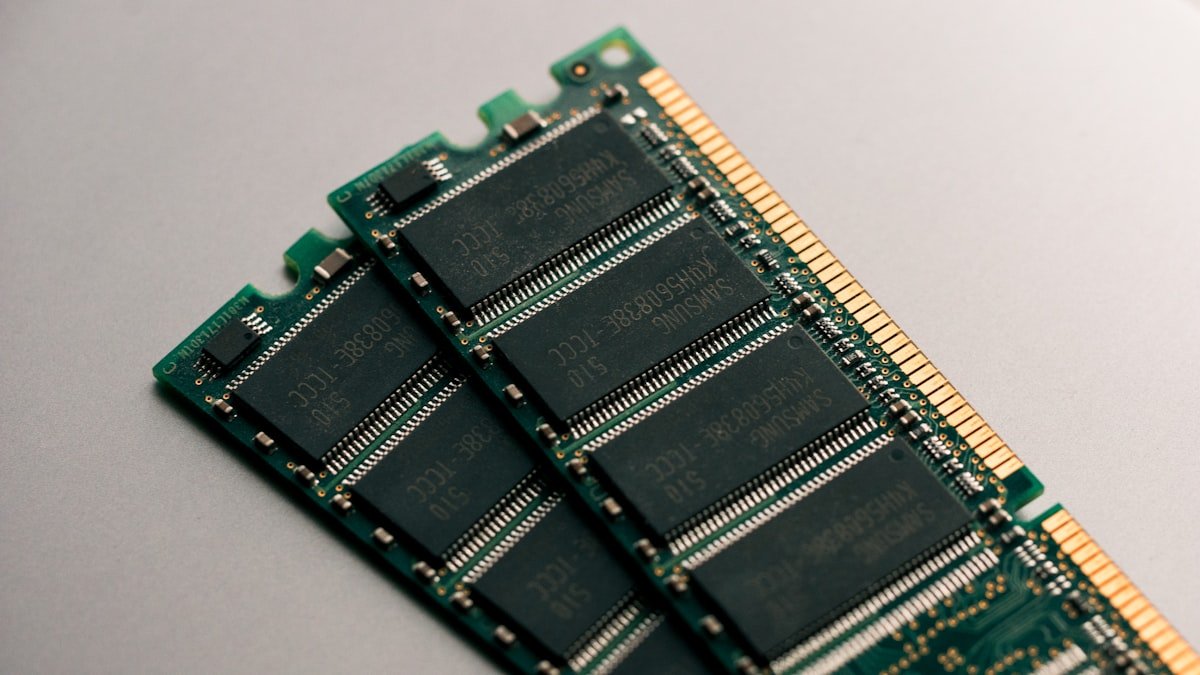
Soldered RAM is permanently welded to the motherboard during manufacturing. It cannot be removed or upgraded. Most high-end ultrabooks (MacBook Air, Dell XPS 13, ASUS ZenBook) solder RAM to save space and weight. It’s more compact, but it locks you into the RAM you buy.
SO-DIMM vs Soldered: Key Difference
- SO-DIMM (upgradeable): Removable RAM modules in a slot — you can pop them out and replace them.
- Soldered (not upgradeable): RAM permanently attached to the motherboard — cannot be removed.
To check if your laptop has soldered RAM, see our specs guide or your manufacturer’s service manual.
The Trade-Off
Soldered RAM allows manufacturers to:
- Make laptops thinner and lighter.
- Reduce manufacturing costs.
- Improve power efficiency (soldered RAM runs cooler).
But it locks you in: when your laptop ages and you want more RAM, you can’t upgrade — you must buy a new machine.
SSD Upgradeability Ratings: 1 to 5

| Rating | What It Means | Examples | Can You Upgrade? |
|---|---|---|---|
| 1 | SSD is soldered or uses proprietary connector. Completely non-replaceable. | MacBook Air M1–M3, MacBook Pro M1–M3, some Microsoft Surface models | No |
| 2 | Single M.2 slot, but proprietary SSD format (Apple’s custom SSD). Can only upgrade with Apple parts. | MacBook Pro Intel models (upgrade possible but expensive via Apple only) | Only Apple SSD |
| 3 | Standard M.2 slot, one storage drive. Easy to replace, but no expansion option. | ASUS Vivobook, HP Pavilion 15, ThinkPad E-series | Yes, single slot |
| 4 | Dual M.2 slots. Can replace one drive or add a second for storage expansion. | Dell XPS 15, HP Elite Dragonfly, ThinkPad T-series | Yes, dual slots |
| 5 | Dual M.2 slots with standard form factors (2280, 2242, etc.), easy access, no proprietary parts. | Framework Laptop, ThinkPad P-series, some Lenovo Legion models | Yes, maximum flexibility |
Form Factor Matters
Even if your laptop has an M.2 slot, the form factor (physical size) might limit you:
- 2280: Standard 80 mm long — most compatible.
- 2242: 42 mm long — some ultrabooks use this for compactness.
- 2230: 30 mm long — newest, ultra-compact (Framework, some Microsoft Surface).
You can’t fit a 2280 into a 2242 slot. Always check your laptop’s exact form factor before buying a replacement SSD.
Gen 3 vs Gen 4 NVMe
NVMe comes in different generations with different speeds:
- Gen 3: Up to 3,500 MB/s. Standard in 2018–2021 laptops.
- Gen 4: Up to 7,000 MB/s. Newer, faster. Available in recent laptops.
- Gen 5: Up to 14,000 MB/s. Cutting-edge; not yet common in consumer laptops.
Your laptop will support the generation of SSD that came in it (or any slower generation). You can usually upgrade to a faster gen if your motherboard supports it — check your manual.
Charger Upgradeability Ratings: 1 to 5
The charger rating measures flexibility and whether you’re locked into proprietary hardware.
| Rating | What It Means | Examples | Flexibility |
|---|---|---|---|
| 1 | Proprietary connector (non-USB-C). Expensive to replace; hard to find third-party chargers. | Old ThinkPads, some Dell business models (pre-2018), older ASUS | Very limited |
| 2 | USB-C but uses proprietary power delivery standard. Most USB-C chargers won’t work properly. | Older Google Pixelbooks, some Microsoft Surface models | Limited |
| 3 | USB-C with standard Power Delivery (USB PD). Works with many third-party USB-C chargers, though wattage may vary. | Framework Laptop, recent ThinkPad X-series, ASUS ZenBook | Good |
| 4 | USB-C with standard USB PD. Official charger is USB-C, but any USB PD charger works well. | Dell XPS 13 (recent), HP Spectre, many 2020+ mid-range laptops | Very good |
| 5 | Charger-agnostic. Works with standard USB PD chargers from any vendor; no proprietary requirements. | Framework Laptop, some European models (EU standardized), newer business laptops | Excellent |
USB Power Delivery (USB PD) Explained
USB Power Delivery is a standard that lets you charge laptops with standard USB-C chargers — the same charger as your phone or tablet. A 3+ charger rating means you’re not locked into the manufacturer’s charger.
Practical benefit: You can buy a cheap £20 USB-C power bank or third-party charger and it will work fine. With 1–2 ratings (proprietary), you’re locked into expensive official chargers.
Wattage Matters
All USB-C chargers deliver power measured in watts (W). Your laptop typically needs:
- Ultrabooks (15W–45W): Can charge with a USB-C phone charger or power bank.
- Mid-range laptops (45W–65W): Need a decent USB-C charger; phone chargers are too weak.
- Gaming laptops (100W–140W+): Need high-wattage chargers; standard USB-C may be insufficient.
Check your laptop’s power requirements (on the charger brick or in the manual) and match or exceed those watts when buying a replacement.
Overall Upgradeability Rating: 1 to 5
The Overall rating combines all three categories into a single score.
| Rating | What It Means | Typical Laptops | Best For |
|---|---|---|---|
| 1 | Nearly everything is soldered or proprietary. You cannot upgrade anything. Not user-friendly to repair. | MacBook Air M-series, MacBook Pro M-series, Microsoft Surface Laptop | Users who don’t plan to upgrade; those who accept the “sealed device” philosophy |
| 2 | Very limited upgrade paths. Maybe one component is upgradeable; everything else is locked down. | ASUS ZenBook, Razer Blade, Dell XPS 13 (base configs) | Users who value thinness over upgradeability; short device lifecycle |
| 3 | Moderate upgradeability. RAM or SSD can be upgraded, but not both easily. Some components are soldered. | HP Pavilion, ASUS Vivobook, ThinkPad E-series, entry-level XPS | Users who want to upgrade one or two components; good balance of price and upgradeability |
| 4 | Good upgradeability. RAM and SSD are both upgradeable; charger is standard USB-C. | Dell XPS 15, HP EliteBook, ThinkPad T-series, business-class laptops | Users who want maximum flexibility without tinkering too much; business buyers |
| 5 | Excellent upgradeability. Everything is user-replaceable, standard parts, easy access, designed for self-repair. | Framework Laptop, ThinkPad P-series, some Lenovo Legion high-end models | Users who want to tinker, maximize hardware lifespan, reduce electronic waste |
Real-World Examples: Comparing Rating Profiles
MacBook Air M3: 1 Overall (1 RAM, 1 SSD, 4 Charger)
What this means:
- RAM is soldered — you cannot upgrade. Max RAM is whatever you buy (8 GB, 16 GB, or 24 GB).
- SSD is soldered — you cannot upgrade or add storage. You’re stuck with your purchase capacity.
- Charger is USB-C with standard Power Delivery — you can use any USB-C charger (4 is good).
- Overall: 1 because RAM and SSD are locked down. The charger flexibility doesn’t compensate.
Best for: Users who don’t plan to upgrade, who accept the “sealed device” philosophy, or who buy a machine with their final RAM/storage needs upfront.
Not ideal for: Users who plan to extend laptop life by upgrading in 3–5 years.
ThinkPad T14: 4 Overall (4 RAM, 4 SSD, 4 Charger)
What this means:
- RAM: Dual SO-DIMM slots, both upgradeable. You can expand from 16 GB to 32+ GB easily.
- SSD: Dual M.2 NVMe slots. You can replace the SSD or add a second drive for storage.
- Charger: USB-C with standard Power Delivery — any USB-C charger works.
- Overall: 4 because everything is upgradeable and uses standard components.
Best for: Business users, students, and professionals who want maximum upgrade flexibility. This laptop can be extended for 5–7 years with component upgrades.
Framework Laptop: 5 Overall (5 RAM, 5 SSD, 5 Charger)
What this means:
- RAM: Dual SO-DIMM slots, completely modular, easy access. Designed for user upgrades.
- SSD: Single M.2 slot with standard form factor. Easy to replace or upgrade.
- Charger: Standard USB-C Power Delivery. Any USB-C charger works perfectly.
- Overall: 5 because the entire laptop is designed for user repair and upgrade. It’s the gold standard.
Best for: Users who want maximum control, sustainability-minded buyers, technical enthusiasts, and anyone who values repairability.
HP Pavilion 15: 3 Overall (3 RAM, 3 SSD, 3 Charger)
What this means:
- RAM: One upgradeable SO-DIMM slot; one soldered. You can upgrade to max ~32 GB total.
- SSD: Single M.2 slot with standard NVMe. Easy to replace.
- Charger: USB-C but not all chargers work reliably; uses a proprietary variant.
- Overall: 3 because you can upgrade RAM and SSD, but with some limitations.
Best for: Budget-conscious buyers who want some upgrade path without paying premium prices. Good balance of affordability and upgradeability.
The Trade-Off: Upgradeability vs. Thinness, Weight, and Cost
There’s a direct relationship between upgradeability rating and laptop design:
| Rating | Typical Weight | Typical Thickness | Typical Price | Upgrade Cost Later |
|---|---|---|---|---|
| 5 (Framework) | ~1.4 kg | ~1.5 cm | £1,400+ | £50–200 for upgrades |
| 4 (ThinkPad T) | ~1.4 kg | ~1.7 cm | £900–1,400 | £50–200 for upgrades |
| 3 (HP Pavilion) | ~1.5 kg | ~1.8 cm | £400–700 | £50–150 for upgrades |
| 2 (ASUS ZenBook) | ~1.2 kg | ~1.4 cm | £800–1,200 | £400–800 (new laptop often better) |
| 1 (MacBook Air) | ~1.2 kg | ~1.1 cm | £1,100–1,500 | Cannot upgrade (buy new) |
Key insight: Thinner, lighter laptops (1–2) are less upgradeable. More upgradeable laptops (4–5) are slightly thicker and heavier. This is a physics trade-off — you can’t have everything.
Cost implication: A 3 laptop at £500 might seem cheaper than a 4 at £1,000, but if you upgrade both with +16GB RAM and new SSD in 3 years, the 4 becomes cheaper overall because you extend its life. The 3 might need replacement sooner.
How to Use Ratings When Buying a New Laptop
If you plan to keep the laptop 3–5 years: Look for 4+ rating. Your upgrades will pay for themselves.
If you plan to replace every 2 years: 2–3 is fine; upgradeability matters less if you’re not keeping it long.
If you want to maximize lifespan (5–7+ years): Aim for 4–5. The upfront cost is higher, but you’ll extend device life significantly with cheap component upgrades.
If you value thinness/weight above all else: 1–2 are your only options. Accept the sealed-device philosophy and plan to replace the laptop when it ages.
If sustainability matters to you: 4–5 ratings reduce electronic waste by extending hardware lifespan. Framework (5) is the most sustainable option.
The Trend: Upgradeability Is Declining
Historically, most laptops were 3–4 in the 2010s. Today, premium brands are pushing 1–2 (thin, sealed, non-upgradeable) while budget brands remain 3. This trend is driven by:
- Thinness competition: Manufacturers compete to make thinner devices. Soldering components saves millimetres.
- Profit motive: Non-upgradeable devices force users to buy new machines sooner, increasing sales.
- Integrated design: Soldered RAM allows chipset integration, improving efficiency.
However, right-to-repair movements and environmental concerns are pushing back. The EU is mandating repairability standards for some electronics. Framework is proving that 5 ratings are possible in modern laptops. This is changing the market slowly.
Next Steps: Use Ratings to Guide Your Choices
- Check the upgradeability rating on every laptop model page.
- Read the detailed breakdown for each component (RAM, SSD, charger).
- Use our brand comparison pages to see upgradeability across different models.
- If you want to extend your current laptop’s life, see our upgrade decision guide.
- For specific upgrade instructions, visit our RAM or SSD upgrade guides.
Where to Buy
Looking for compatible components? Check current prices and availability:
Recommended Products
These are the products we recommend based on this guide. All links go to Amazon where you can check current prices and availability.
| Product | Why We Recommend It | Amazon |
|---|---|---|
| Corsair Vengeance DDR4 SO-DIMM 32GB (2×16GB) 3200MHz | Best overall DDR4 upgrade kit | View on Amazon |
| Kingston Fury Impact DDR4 SO-DIMM 32GB (2×16GB) 3200MHz | Reliable alternative with tight latency | View on Amazon |
| Crucial DDR4 SO-DIMM 16GB 3200MHz | Budget single-stick upgrade | View on Amazon |
| Samsung DDR4 SO-DIMM 32GB 3200MHz | OEM-quality for business laptops | View on Amazon |
| WD SN770M 1TB M.2 2230 NVMe | Best 2230 SSD for Dell, Surface, Steam Deck | View on Amazon |
| Sabrent Rocket 2230 1TB | Fast 2230 alternative | View on Amazon |
| Samsung PM991a 1TB 2230 | OEM-grade 2230 at good prices | View on Amazon |
| Samsung 990 Pro 2TB NVMe M.2 2280 | Fastest consumer NVMe — ideal for gaming & editing | View on Amazon |
Prices and availability may vary. As an Amazon Associate, we earn from qualifying purchases.
Related Guides
- How To Upgrade Laptop Ssd
- Is It Worth Upgrading Old Laptop
- Dynabook Laptop Upgrades
- Huawei Laptop Upgrades
- Hp Laptop Upgrades
Recommended upgrades
As an Amazon Associate we earn from qualifying purchases. Prices & availability shown on Amazon.