Affiliate disclosure: this page contains affiliate links — if you buy through them we may earn a commission at no extra cost to you. As an Amazon Associate we earn from qualifying purchases.
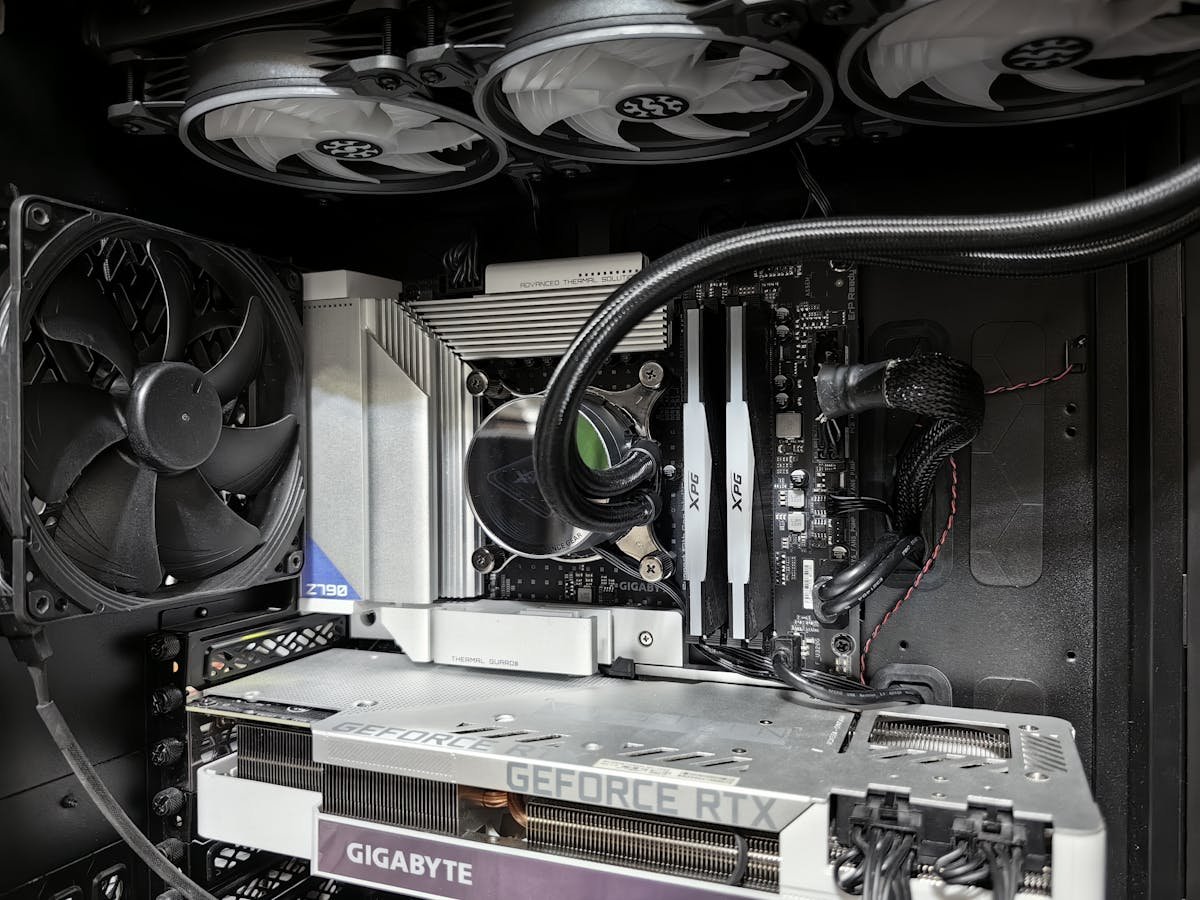
The amount of RAM your desktop needs depends on what you do with it. A light browsing machine needs far less than a 4K video editor or a developer running 50 tabs and three VMs simultaneously. This guide breaks down RAM requirements by use case, with real-world examples and recommendations for 2026.
Quick Recommendations by Use Case
| Use Case | Recommended RAM | Budget Alternative | Premium Option |
|---|---|---|---|
| Web Browsing, Office Work | 8GB | 4GB (minimal) | 16GB |
| Gaming (1080p/1440p) | 16GB | 8GB (minimum) | 32GB |
| Content Creation (Video, Photo) | 32GB | 16GB (tight) | 64GB |
| Software Development | 16GB | 8GB (tight) | 32GB+ |
| 3D Rendering, CAD | 32GB | 16GB | 64GB+ |
| Streaming + Gaming | 32GB | 16GB (marginal) | 64GB |
| Server, Workstation, AI | 64GB+ | 32GB | 128GB–256GB |
8GB RAM: Basic Computing
What It’s Good For
- Web browsing (Chrome, Firefox, Edge with 20–30 tabs)
- Office work (Word, Excel, Google Docs)
- Streaming video (YouTube, Netflix, Discord)
- Email and communication apps
- Light photo editing (single file at a time)
Real-World Example: Light User
Sarah browses the web, uses Outlook for email, and streams Netflix in the background. With 8GB, she can comfortably run Windows + 25 Chrome tabs + Outlook + Netflix simultaneously without slowdown. Her memory usage sits around 65–75%.
What It Struggles With
- Heavy multitasking (50+ browser tabs)
- Batch photo editing or video work
- Running multiple applications simultaneously
- Virtual machines or Docker containers
When to Upgrade from 8GB
If you frequently experience Windows freezing, hear your hard drive thrashing, or see “low memory” warnings, you’ve outgrown 8GB. Modern web browsers can consume 100MB+ per tab, and just opening Photoshop eats 2–3GB.
8GB Verdict
Acceptable in 2026 for ultra-lightweight use. Not recommended for anyone who keeps more than 20 browser tabs open or occasionally edits photos/videos.
16GB RAM: The Mainstream Sweet Spot
What It’s Good For
- Gaming (all modern games at high/ultra settings, 1080p–1440p)
- Heavy multitasking (50–100 browser tabs + other apps)
- Content creation (photo editing, light video work)
- Software development (coding, running a local dev server)
- Streaming video while gaming
- Running 1–2 VMs simultaneously
Real-World Example: Gamer & Content Creator
James plays Cyberpunk 2077 and Starfield with high settings at 1440p, keeps Discord, Twitch, and OBS open for streaming, and has 40 Chrome tabs for research. With 16GB, he sees 70–80% memory usage during streaming gameplay, with occasional brief spike to 95%. Frame rates remain stable.
Real-World Example: Developer
Emma develops web applications using Visual Studio Code, runs a local Node.js server, has a PostgreSQL database running, Docker with 2 containers, and 30 browser tabs for documentation and testing. Her 16GB sits at 80–85% utilization during development. When she spins up a heavier workload (running a build process), it temporarily spikes to 95%+.
Gaming Performance Impact of 16GB
Modern games typically use 6–10GB during gameplay at high settings. With 16GB, you have 6–8GB free for background apps, reducing stutters and frame drops caused by memory pressure.
Comparison: On 8GB, the same game uses 7–9GB, leaving only 1–2GB free, which leads to stutters when Windows needs to page memory to your SSD.
When to Upgrade from 16GB
If you’re streaming, editing 4K video, running multiple VMs, or compiling large software projects, 16GB can become tight (90%+ utilization). Upgrading to 32GB removes this ceiling.
16GB Verdict
The best balance of performance and cost for most users in 2026. Recommended for gamers, developers, and content creators doing typical work. Consider 16GB the minimum for anyone planning to keep this system for 3+ years.
32GB RAM: Power User Territory
What It’s Good For
- 4K video editing (timeline scrubbing, effects rendering preview)
- Heavy multitasking (100+ browser tabs, multiple large applications)
- Running 3–4 VMs simultaneously
- 3D rendering projects (Blender, 3ds Max)
- Large photo libraries in Lightroom (thousands of RAW files)
- Streaming while gaming at high quality (1440p 60fps+)
- Complex software builds and testing
- Data analysis (Python/R with large datasets)
Real-World Example: Video Editor
Marcus edits 4K YouTube videos in Premiere Pro. He imports 50 GB of 4K footage, applies color correction, effects, and compositing. With 32GB, his timeline scrubbing is smooth, preview renders quickly, and he can run Photoshop, Audition, and a browser simultaneously. Memory utilization sits at 55–70%.
On 16GB, the same workflow would cause repeated out-of-memory errors, forcing Marcus to close other apps and close/reopen projects frequently.
Real-World Example: 3D Artist
Lisa renders architectural visualizations in Blender. Her project file is 15 GB with complex lighting, volumetrics, and high-poly assets. With 32GB, she can render without waiting for memory allocation. With 16GB, her render times would increase 30–50% as the system pages memory to SSD.
Gaming & Streaming at 4K
If you stream games at 4K, stream bitrate 20+ Mbps, or capture at high quality while gaming, 32GB prevents memory pressure spikes that cause stream quality drops or game stuttering.
When to Upgrade from 32GB
If you’re working with massive datasets (machine learning, 100GB+ spreadsheets), rendering CAD models with unlimited tessellation, or running 5+ VMs, 32GB can exhaust. Upgrading to 64GB removes this limitation.
32GB Verdict
The inflection point where professional work becomes comfortable. Strongly recommended for content creators, developers, and power users. If you spend more than 20 hours/week on memory-intensive work, 32GB is the practical minimum.
64GB RAM: Professional Workstation
What It’s Good For
- 8K video editing and color grading
- Large-scale CAD projects (aerospace, architecture)
- Running 5–10 VMs simultaneously
- Scientific computing and data analysis (terabyte-scale datasets)
- Machine learning (training neural networks, large batch sizes)
- Music production (orchestral templates with 300+ samples)
- Asset management servers (Perforce, Helix Core)
- Simulation software (CFD, FEA)
Real-World Example: Machine Learning Engineer
David trains machine learning models on large datasets. With 64GB, he can load a 50 GB dataset into RAM, train a neural network with large batch sizes, and run monitoring scripts simultaneously. Memory utilization: 45–60%.
On 32GB, he’d hit memory limits frequently, forcing him to reduce batch size (which hurts training convergence) or use disk caching (which is 10–100x slower than RAM).
Real-World Example: Workstation CAD
An aerospace engineer works on complex aircraft fuselage assemblies with 50,000+ parts. With 64GB, the model loads instantly and interactions are fluid. Rotating, panning, and selecting complex geometry happens in real-time without lag.
64GB Verdict
Necessary for professional workload categories. Consumer/hobbyist work rarely justifies the cost. If your primary job involves working with massive datasets or rendering/simulation, 64GB is a tax-deductible business expense.
128GB+ RAM: Enterprise & Extreme
What It’s Good For
- Running 20+ VMs as a homelab server
- High-frequency trading systems
- Large-scale database operations (10+ TB datasets in memory)
- Petabyte-scale data analytics and processing
- Running application servers handling millions of requests
- Scientific simulation and HPC (high-performance computing)
- Advanced machine learning with enormous models (LLMs, multimodal AI)
128GB Verdict
Extreme overkill for gaming, content creation, or productivity. This tier is for IT professionals, quants, researchers, and system administrators building specialized infrastructure.
RAM Capacity vs Speed: Which Matters More?
Speed (MHz) Impact
Gaming: DDR5-6000 vs DDR4-3600 nets 2–8% FPS improvement. Diminishing returns above 6000 MHz.
Content creation: Doubling speed (3600 → 7200) yields 5–10% improvement. Capacity gains are more impactful.
General use: No perceptible difference between 3600 MHz and 7000 MHz. Both feel instant.
Capacity (GB) Impact
Under-capacity (using 95%+): System becomes slow and unresponsive. Disk thrashing occurs as Windows pages memory to SSD.
Optimal capacity (using 50–75%): Smooth operation, quick app launches, no paging.
Over-capacity: No performance gain. Extra capacity just sits unused.
Verdict: Capacity > Speed
Having insufficient capacity is catastrophic. Having too much is harmless but wasteful. Having fast speed is beneficial but secondary. Prioritize getting enough capacity first, then get the fastest speed you can afford.
Future-Proofing: Plan for Growth
5-year horizon: Software gets heavier over time. What uses 10 GB today may use 15 GB in 2029. Consider buying one tier higher than your current needs suggest.
- If 16GB seems enough now: Buy 32GB. You’ll thank yourself in 2028.
- If 32GB seems enough: Buy 48GB or 64GB if your motherboard supports it.
Platform lock-in: Upgrading RAM is easy. Upgrading your motherboard/CPU is expensive. DDR5 platforms will receive driver improvements and OS optimizations for 5+ years. DDR4 support will wind down within 2–3 years.
How to Check Your Current RAM Usage
Windows: Open Task Manager (Ctrl+Shift+Esc), click the Performance tab, select Memory. You’ll see current usage and available RAM.
During real work: Note your peak memory usage while doing typical tasks (gaming, editing, coding). If you consistently hit 90%+, you need more RAM.
macOS: Open Activity Monitor (Applications → Utilities), click Memory tab. Look at the “Memory Used” stat at the bottom.
Linux: Run free -h in a terminal to see used/available memory.
RAM Capacity Tiers Summary
| Capacity | Sweet Spot For | Price Tier* | Longevity |
|---|---|---|---|
| 8GB | Light browsing, office | Budget | 2–3 years (2026) |
| 16GB | Gaming, general use, development | Mainstream | 4–5 years (2030) |
| 32GB | Content creation, heavy multitasking | Mid-range | 5+ years (2031) |
| 64GB | Professional workstation, AI/data | Premium | 5+ years (2031) |
| 128GB+ | Enterprise, servers, extreme | Very expensive | 5+ years (2031) |
Recommended RAM Kits by Capacity
| Capacity | Type | Where to Buy |
|---|---|---|
| 16GB (2x8GB) | DDR5-6000 CAS 36 | Browse DDR5 16GB |
| 32GB (2x16GB) | DDR5-6000 CAS 36 | Browse DDR5 32GB |
| 64GB (2x32GB) | DDR5-6000 | Browse DDR5 64GB |
Related Guides
Prices and availability may vary. As an Amazon Associate, we earn from qualifying purchases.
Recommended upgrades
As an Amazon Associate we earn from qualifying purchases. Prices & availability shown on Amazon.
For desktops that use DDR5 DIMMs
For desktops that use DDR4 DIMMs
How we verify this guide
We cross-reference compatibility figures against manufacturer specifications where available, official service manuals, and the standards that govern fit — memory type and speed (DDR4 / DDR5 / LPDDR5), maximum supported capacity and slot count, SSD form factor and interface (M.2 2280, NVMe PCIe vs SATA, keying), and charger wattage and connector (USB-C Power Delivery, GaN). We’re explicit about soldered or non-upgradeable parts, prioritise primary sources over retailer listings, and re-verify the data on a regular cycle. More on our method →
*Indicative UK street prices, shown for guidance only. These are not live Amazon prices and change frequently — check the current price on Amazon before buying.