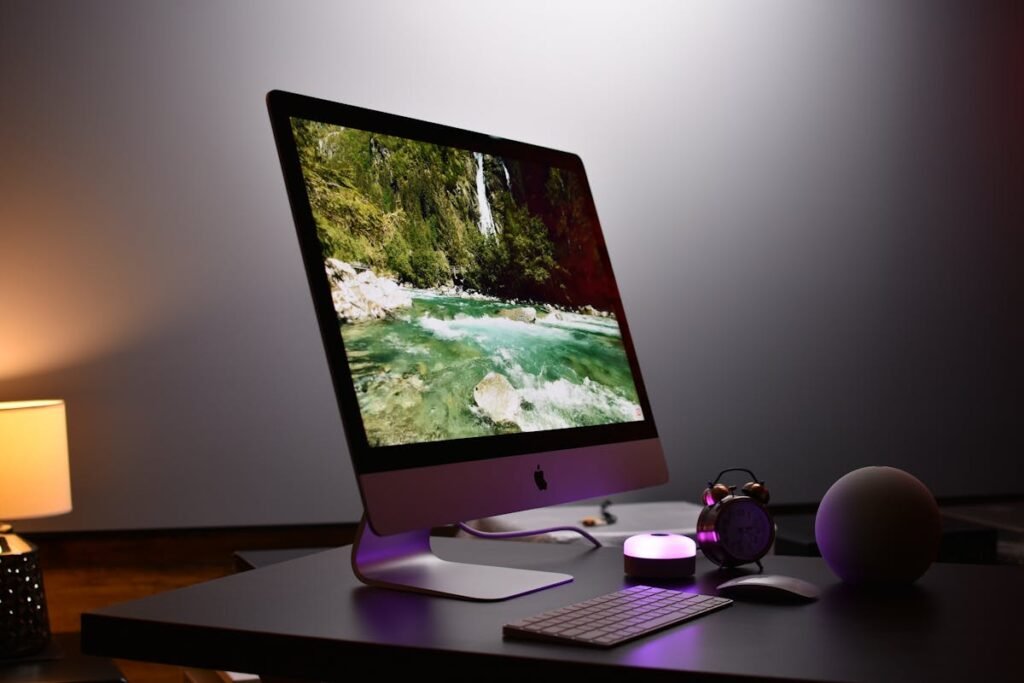
iMac 27-inch 2020 RAM Upgrade Guide — Maximum 128GB DDR4 Support

The 2020 27-inch iMac with Retina 5K display is the last iMac to feature both Intel processors and user-accessible RAM upgrades. This model was built with professionals in mind and supports up to 128GB of high-speed DDR4-2666 memory — making it ideal for video editors, 3D animators, data scientists, and anyone running memory-intensive workflows.
If you own a 2020 27-inch iMac and need to expand its memory, this guide walks you through everything: specifications, compatibility, required tools, and a complete step-by-step upgrade procedure.
2020 iMac 27-inch Specifications
Processor and Performance
The 2020 27-inch iMac shipped with three processor options:
| Configuration | Processor | Cores | Base Clock | Typical Use Case |
|---|---|---|---|---|
| Standard | Intel Core i5-10500 (6-core) | 6 | 3.1 GHz | General computing, everyday tasks |
| Enhanced | Intel Core i7-10700K (8-core) | 8 | 3.8 GHz | Video editing, 3D rendering, professional work |
| Pro | Intel Core i9-10900K (10-core) | 10 | 3.7 GHz | Heavy rendering, workstation-class computing |
All processors pair with the same memory subsystem, so RAM upgrade options are identical regardless of which CPU variant you own.
Memory Specifications
| Specification | Details |
|---|---|
| RAM Type | DDR4-2666 MHz |
| Form Factor | SODIMM (laptop-style memory) |
| DIMM Slots | 4 (all easily accessible via RAM door) |
| Stock Configuration | 8GB, 16GB, or 32GB (depends on config purchased) |
| Maximum Supported | 128GB (4 × 32GB DDR4-2666) |
| Default Layout | Dual-channel (populate slots in pairs for optimal performance) |
Important note on memory layout: The 2020 iMac uses a dual-channel memory architecture. For best performance, populate memory slots in matching pairs. If upgrading from 8GB to 16GB, add one 8GB module. To reach 32GB, add another 8GB module in a matching slot. For maximum capacity (128GB), use four identical 32GB modules.
Display and Graphics
The 2020 27-inch iMac features a stunning 5K Retina display (5120 × 2880 pixels) paired with AMD Radeon Pro graphics (RX 5500 XT or RX 5700 XT). The additional RAM is particularly valuable when working with high-resolution content like 4K/5K video, large Photoshop files, or 3D models.
Why Upgrade RAM on the 2020 iMac?
Performance Improvement Areas
Video Editing: Applications like Final Cut Pro and Adobe Premiere Pro benefit significantly from additional RAM. Editing 4K or 5K video requires holding entire sequences in memory. With only 8GB or 16GB, you’ll experience frequent disk caching and slow scrubbing. 32GB or more eliminates these bottlenecks.
3D Rendering: Cinema 4D, Blender, Maya, and similar applications allocate substantial memory for models, textures, and simulation data. More RAM means faster viewport interactions and quicker final renders.
Data Analysis: Python and R workflows with large datasets (Pandas, NumPy, scikit-learn) require enough RAM to hold entire datasets in memory. Upgrading from 16GB to 64GB can improve analysis speed by orders of magnitude.
Graphic Design: Adobe Creative Suite applications (Photoshop, Illustrator, InDesign) benefit from additional RAM for layer management, smart objects, and non-destructive editing. Working with large PSDs (500MB+) is much smoother with 32GB or more.
Multitasking: Running multiple applications simultaneously (Chrome with 20 tabs, Slack, email, IDEs, media players) consumes significant memory. Upgrading ensures your system remains responsive even under heavy load.
Why Now?
The 2020 iMac is likely 3-4 years old, and RAM has become even more critical as software grows more demanding. Applications routinely recommend 16GB minimum, with professional tools suggesting 32GB or more. If your iMac shipped with 8GB or 16GB, an upgrade is almost certainly worthwhile.
Before You Upgrade: Identify Your Current Memory
Check Current RAM and Slots
Before buying new memory, confirm what you currently have installed:
- Click the Apple menu and select About This Mac
- Navigate to the Memory tab
- Note the total capacity and type (should say DDR4 SDRAM)
- Note how many slots are populated (e.g., “2 × 8GB” means 2 of 4 slots are in use)
This information tells you exactly how much you can add before hitting the 128GB maximum.
Memory Upgrade Scenarios
| Current Setup | Upgrade Path | New Total | What to Buy |
|---|---|---|---|
| 1 × 8GB | Add 1 × 8GB | 16GB | One DDR4-2666 SODIMM 8GB |
| 2 × 8GB | Add 2 × 16GB (replace both 8GB modules) | 32GB | Two DDR4-2666 SODIMM 16GB modules |
| 1 × 16GB | Add 3 × 32GB (remove the 16GB) | 96GB | Three DDR4-2666 SODIMM 32GB modules |
| 2 × 16GB | Add 2 × 32GB | 64GB | Two DDR4-2666 SODIMM 32GB modules |
| 2 × 16GB | Replace all 4 with 4 × 32GB (max) | 128GB | Four DDR4-2666 SODIMM 32GB modules |
Pro tip for budget-conscious upgrades: You can keep your existing memory modules and add new ones to empty slots, as long as they’re the same speed (DDR4-2666). However, for the best performance and simplicity, use identical modules throughout (same brand, capacity, and speed).
What You’ll Need for the Upgrade
Required Hardware
- Compatible DDR4-2666 SODIMM modules — Size depends on your target capacity (8GB, 16GB, or 32GB per module)
- Small Phillips screwdriver — For the RAM door screws (common #1 or #0 size)
- Anti-static wrist strap (optional but highly recommended) — Prevents electrostatic discharge damage
- Anti-static mat or bag — For storing the RAM door and protecting components
- Soft cloth — For cleaning and handling parts
Recommended Tools
While not strictly necessary, these tools make the process easier and safer:
- Flashlight or headlamp — The RAM door area can be dark
- Magnetic screwdriver — Prevents losing tiny screws
- iFixit Precision Screwdriver Kit — For various Apple devices
- Anti-static wrist strap with proper grounding — Professional-grade
Find these tools with an iMac upgrade toolkit on Amazon UK.
Step-by-Step RAM Upgrade Procedure
Phase 1: Preparation
Step 1: Shut Down Your iMac Completely
- Save all open work and close all applications
- Click the Apple menu and select Shut Down
- Wait for the system to power down completely
- Wait an additional 30 seconds to allow residual power to dissipate
Step 2: Disconnect All Cables
- Unplug the power cable from the back of the iMac
- Disconnect any other peripherals (USB devices, monitors, audio cables)
- This ensures no electrical current is present during the upgrade
Step 3: Prepare Your Workspace
- Clear a clean, flat surface near where your iMac sits
- Place the anti-static mat (if you have one)
- Gather all tools and new RAM modules
- Put on your anti-static wrist strap and ground yourself
Phase 2: Accessing the RAM Slots
Step 4: Position Your iMac for Rear Access
- Turn your iMac around so you can comfortably access the back
- You should see a large rectangular panel below the Apple logo — this is the RAM door
Step 5: Remove the RAM Door
- Look for two or four small Phillips screws on the RAM door
- Using your Phillips screwdriver, carefully unscrew these screws (not too hard — just firm)
- Place the screws in a safe location (a small bowl or magnetic tray works well)
- Gently pull the RAM door straight toward you to remove it
- Set the door aside on a soft surface to prevent scratching
Step 6: Identify the SODIMM Slots
- Looking into the opening, you’ll see 4 vertical memory slots
- Slots are typically numbered 1–4 or labeled with graphics
- Each slot has two small metal clips (ejectors) on the ends
- Existing modules (if any) will be standing vertically in these slots
Phase 3: Removing Old Memory (if Upgrading)
Step 7: Ground Yourself Again
- Touch a bare metal part of the iMac chassis to ground any static electricity
- If wearing a wrist strap, ensure it’s properly connected
Step 8: Release and Remove Existing Modules
- Locate the first module you want to remove
- Using your fingers, gently push the metal clips on both ends outward
- The module will pop up at approximately a 45-degree angle
- Gently grasp the module by its edges and pull it straight out
- Place it on the anti-static mat or bag
- Repeat for any other modules you’re replacing
Important: Handle modules only by the edges. Avoid touching the gold contact pins on the bottom or the electronic components on the faces.
Phase 4: Installing New Memory
Step 9: Prepare New Modules
- Remove your new DDR4-2666 SODIMM from its packaging
- If it’s brand new, it may be statically charged — handle by the edges only
- Inspect the module for any visible damage (shouldn’t be any from factory)
Step 10: Install First Module
- Align the new SODIMM with an empty slot, matching the notch in the module to the key in the slot
- The notch should prevent incorrect installation
- Position the module at a 45-degree angle above the slot
- Press down firmly and evenly on both edges until the module clicks into the upright position
- The ejector clips should snap around the module automatically
- The module should now be vertical and fully seated, with no visible gaps
Step 11: Install Remaining Modules
- Repeat Step 10 for each additional module you’re installing
- Verify each module is fully seated before moving to the next
- Your iMac has 4 slots total, so plan your installation accordingly
Seating verification: Each module should be vertical and flush against the ejector clips. There should be no gaps, wobbling, or tilting. If a module feels loose, power down again, remove it, and reseat it firmly.
Phase 5: Closing Up and Testing
Step 12: Replace the RAM Door
- Align the RAM door with the opening on the back of the iMac
- Push it gently inward until it sits flush with the case
- Reinsert the screws through the door into the threaded holes
- Tighten the screws firmly but gently — over-tightening can crack the door
Step 13: Reconnect Power and Peripherals
- Plug the power cable back into the iMac
- Reconnect any other peripherals (USB devices, monitors, etc.)
Step 14: Power On and Verify Installation
- Press the power button to turn on your iMac
- Allow it to boot normally into macOS
- You may see the Apple logo and a loading bar during initial startup
- Once fully booted, log in if prompted
Step 15: Confirm Memory Recognition in macOS
- Click the Apple menu and select About This Mac
- Go to the Memory tab
- Verify the total capacity matches your installation (e.g., “32GB” or “64GB”)
- Confirm the memory type shows as “DDR4 SDRAM 2666 MHz”
- All modules should be listed by size and speed
If memory is not recognized: Power down again, open the RAM door, remove each module, and firmly reseat them one by one. Ensure you hear the ejector clips snap. This usually resolves detection issues.
Best RAM Modules for iMac 27-inch 2020
| Product | Capacity | Speed | Form Factor | Price Range | Link |
|---|---|---|---|---|---|
| Crucial DDR4 SODIMM 2666MHz | 8GB, 16GB, 32GB | 2666 MHz | SODIMM | £20–80 | View on Amazon UK |
| Corsair Vengeance DDR4 SODIMM | 8GB, 16GB, 32GB | 2666 MHz | SODIMM | £30–95 | View on Amazon UK |
| Kingston FURY DDR4 SODIMM | 8GB, 16GB, 32GB | 2666 MHz | SODIMM | £25–90 | View on Amazon UK |
| Samsung DDR4 SODIMM | 8GB, 16GB, 32GB | 2666 MHz | SODIMM | £20–85 | View on Amazon UK |
| Anti-Static Wrist Strap Kit | — | — | — | £8–15 | View on Amazon UK |
| Precision Screwdriver Set | — | — | — | £12–20 | View on Amazon UK |
Troubleshooting Common Issues
Issue: iMac Doesn’t Power On After RAM Upgrade
Cause: RAM module not fully seated or incompatible memory type.
Solution:
- Power off completely and wait 30 seconds
- Open the RAM door again
- Remove all new RAM modules and reseat them firmly
- Ensure you hear the ejector clips click into place
- Close the door and power on again
Issue: Partial Memory Recognition (e.g., 32GB installed but only 16GB detected)
Cause: One or more modules not fully seated or slot issue.
Solution:
- Power off and wait 30 seconds
- Remove all modules and inspect each one visually
- Check the RAM slots for any visible damage or bent pins
- Reseat each module individually, testing with each insertion
- If one slot consistently fails, contact Apple support
Issue: Kernel Panics or Random Freezes After Upgrade
Cause: Incompatible memory speed/type or defective module.
Solution:
- Power off and remove the newest RAM modules
- Boot with only the original memory
- If stable, test each new module individually
- One module may be defective — contact the seller for a replacement
- Verify you purchased DDR4-2666 (not DDR4-2400 or faster)
Issue: Fans Run Continuously or System is Slow After Upgrade
Cause: Residual dust inside the iMac or thermal paste disrupted during the door removal.
Solution:
- The RAM door area should not affect thermals, but if you’re seeing performance issues, shut down and remove the door again
- Use a flashlight to check for dust buildup near the logic board
- A compressed air can can gently blow out dust (never spray inside directly)
- Reboot and monitor temperatures in Activity Monitor
Performance Expectations After Upgrade
Real-World Performance Gains
Video Editing (Final Cut Pro / Adobe Premiere):
- 8GB → 16GB: Massive improvement in playback smoothness, especially with effects
- 16GB → 32GB: Smooth handling of 4K timelines with color correction and transitions
- 32GB → 64GB: Professional-level performance; 5K timelines become manageable
3D Rendering (Cinema 4D / Blender):
- 16GB → 32GB: Faster viewport navigation and interactive preview rendering
- 32GB → 64GB: Complex scenes render to preview without memory swapping
Image Editing (Photoshop):
- 16GB → 32GB: Open and work with 500MB+ PSD files without lag
- Undo history becomes deeper; smart objects load faster
Data Science & Analysis:
- 16GB → 32GB: Load and manipulate datasets 2–3x larger
- 32GB → 64GB: Entire machine learning datasets fit in RAM; training significantly faster
Multitasking:
- Noticeable improvement when running 5+ applications simultaneously
- Web browsing with 20+ tabs becomes lag-free
- System doesn’t resort to disk swapping during heavy use
Related Apple Upgrade Guides
- Apple Mac Mini M2 Pro Compatibility
- Apple iMac M2 (2023) Compatibility
- Apple iMac M4 (2024) Compatibility
- Apple Mac Pro M2 Ultra Compatibility
- Apple Mac Studio M4 Max/Ultra Compatibility
- Apple Upgrade Guide
Not sure what fits? Use our free Compatibility Checker covering 3,195+ models.
Helpful Guides
Frequently Asked Questions
Prices and availability may vary. As an Amazon Associate, we earn from qualifying purchases.
Recommended 128GB RAM Upgrades
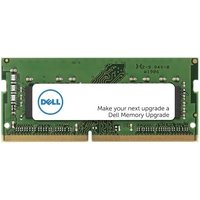


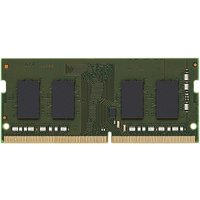
Kingston Technology
Kingston Technology KCP432SS8/8 memory module 8 GB 1 x 8 GB DDR4 3200
£96.47
View Deal