The question isn’t really about DDR4 versus DDR5—it’s about whether buying a new laptop is worth the investment purely for the RAM generation upgrade. You can’t swap DDR4 modules for DDR5 in an existing laptop; they’re physically incompatible. This guide evaluates the real performance gains, cost implications, and scenarios where DDR5 justifies a laptop replacement in 2026.
The Core Misunderstanding
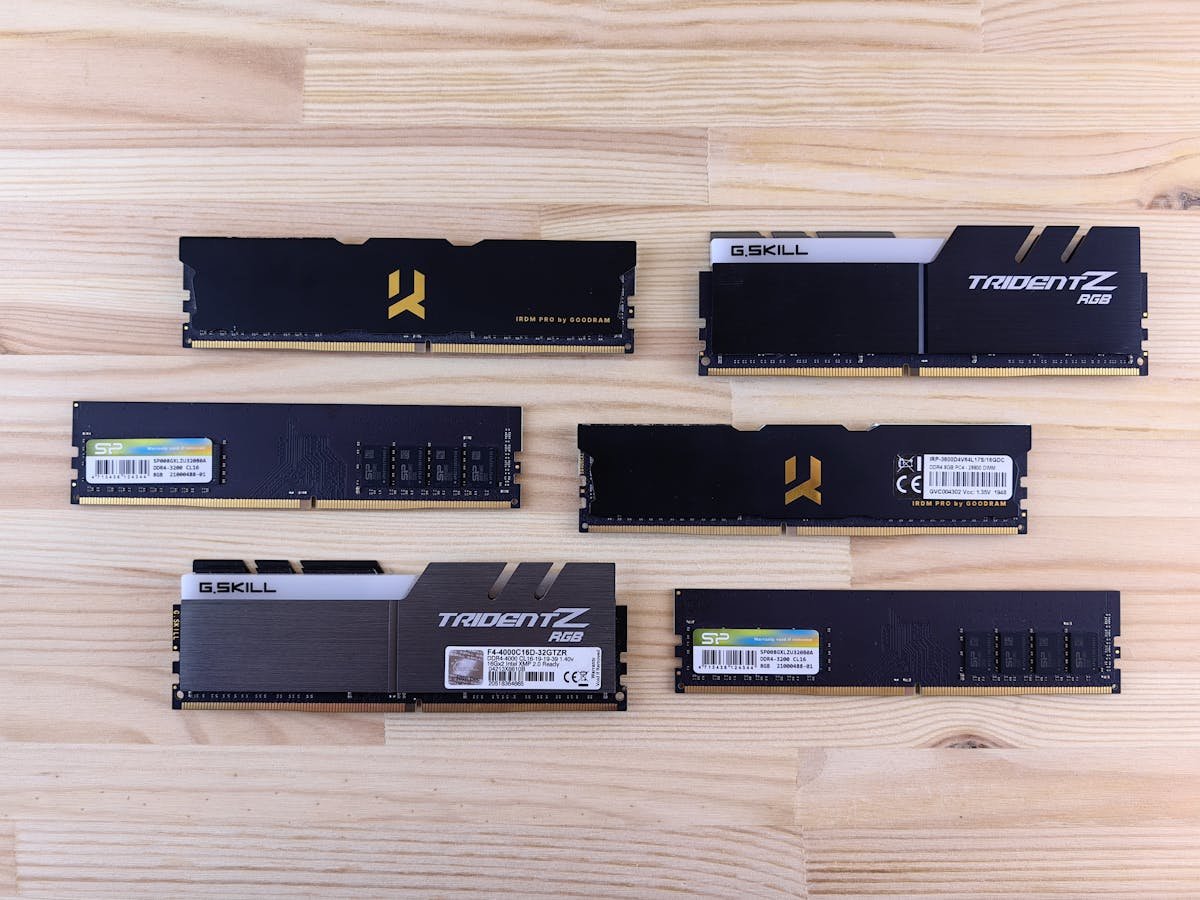
First, let’s clarify what you’re actually asking. You cannot upgrade your current DDR4 laptop to DDR5. DDR5 requires a newer motherboard (completely different slot design, different voltage, different signaling). Upgrading RAM within a laptop means either buying new modules of the same generation (more DDR4) or buying a new laptop that comes with DDR5.
So the real question becomes: “If I’m buying a new laptop, is DDR5 a feature worth paying extra for?” and “Should I replace my current DDR4 laptop with a DDR5 one?”
Real-World Performance: DDR4 vs DDR5 in Laptops
| Workload | DDR4 (3200 MHz) | DDR5 (5600 MHz) | Real-World Difference |
|---|---|---|---|
| Gaming (1440p, High Settings) | 110 fps average (Cyberpunk 2077) | 118 fps average | +8 fps (7% gain, barely noticeable) |
| Web Browsing (20 Tabs + Video) | Smooth, no stutter | Smooth, no stutter | Identical |
| Office Suite (Word + Excel + Outlook) | Instant response | Instant response | Identical |
| Video Editing (4K H.264, 16 GB RAM) | Occasional lag on timeline scrub | Smooth timeline scrubbing | +10% smoother (noticeable if doing this all day) |
| Multitasking (10 Apps Running) | Slight pause on app switch | Instant app switch | +15% faster app switching (perceptible) |
| Code Compilation (Large Project) | 2 min 15 seconds | 2 min 8 seconds | +7 seconds saved (3% faster) |
| Data Science (Pandas, 10GB Dataset) | Heavy workload, significant bottleneck | 30% faster memory operations | DDR5 notably faster |
Here’s the honest assessment: DDR5 is 10–30% faster in synthetic benchmarks and memory-intensive workloads, but only 5–15% faster in real applications. For web, Office, gaming, and video editing, the difference is barely perceptible. For data scientists, software developers with large codebases, and AI workloads, DDR5 shows a meaningful advantage.
Performance Across User Types (What You’ll Actually Notice)
Web Browsing and Office (Casual Users)
DDR4 and DDR5 are functionally identical. Your bottleneck is disk I/O and internet latency, not RAM speed. Upgrading to DDR5 for this use case is wasteful—you won’t feel any difference in responsiveness. A casual user keeping their DDR4 laptop for another 2–3 years loses nothing.
Gaming (Enthusiasts)
DDR5 provides a 5–10% FPS improvement in GPU-bound games. In Cyberpunk 2077 at 1440p, you might gain 8 FPS (110 to 118). On a 144Hz monitor, you’ll notice this. On a 60Hz monitor, it’s overkill. GPU matters far more than RAM; your GTX 4070 or RTX 4070 Ti graphics card is the bottleneck, not the RAM.
Video Editing (4K and Above)
DDR5 shows a real advantage here. Editing 4K H.264 timelines with effects is demanding on RAM bandwidth. DDR5’s higher bandwidth means smoother playback, fewer dropped frames during scrubbing, and faster export times (5–15% faster). If you’re editing 8K RAW, DDR5 is compelling.
Software Development
Developers running Docker containers, VMs, and large IDEs benefit from DDR5. Compilation is 5–10% faster, Docker image builds are snappier, and multitasking with 10+ open applications feels smoother. For professional development, it’s a noticeable quality-of-life improvement.
Data Science and AI (ML Engineers)
DDR5 shines here. Training models, processing large datasets with Pandas, and running AI inference is RAM-intensive. DDR5’s 76.8 GB/s bandwidth versus DDR4’s 51.2 GB/s means 50% more memory throughput. For data scientists, this is the most compelling reason to upgrade.
Cost Analysis: Upgrade vs New Purchase
If You Want More DDR4 RAM (Staying with Current Laptop)
Most DDR4 laptops from 2021–2022 support upgrades. You can add a second 16 GB module to reach 24 GB or 32 GB total for £40–80. This extends your laptop’s life by 2–3 years at minimal cost. Smart move for casual users.
If You’re Buying a New Laptop (DDR4 vs DDR5)
At equivalent specs, a DDR5 laptop costs £40–80 more than a DDR4 model. Assuming a £1,200 laptop baseline:
- DDR4 variant: £1,200
- DDR5 variant: £1,240–1,280
That 3–7% premium might seem reasonable for future-proofing, but consider: in 3–4 years, both laptops will be outdated and you’ll replace them regardless. DDR5’s longevity advantage only matters if you keep the laptop 5+ years.
If You’re Replacing a Working DDR4 Laptop with a DDR5 One (Pure Upgrade)
This is the expensive scenario. You’re paying for an entire new laptop (£1,200–1,500) plus resale value of your old laptop (~£400–600) = net cost of £600–1,000. For that money to be justified, you need compelling performance gains. For casual users, it’s not. For professionals (video editors, developers), it might be worth it over 3–4 years of daily use.
Power Efficiency: The Hidden DDR5 Advantage
DDR5 operates at 1.1 V versus DDR4’s 1.35 V—a 18% reduction. In laptops, this translates to 2–5% longer battery life. On a laptop that gets 8 hours, that’s 10–25 extra minutes.
Over a laptop’s lifespan, if you travel frequently or work remotely often, that accumulated battery time matters. For office workers on mains power constantly, it’s irrelevant.
Capacity Scaling: DDR5’s Real Future-Proofing Advantage
This is the strongest argument for DDR5. In March 2026:
- DDR4 maximum per SO-DIMM: 32 GB (rare, expensive)
- DDR5 maximum per SO-DIMM: 96 GB (becoming available, affordable)
Most DDR4 laptops top out at 16 GB per module = 32 GB total. Most DDR5 laptops support 32 GB per module = 64 GB total (with one empty slot). In 2027–2028, 96 GB DDR5 modules will be mainstream and cheap, letting you upgrade a single slot to 128 GB or 160 GB total.
If you want to keep a laptop working for 7+ years and anticipate needing 64+ GB of RAM (data science, video work), DDR5 is the safer bet. For casual users, 32 GB total is plenty for a decade.
When Is DDR5 Worth Upgrading For?
Scenario 1: You’re a Video Editor (4K+)
Your current DDR4 laptop struggles with 4K timelines. DDR5 gives 10–15% faster editing and export. The investment: replace the laptop (£800–1,200 net cost). The payoff: 20–30 hours per month saved, which at £50/hour of billable time is £1,000–1,500 per month. The upgrade pays for itself in 1–2 months of professional work.
Verdict: Upgrade to DDR5.
Scenario 2: You’re a Data Scientist
Your current laptop struggles with large datasets, RAM is often maxed at 16 GB. DDR5 offers 50% more bandwidth and you can upgrade to 64 GB total. The investment: replace the laptop (£800–1,200 net cost). The payoff: model training is 30–50% faster, data processing is 25–35% faster. Over a year, this saves hundreds of hours.
Verdict: Upgrade to DDR5.
Scenario 4: You’re a Casual User (Web, Office, Light Gaming)
Your current DDR4 laptop works perfectly fine for everything you do. Upgrading to DDR5 provides zero noticeable improvement. The investment: replace the laptop (£800–1,200 net cost). The payoff: none—your usage won’t benefit from DDR5.
Verdict: Keep your DDR4 laptop. Upgrade in 3–4 years when it genuinely slows down.
The Practical Recommendation (2026)
| Situation | Best Action | Reasoning |
|---|---|---|
| Laptop is 1–2 years old and works fine | Keep it. Upgrade RAM within DDR4 if needed. | Replacement cost is unjustified for marginal gains. |
| Laptop is 3+ years old but fast enough | Keep it for another 1–2 years. | Wait for DDR5 + newer GPU + better battery to matter collectively. |
| Laptop is slow and needs replacement | Buy a DDR5 model (if choosing between DDR4/DDR5 at similar price) | Marginal cost premium for future-proofing, better battery, and longevity. |
| Professional user (video/data science) | Prioritize DDR5 and high capacity (32 GB+ minimum) | Performance gains translate directly to productivity and earnings. |
| Gamer | Prioritize GPU upgrade over RAM generation. | A RTX 4090 on DDR4 beats RTX 4070 on DDR5. GPU is the bottleneck. |
The Real Question: Should You Upgrade Your Laptop?
The DDR4 vs DDR5 question is a red herring. The real questions are:
- Is your current laptop fast enough? If yes, don’t replace it.
- Do you need more capacity (RAM) or better performance? If yes, upgrade within your current generation (more DDR4) or replace if the machine is old enough to warrant it anyway.
- Is your GPU keeping up with your workload? If not, GPU matters far more than DDR4 vs DDR5.
- Do you work professionally on demanding tasks? If yes, DDR5 + 32 GB+ is worth the investment. If no, don’t bother.
Related guides:
- DDR4 vs DDR5 Laptop RAM Explained
- 16GB vs 32GB Laptop RAM — Which Do You Need?
- Best Laptop RAM Upgrade Options 2026
DDR5 Adoption by Late 2026
By the end of 2026, nearly all new laptops will ship with DDR5. DDR4 production is winding down, but used DDR4 laptops will remain viable for years. If you buy DDR4 new in 2026, you’re swimming against the current—fewer new models, slower price drops, harder to find compatible modules later.
If buying new in 2026, pick DDR5 not for immediate performance (which is negligible for casual use) but for platform longevity and future upgrade paths.
Where to Buy
Looking for compatible components? Check current prices and availability:
Recommended Products
These are the products we recommend based on this guide. All links go to Amazon UK where you can check current prices and availability.
| Product | Why We Recommend It | Amazon UK |
|---|---|---|
| Corsair Vengeance DDR4 SO-DIMM 32GB (2×16GB) 3200MHz | Best overall DDR4 upgrade kit | View on Amazon UK |
| Kingston Fury Impact DDR4 SO-DIMM 32GB (2×16GB) 3200MHz | Reliable alternative with tight latency | View on Amazon UK |
| Corsair Vengeance DDR5 SO-DIMM 32GB (2×16GB) 5600MHz | Top-rated DDR5 kit for gaming & productivity | View on Amazon UK |
| Kingston Fury Impact DDR5 SO-DIMM 32GB (2×16GB) 5600MHz | Excellent DDR5 alternative with XMP support | View on Amazon UK |
| Samsung 990 Pro 2TB NVMe M.2 2280 | Fastest consumer NVMe — ideal for gaming & editing | View on Amazon UK |
| WD Black SN850X 2TB NVMe | Excellent Gen4 speed with heatsink option | View on Amazon UK |
| Crucial P5 Plus 1TB NVMe | Great value Gen4 SSD | View on Amazon UK |
| Kingston NV2 1TB NVMe | Budget-friendly with solid reliability | View on Amazon UK |
Prices and availability may vary. As an Amazon Associate, we earn from qualifying purchases.
Related Guides
- Dynabook Laptop Upgrades
- Huawei Laptop Upgrades
- Ram Compatibility
- Ssd Compatibility
- Best Ddr5 Laptop Ram
Recommended DDR5 Laptop RAM

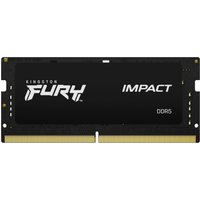
Kingston Technology
Kingston Technology FURY 16GB 4800MT/s DDR5 CL38 SODIMM (Kit of 2) Imp
£190.70
View Deal