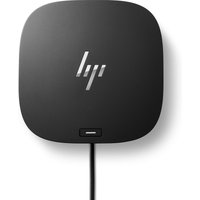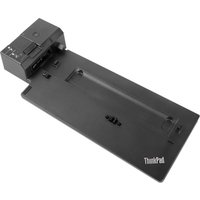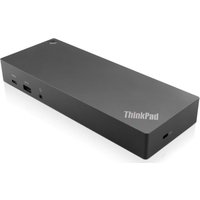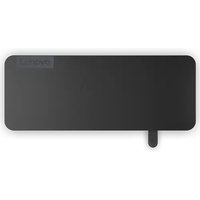
If you’re shopping for a docking station, you’ve probably noticed two types: USB-C docks and Thunderbolt docks. The names suggest they’re similar, but the performance difference is dramatic — and so is the price. A USB-C dock might cost £40–80, while a Thunderbolt dock runs £150–350. Understanding what you’re paying for is essential before you commit.
The core difference isn’t just about connectors. It’s about bandwidth, display capability, and native support for multi-monitor setups. USB-C docks rely on limited USB-3 bandwidth and workarounds for multiple displays. Thunderbolt docks use native PCIe tunnelling, which means no drivers, no compromises, and dual 4K displays as standard. This guide breaks down every practical difference so you can choose the right dock for your setup.
Quick Comparison: USB-C Dock vs Thunderbolt Dock
| Feature | USB-C Dock | Thunderbolt Dock |
|---|---|---|
| Protocol | USB 3.0, 3.1, or 3.2 | Thunderbolt 3/4 (PCIe tunnelling) |
| Bandwidth | 5–20 Gbps (USB 3.2) | 40 Gbps (Thunderbolt 3/4) |
| Native Display Output | 1 monitor @ 1080p–1440p native | Dual 4K @ 60 Hz native |
| 2nd Monitor | Requires DisplayLink (driver + chip) | Native PCIe, no driver needed |
| Data Transfer Speed | 5–20 Mbps (practical: 100–400 Mbps) | 40 Gbps (practical: 1–4 GBps) |
| Power Delivery | 60–100 W (typically 60 W) | 60–96 W (typically 96 W) |
| Driver Installation | DisplayLink driver required (for 2nd display) | Native support — no drivers |
| Price Range | £30–120 | £150–400 |
| Compatible Laptops | Any USB-C laptop (vast majority) | TB3/4 laptops only (Apple, Dell, Lenovo, Asus premium) |
What Are USB-C Docks? Understanding the Basics
USB-C docks are the affordable, universal option. They connect to your laptop’s USB-C port and deliver USB 3.0, 3.1, or 3.2 bandwidth—the same standard that powers external hard drives and USB hubs. They work with virtually every USB-C laptop on the market: MacBooks (Intel models), Windows ultrabooks, Chromebooks, even iPads.
The catch is bandwidth. USB 3.2 maxes out at 20 Gbps, which sounds high until you share it across display output, data transfer, and peripherals. When you connect a second monitor, most USB-C docks use a proprietary chip called DisplayLink, which compresses the display signal and requires driver software on your operating system. It works, but it’s a workaround.
USB-C docks excel at what they’re designed for: single-monitor office setups, adding ports to thin laptops, and basic content consumption. If you’re writing emails, browsing the web, or editing documents on one screen, a USB-C dock is perfectly adequate and will save you £200+ versus Thunderbolt.
What Are Thunderbolt Docks? The Professional Standard
Thunderbolt docks use Thunderbolt 3 or Thunderbolt 4, which is fundamentally different from USB. Instead of sharing bandwidth across multiple functions, Thunderbolt uses PCIe tunnelling to create dedicated lanes for display output, data transfer, and peripherals. No compression, no drivers, no bottlenecks.
This means a Thunderbolt dock can drive two 4K monitors at 60 Hz natively, without any software tricks. Your external drives connect at full Thunderbolt speed. Your peripherals respond instantly. The tradeoff is price—Thunderbolt docks start at £150 and climb to £400+ depending on the number of ports and display outputs.
Thunderbolt docks are the choice of video editors, photographers, software developers, and anyone running multiple high-resolution monitors. The bandwidth headroom is worth the investment if your workflow demands it.
Display Output: Where the Real Difference Shows
This is the single most important difference between USB-C and Thunderbolt docks, and it’s where you’ll feel the gap in real-world use.
USB-C docks typically support:
- One native DisplayPort or HDMI output at up to 1440p or 4K (depending on the dock)
- A second monitor via DisplayLink, which requires a driver and runs at reduced frame rates or resolution
- Some models offer dual HDMI, but the second is often limited to 1080p or 1440p
Thunderbolt docks support:
- Two Thunderbolt ports with native 4K @ 60 Hz output (no drivers, no compression)
- Some models add a third display via USB-C DisplayPort Alt Mode
- Full 60 Hz refresh rate on both displays, even for gaming or video playback
If you need to drive two 4K monitors for photo or video editing, Thunderbolt is the only native solution. If you need dual displays on a USB-C dock, expect to install DisplayLink drivers and accept lower performance on the secondary monitor.
Data Transfer Speed: The Bandwidth Reality
On paper, USB 3.2 (20 Gbps) sounds fast compared to Thunderbolt 3 (40 Gbps). In practice, USB-C docks rarely achieve those speeds because bandwidth is shared with display output and power delivery.
Real-world USB-C data speeds: 100–400 Mbps (about 12–50 MBps). This is fine for daily work but sluggish if you’re regularly transferring 10 GB video files or working with large Photoshop libraries stored on external drives.
Real-world Thunderbolt data speeds: 1–4 GBps (gigabytes per second). A 10 GB file copies in seconds instead of minutes. If you’re editing 4K video, this speed advantage translates to real productivity gains.
For most office workers, the difference is irrelevant. For creative professionals, Thunderbolt is significantly faster.
Power Delivery: How Much Can Your Dock Charge?
Both dock types support USB Power Delivery (PD), but the amounts differ.
USB-C docks: Typically 60 W power delivery. This is enough to charge most laptops at normal speeds, but if your laptop needs 96–140 W (like large gaming laptops or 16-inch MacBook Pros), you’ll need to plug in the laptop separately.
Thunderbolt docks: Usually 96 W or higher. This covers almost all laptop charging needs, including high-performance machines.
Check your laptop’s power requirements before choosing a dock. If you want a single cable solution, verify the dock’s PD rating matches your laptop’s charger wattage.
When to Choose a USB-C Dock
Choose USB-C if:
- Budget is a priority. USB-C docks cost 40–50% less than Thunderbolt.
- You have one external display. A single 1440p or 4K monitor works perfectly with USB-C.
- Your laptop doesn’t have Thunderbolt. Most USB-C laptops (Dell XPS, ASUS ZenBook, HP Elite, older MacBooks) only support Thunderbolt on high-end models.
- You work in basic productivity. Email, web browsing, document editing, spreadsheets—no driver overhead matters.
- You need portability. USB-C docks are typically smaller and lighter than Thunderbolt equivalents.
- You want universal compatibility. USB-C works with virtually every modern laptop and even some tablets and phones.
When to Choose a Thunderbolt Dock
Choose Thunderbolt if:
- You use dual 4K monitors. This is the only native, driver-free solution.
- You edit video or photography. The bandwidth headroom supports real-time editing and fast file transfers.
- You transfer large files regularly. 1–4 GBps is 10–40x faster than USB-C in practice.
- You develop software. Virtual machines, containers, and Docker benefit from Thunderbolt bandwidth.
- Your laptop has Thunderbolt 3 or 4. High-end MacBooks, Dell XPS, Lenovo ThinkPad, and ASUS ProBook models support it.
- You want future-proofing. Thunderbolt 4 is becoming standard on premium laptops; USB-C may plateau.
- You want a single cable solution. Higher power delivery means charging + displays + data through one connection.
Can You Use a Thunderbolt Dock with a USB-C Laptop?
Short answer: Partially, but not as intended.
Thunderbolt docks are backwards-compatible with USB-C at the port level—they have a USB-C physical connector. However, you lose all Thunderbolt features:
- Display output may not work at all (depends on the dock’s fallback support)
- Data transfer reverts to USB 3.0 speeds (if supported)
- Power delivery may work (if the dock supports USB PD fallback)
- You’re paying £200+ for features you can’t use
Buying a Thunderbolt dock for a USB-C-only laptop is wasteful. Get a USB-C dock instead and pocket the savings.
Best USB-C Docks (2026)
Anker 332 USB-C Docking Station (5-in-1)
The budget choice: HDMI output, USB 3.0 ports, SD card slot, 60 W power delivery. Works with any USB-C laptop. No DisplayLink, so second monitor isn’t an option, but single-display setups are rock solid.
Dell D6000 USB-C Docking Station
Enterprise favourite: 6 USB 3.0 ports, dual HDMI (though second is limited), 90 W power delivery. Slightly pricier but rock-solid build quality. Great if you’re in a Dell shop or need maximum port count.
Lenovo ThinkPad USB-C Dock Gen 3
ThinkPad-optimised but works with any USB-C laptop. DisplayPort output for 4K single display, USB 3.0 hub, 65 W power delivery. Compact and reliable for office use.
Buy Lenovo ThinkPad USB-C Dock on Amazon UK
Best Thunderbolt Docks (2026)
CalDigit TS4 Thunderbolt 4 Docking Station
The professional workhorse. Dual Thunderbolt 4 display outputs, 87 W power delivery, 18 ports total (USB-A, USB-C, SD, Ethernet). Supports dual 6K displays or dual 4K@60Hz. Industry standard for video editors and creatives.
Anker 568 USB-C & Thunderbolt Dock (12-in-1)
Dual-protocol dock supporting both USB-C and Thunderbolt laptops. Dual 4K @ 60 Hz output, 96 W power delivery, extensive port selection. Bridges the gap for households with mixed laptop types.
Dell WD22TB4 Thunderbolt Dock
Enterprise Thunderbolt dock with 12 ports, dual 4K support, 96 W power delivery. Larger footprint but exceptional connectivity. Best if you have multiple peripherals or require maximum expansion.
Frequently Asked Questions
Will a USB-C dock work with older MacBooks?
Yes, but only Intel-based MacBooks (2015–2021) and those with USB-C ports. Older MacBooks with Thunderbolt 2 or standard USB require adapters. Newer M-series MacBooks (2021+) support Thunderbolt 4 and can use Thunderbolt docks for better performance.
Do I need DisplayLink drivers on Windows?
Only if your USB-C dock uses DisplayLink for the second monitor. Single-display USB-C docks or those with native DisplayPort don’t require drivers. Check the dock specifications; most entry-level models skip DisplayLink for simplicity.
Can I use multiple USB-C docks simultaneously?
Technically yes, but bandwidth is shared. Each dock will slow the other down. For dual-dock setups, ensure they split the workload (one for peripherals, one for displays) to avoid bottlenecks.
Is Thunderbolt 4 better than Thunderbolt 3?
Functionally similar for docking (both are 40 Gbps), but Thunderbolt 4 mandates more features (better USB-C compliance, eGPU support). For docks, the upgrade isn’t critical—a TB3 dock works fine with TB4 laptops.
What’s the maximum resolution per dock port?
USB-C: typically 1440p–4K (depends on the dock’s video chip). Thunderbolt: native 4K@60Hz or 6K@60Hz per port (CalDigit TS4). DisplayLink USB-C docks may reduce the second display to 1080p or lower.
Should I buy a dock for gaming on an external monitor?
For 144+ Hz gaming, Thunderbolt is safer (guaranteed bandwidth for smooth display + mouse/keyboard). USB-C docks can work for casual gaming at 60 Hz, but DisplayLink-based second displays may stutter. Test before committing.
Recommended Products
These are the products we recommend based on this guide. All links go to Amazon UK where you can check current prices and availability.
| Product | Why We Recommend It | Amazon UK |
|---|---|---|
| Corsair Vengeance DDR4 SO-DIMM 32GB (2×16GB) 3200MHz | Best overall DDR4 upgrade kit | View on Amazon UK |
| Kingston Fury Impact DDR4 SO-DIMM 32GB (2×16GB) 3200MHz | Reliable alternative with tight latency | View on Amazon UK |
| Crucial DDR4 SO-DIMM 16GB 3200MHz | Budget single-stick upgrade | View on Amazon UK |
| Samsung DDR4 SO-DIMM 32GB 3200MHz | OEM-quality for business laptops | View on Amazon UK |
| Samsung 990 Pro 2TB NVMe M.2 2280 | Fastest consumer NVMe — ideal for gaming & editing | View on Amazon UK |
| WD Black SN850X 2TB NVMe | Excellent Gen4 speed with heatsink option | View on Amazon UK |
| Crucial P5 Plus 1TB NVMe | Great value Gen4 SSD | View on Amazon UK |
| Kingston NV2 1TB NVMe | Budget-friendly with solid reliability | View on Amazon UK |
Prices and availability may vary. As an Amazon Associate, we earn from qualifying purchases.
Related Guides
- Dock Compatibility
- How Many Monitors Laptop Support
- Thunderbolt 3 Vs 4 Vs 5 Dock Compatibility
- Best Budget Laptop Dock
- Best Usb C Dock Non Thunderbolt