
Affiliate disclosure: this page contains affiliate links — if you buy through them we may earn a commission at no extra cost to you. As an Amazon Associate we earn from qualifying purchases.
Photo editing RAM needs vary dramatically based on your catalog size, file type, and editing style. A hobbyist editing JPEGs needs far less than a professional processing thousands of RAW files. This guide covers exact requirements for every level of photo editing.
RAM by Photo Editing Workflow
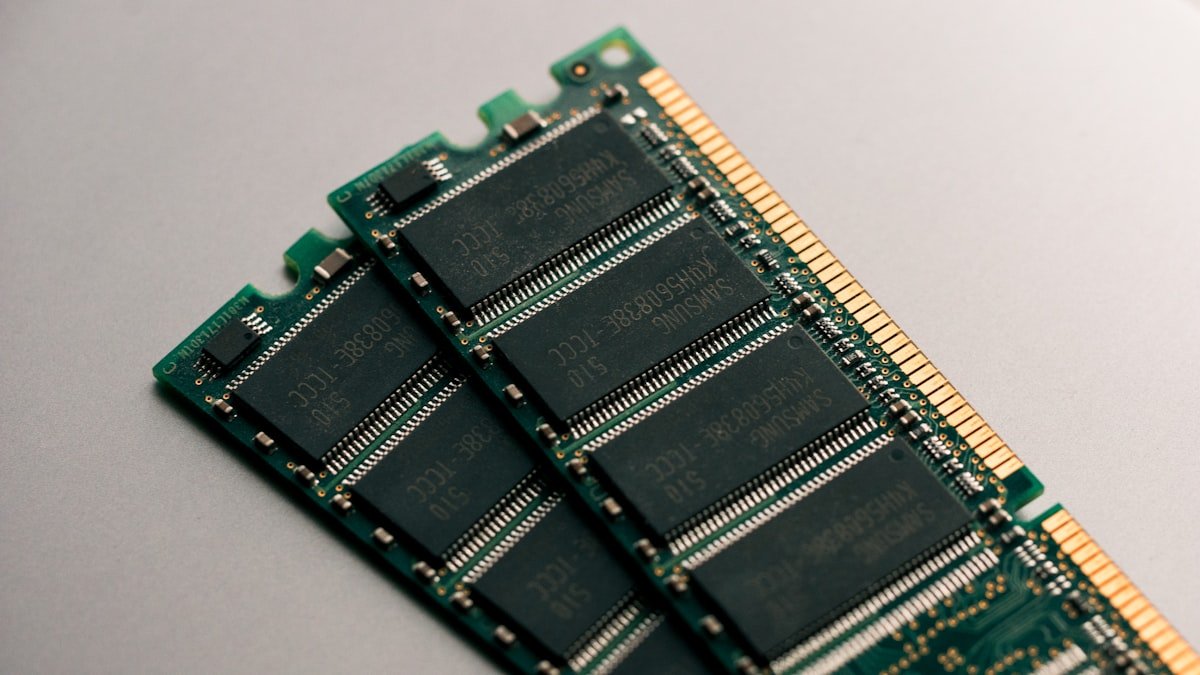
Match your RAM to your actual workflow:
| Workflow | Minimum | Recommended | Key Factor |
|---|---|---|---|
| JPEG editing (hobby) | 8GB | 16GB | Small file sizes, simple adjustments |
| RAW editing (casual) | 16GB | 32GB | 24-50MP RAW files, moderate catalog |
| RAW editing (professional) | 32GB | 64GB | Large catalogs, batch processing |
| Compositing (Photoshop) | 16GB | 32GB | Multiple large layers and smart objects |
| Panorama stitching | 32GB | 64GB | Merging multiple high-res images |
| Focus stacking | 16GB | 32GB | Multiple exposure layers merged |
| Tethered shooting | 16GB | 32GB | Real-time preview and import |
Software-Specific Requirements
Each photo editor uses memory differently:
- Lightroom Classic: Builds previews in RAM. Large catalogs (50K+ images) benefit greatly from 32GB+. Enable Smart Previews to reduce RAM pressure with original files on external drives
- Photoshop: RAM usage scales with canvas size, layer count, and history states. Set RAM allocation in Preferences → Performance (70% of system RAM is default)
- Capture One: Similar to Lightroom but generally uses slightly more RAM for real-time adjustments. 32GB recommended for professional use
- Affinity Photo: More memory-efficient than Photoshop. 16GB handles most workflows comfortably
- DxO PhotoLab: DeepPRIME AI denoising is GPU-accelerated but still benefits from 32GB RAM for batch processing
Does RAM Speed Matter for Photo Editing?
Photo editing benefits modestly from RAM speed:
- Export speed: 3-8% improvement with faster RAM (DDR5-5600 vs DDR4-2666)
- Filter application: Some complex filters benefit from memory bandwidth
- Lightroom catalog operations: Minimal impact — largely storage I/O bound
- Photoshop brush response: No perceptible difference from RAM speed
- Verdict: Capacity matters far more than speed. Always prioritise 32GB at moderate speed over 16GB at fast speed
Recommended Products
Sweet spot for photo editors. Handles large RAW catalogs and Photoshop layers comfortably.
Check Price on Amazon
Best value for DDR4 photo editing stations. 32GB at an unbeatable price.
Check Price on Amazon
Fast SSD for Lightroom catalogs and scratch disks. Dramatically improves import and export speeds.
Check Price on Amazon
Frequently Asked Questions
Is 16GB enough for Lightroom?
For casual editing with catalogs under 20,000 images, 16GB works adequately. For professional use with larger catalogs, batch processing, and the Develop module heavily used, 32GB provides a noticeably smoother experience.
Does Photoshop use all available RAM?
Photoshop allocates a configurable percentage of system RAM (default 70%). With 32GB, it gets ~22GB which is ample for most work. With 16GB, it gets ~11GB which can be limiting with large canvases or many layers.
SSD or RAM upgrade for Lightroom?
Both help but in different ways. An NVMe SSD dramatically speeds up import, export, and Smart Preview generation. More RAM improves Develop module responsiveness and Preview rendering. If you have a mechanical drive, SSD first. If already on SSD, RAM next.
Can I edit photos with 8GB RAM?
Yes, for basic JPEG editing and small RAW files. You will notice slowdowns when switching between editing tools, applying complex filters, or working with files from high-resolution cameras (40MP+). Upgrade to 16GB minimum for a comfortable experience.
Recommended Laptop RAM Upgrades
As an Amazon Associate we earn from qualifying purchases. Prices & availability shown on Amazon.