Affiliate disclosure: this page contains affiliate links — if you buy through them we may earn a commission at no extra cost to you. As an Amazon Associate we earn from qualifying purchases.
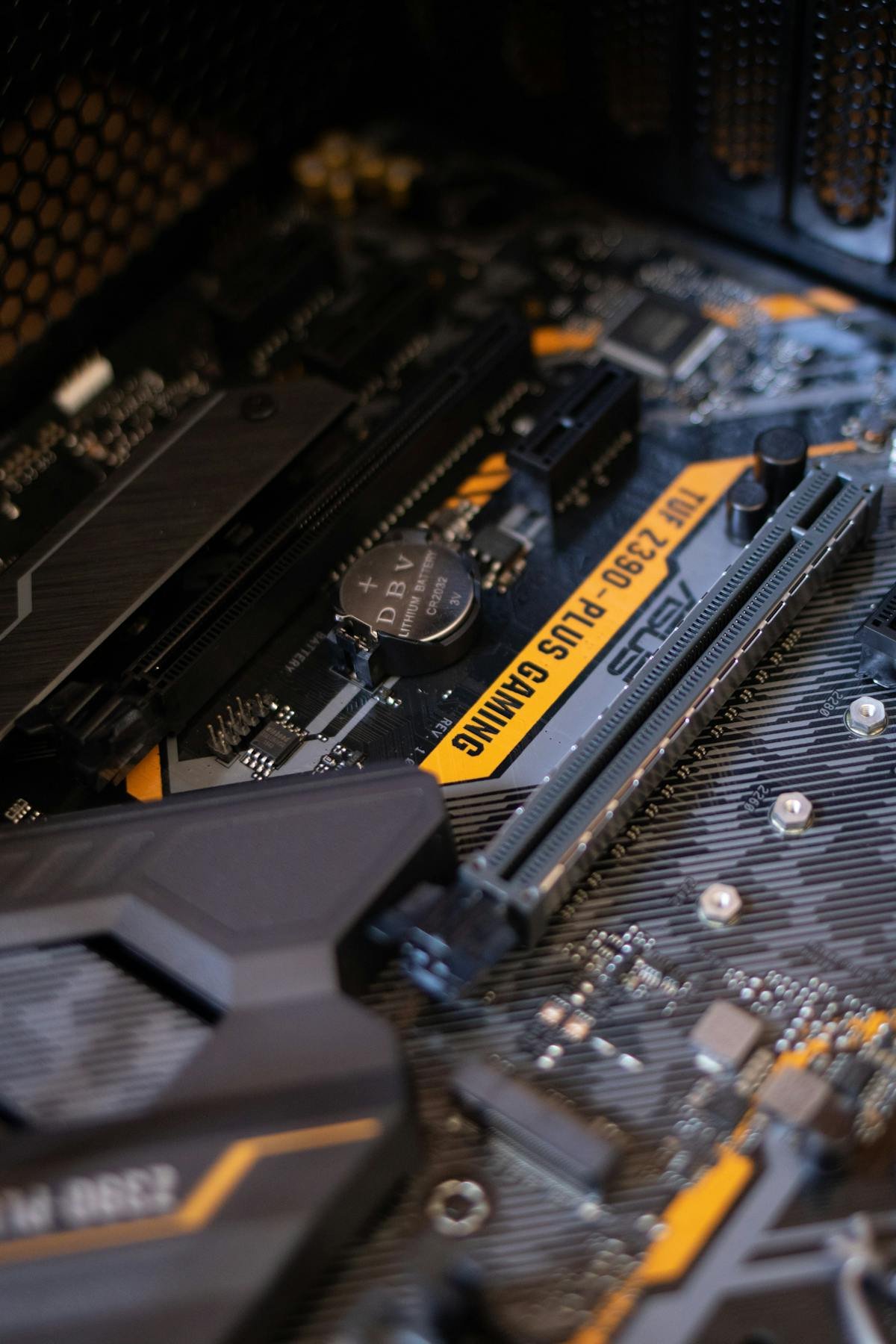
Choosing between the B860 and B760 is one of the most common decisions for Intel builders in 2026. Both chipsets use the LGA 1851 / LGA 1700 socket and support DDR5 memory, but they differ in features, pricing, and target audience.
This guide breaks down exactly what separates these two chipsets so you can make the right choice for your build.
Quick Comparison
| Feature | B860 | B760 |
|---|---|---|
| Generation | Arrow Lake (15th Gen) | Raptor Lake (13th/14th Gen) |
| Socket | LGA 1851 | LGA 1700 |
| Memory | DDR5 only | DDR4 or DDR5 |
| PCIe Gen 5 M.2 | Most models | High-end models only |
| USB4 | Some models | Rare |
| WiFi 7 | Standard on WiFi models | WiFi 6E typical |
| Price Range | £130–£250 | £90–£200 |
| CPU Upgrade Path | Arrow Lake + future | Raptor Lake only |
When to Choose B860
B860 is the better choice if you want the latest features, improved power delivery, and potentially better future-proofing. It’s designed for users who want the newest technology and are willing to pay a modest premium for it. Builders focused on longevity and maximum feature access should lean towards B860.
When to Choose B760
B760 remains an excellent choice, especially if you’re on a tighter budget or don’t need the absolute latest features. The mature ecosystem means wider board selection, more reviews, and often better pricing. Many B760 boards offer nearly identical real-world performance for gaming and productivity workloads.
RAM and SSD Compatibility
Both B860 and B760 support DDR5 memory with similar speed capabilities. SSD compatibility is also largely the same, with both chipsets offering multiple M.2 NVMe slots. The key difference is that B860 boards may offer more PCIe Gen 5 M.2 slots on mid-range models compared to B760.
Our Recommendation
For new builds in 2026, B860 is generally the better choice — the price premium is small and you get a newer platform with longer support. However, if you find a great deal on a B760 motherboard, it’s still a perfectly capable chipset that will serve you well for years to come.
Frequently Asked Questions
Is B860 worth the upgrade from B760?
For new builds, yes — the price difference is typically small and you get a newer platform. For existing B760 owners, there’s rarely a compelling reason to switch unless you need a specific feature only available on B860.
Can I use the same RAM on both?
Yes, both chipsets use the LGA 1851 / LGA 1700 socket and support DDR5 memory. RAM that works on one will work on the other, assuming it meets the specific board’s QVL specifications.
Related Resources
- Laptop Upgrade Compatibility Checker — Check RAM, SSD & charger compatibility for 3,195+ models
- RAM Compatibility Guide — DDR4, DDR5 & LPDDR5 explained
- SSD Compatibility Guide — NVMe, SATA & M.2 sizes
- Charger Compatibility Guide — USB-C, Power Delivery & GaN
- Docking Station Compatibility Guide — Thunderbolt, USB-C & DisplayLink
Popular Brand Upgrade Guides
- Dell Laptop Upgrades
- Lenovo Laptop Upgrades
- HP Laptop Upgrades
- ASUS Laptop Upgrades
- Acer Laptop Upgrades
- MSI Laptop Upgrades
Related Guides
Recommended upgrades
As an Amazon Associate we earn from qualifying purchases. Prices & availability shown on Amazon.
For desktops that use DDR5 DIMMs
For desktops that use DDR4 DIMMs
M.2 2280 NVMe SSDs
How we verify this guide
We cross-reference compatibility figures against manufacturer specifications where available, official service manuals, and the standards that govern fit — memory type and speed (DDR4 / DDR5 / LPDDR5), maximum supported capacity and slot count, SSD form factor and interface (M.2 2280, NVMe PCIe vs SATA, keying), and charger wattage and connector (USB-C Power Delivery, GaN). We’re explicit about soldered or non-upgradeable parts, prioritise primary sources over retailer listings, and re-verify the data on a regular cycle. More on our method →