Affiliate disclosure: this page contains affiliate links — if you buy through them we may earn a commission at no extra cost to you. As an Amazon Associate we earn from qualifying purchases.
If you’re shopping for a new laptop, one of the first decisions you’ll face is how much RAM to buy. The difference between 8GB, 16GB, and 32GB has become more important in 2026 as Windows 11 and modern applications demand more memory, but the right choice still depends entirely on what you’ll actually do with the machine.
This guide cuts through the marketing hype and gives you a practical breakdown: what each capacity can handle in real-world use, the true cost difference, and whether you’ll regret your choice in two years. We’ve also covered the increasingly common problem of soldered RAM — if your laptop doesn’t let you upgrade, this decision matters even more.
Quick Recommendation Table
| Use Case | Recommended Capacity | Why |
|---|---|---|
| Student (essays, browsing, Zoom) | 8GB | Sufficient if you close unused browser tabs and apps. Tight with modern Windows 11, but manageable. |
| General office work (email, Office, Teams) | 16GB | Comfortable headroom for multitasking without slowdowns or stuttering. |
| Heavy browsing + Slack + Zoom + Office | 16GB | 8GB will cause lag. 16GB keeps everything snappy. Chrome alone can eat 2–3GB with 20+ tabs. |
| Photo editing, light video, casual gaming | 16GB | Entry point for creative work. 8GB bottlenecks performance; 32GB is overkill unless you’re doing 4K video. |
| 4K video editing, software development, VMs | 32GB | Professional workloads. Premiere Pro, After Effects, Docker containers, and virtual machines all need breathing room. |
| Gaming + streaming simultaneously | 32GB | AAA games (Cyberpunk, Indiana Jones) + OBS streaming or Discord overlay can hit 20–25GB. |
| Mac user (M1/M2/M3 with unified memory) | 8GB minimum, 16GB ideal | Apple’s architecture is more efficient. 8GB on a Mac is more usable than 8GB on Windows, but it is still 8GB. Go 16GB if budget allows. |
8GB RAM in 2026: Who It’s For (and Who It Isn’t)
Eight gigabytes was the baseline for laptops until around 2023. In 2026, it’s become increasingly tight — not because 8GB is inherently small, but because Windows 11, Google Chrome, and background services eat more than they used to.
Who 8GB Still Works For
If you’re mostly doing web browsing, email, streaming videos (Netflix, YouTube), or light Office work, 8GB is still functional. The trap is thinking “light browsing” means what it did five years ago. If you open 15 Chrome tabs, run Slack, Teams, and Spotify in the background, you’re already at 6–7GB of your 8GB budget before you’ve opened a single document.
Students who stick to university learning platforms, word processing, and video calls can survive on 8GB, but only if they discipline themselves about closing apps. Teachers and course materials often recommend 8GB for student laptops — don’t trust that assessment. Reality is messier.
Realistic scenario (Windows 11 + 8GB): System uses 2.5GB at idle. Open Chrome with 10 tabs (1.5GB), Teams (400MB), Spotify (100MB), and a Word document (200MB). You’re at 4.7GB used, with 3.3GB free. Open 10 more tabs, and Windows starts using your SSD as “virtual memory” — your laptop slows to a crawl.
Who Should Avoid 8GB
If any of these apply to you, step up to 16GB:
- Chrome power users: More than 20 tabs regularly open. Chrome’s memory footprint is brutal.
- Multitasking professionals: Juggling Office applications, Slack, Zoom, and email simultaneously.
- Creative work: Photoshop, Lightroom, DaVinci Resolve, or Premiere Pro need headroom.
- Developers and sysadmins: IDEs, Docker, VMs, and database tools all demand memory.
- Gamers: Even “light” gaming will use 6–8GB; modern AAA titles need 16GB+.
- Future-proofing: If you plan to keep the laptop 3+ years, 8GB will feel cramped by 2028.
The Apple Exception
If you’re buying a MacBook with an M-series chip (M3, M4), 8GB of unified memory is more usable than 8GB DDR on a Windows laptop. Apple’s architecture doesn’t separate system and video memory; 8GB on a Mac tends to stretch further than the same 8GB on a Windows machine. That said, if you can stretch to 16GB, do it — future apps will expect it, and resale value holds better.
16GB RAM in 2026: The Sweet Spot
Sixteen gigabytes has become the de facto standard for “I don’t want to think about RAM for the next three years.” It’s the capacity that handles nearly every real-world use case without becoming a bottleneck.
What 16GB Handles Comfortably
- Browser with 30+ tabs, email, Office, Slack, Teams, Discord — all open simultaneously without throttling.
- Light photo and video editing (4K timelapse in Premiere, batch edits in Lightroom).
- Casual gaming (Elden Ring, Baldur’s Gate 3, Minecraft with heavy mods).
- Software development (IDE, debugger, Docker container, web server all running).
- One or two lightweight virtual machines (Windows XP VM for legacy software, Linux VM for testing).
- Streaming and content creation (OBS + game + chat = 12–14GB; you have headroom).
- Adobe Creative Suite (Photoshop + Lightroom + Audition; not all simultaneously, but possible).
The Comfort Margin
The real value of 16GB isn’t capacity — it’s headroom. With 8GB, you’re always close to the limit. With 16GB, a poorly behaved app or Windows update that’s consuming more memory than expected doesn’t tank your whole laptop. That buffer is worth the money.
In real-world testing, a Windows 11 laptop with 16GB RAM running a “heavy” workday (20 browser tabs, Teams, Slack, Outlook, Spotify, and VS Code) sits at 11–12GB, leaving a comfortable 4–5GB as a safety buffer. With 8GB, that same setup maxes out and triggers disk paging.
32GB RAM in 2026: When You Actually Need It
Thirty-two gigabytes is no longer “future-proofing overkill.” It’s become the standard for professional creative and development work. But it’s also where you start paying for capacity you might not use.
Who Actually Uses 32GB
- Video editors: Editing 4K or 8K footage in Premiere Pro, After Effects, or DaVinci Resolve. Even with proxies, large timelines need 20–28GB.
- Data scientists and machine learning engineers: Training models, handling large datasets in Python/R, Jupyter notebooks with GPU acceleration.
- Software developers with Docker: Running 5+ containers (web server, database, Redis, Elasticsearch) + IDE + browser for testing = 18–24GB.
- 3D artists and architects: Blender with large scenes, Revit models, Cinema 4D projects all need 20GB+.
- Concurrent gamers and streamers: AAA gaming at high settings (8–12GB) + OBS streaming (2–4GB) + Discord overlay, music, chat apps = 15–20GB total.
- Server administrators and cybersecurity professionals: Multiple VMs running simultaneously (Kali, Windows Server, Ubuntu) can easily use 24–28GB.
The Overkill Scenario
If you’re a student writing essays, a freelance writer, or someone who mainly uses Office and browsing, 32GB is wasted money. You won’t notice the difference between 16GB and 32GB in those workloads. Buying 32GB out of habit or “just in case” is like fitting a V8 engine to a town car.
Diminishing Returns on Cost
In 2026, upgrading from 8GB to 16GB costs £15–25 and gives you real, tangible daily benefit. Upgrading from 16GB to 32GB costs another £25–40 but only helps if you’re doing professional work. Unless you’re certain about your use case, 32GB is hard to justify on a consumer budget.
UK Pricing (March 2026)
Prices fluctuate with market availability, but here’s a realistic snapshot of DDR4 and DDR5 RAM costs in the UK:
| Capacity | DDR4 (Older Laptops) | DDR5 (2023+) | Notes |
|---|---|---|---|
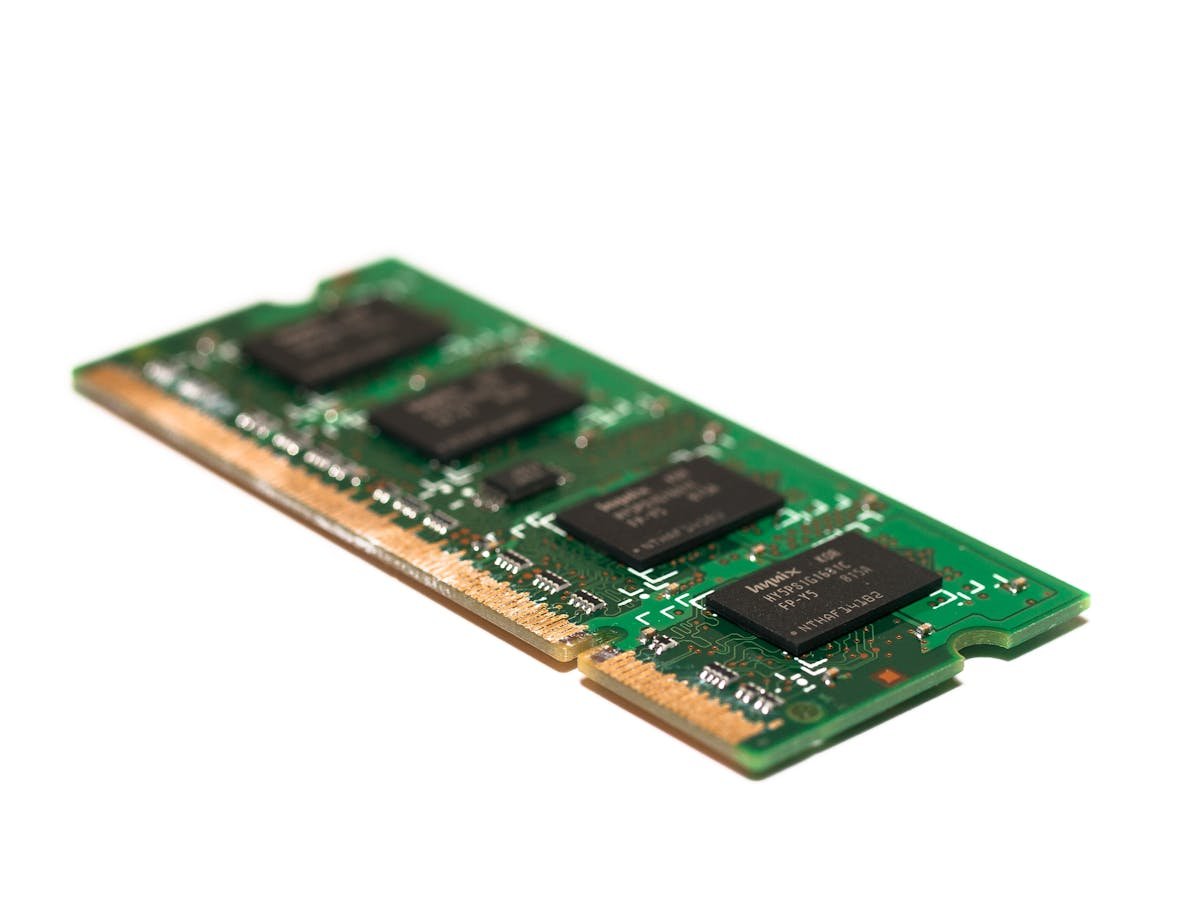
| 8GB Single Module (SO-DIMM) | £16–22 | £22–28 | Budget-friendly. DDR5 premium is 30–35%. |
| 16GB Single Module | £28–38 | £35–48 | Most common upgrade path. |
| 32GB Single Module | £50–68 | £62–85 | Professional-grade pricing. DDR5 kit rare. |
| 16GB Kit (2x8GB) | £30–42 | £40–55 | Better dual-channel performance than single 16GB. |
| 32GB Kit (2x16GB) | £55–75 | £75–110 | Fills all slots on most laptops. Future-proofs. |
Cost-benefit: The price jump from 8GB to 16GB is modest (£12–15 at point of purchase). For future upgradability, you can often buy an 8GB laptop with SO-DIMM slots and upgrade to 16GB later for an extra £35–45. This is more cost-effective than buying a sealed 16GB machine if your budget is tight.
Single Stick vs Dual-Channel Kit: Does It Matter?
Here’s where things get technical — but the practical takeaway is simple.
Single stick (1×16GB): Cheaper at purchase. Works fine. Slots in one SO-DIMM slot.
Dual-channel kit (2×8GB): Slightly faster in some scenarios. Fills both slots, leaving no upgrade path.
Performance Difference
In memory bandwidth tests, dual-channel RAM is 10–15% faster than single-channel. In real-world use, you’ll notice this only in specific workloads:
- Video editing: Noticeable 5–10% speedup in playback and rendering.
- Gaming: 3–8% better frame rates on games that hammer memory bandwidth (some engines are more sensitive than others).
- Data processing: Measurable speedup in Python/R data operations.
- General Office/browsing: Zero noticeable difference.
If you’re buying 16GB for office work or light creative work, a single 16GB stick is fine and costs less. If you’re a gamer or video editor and budget allows, go for 2×8GB or 2×16GB to unlock that extra performance.
The Soldered RAM Problem: A Hidden Trap
This is the most important thing most people don’t know about: some laptops solder their RAM directly to the motherboard instead of using upgradeable SO-DIMM slots. Once you buy the machine, you can’t upgrade. This decision is final.
Which Brands Solder RAM?
- All modern MacBooks: RAM is soldered. Buy the capacity you think you’ll need.
- High-end gaming laptops: Increasingly soldering to reduce size and weight. Check specs carefully.
- Business ultrabooks: Some Lenovo ThinkPad X1, HP EliteBook, and Dell XPS models are soldering half or all of the RAM.
- Budget laptops: Some budget models under £500 have half the RAM soldered (e.g., 4GB soldered + 8GB upgradeably).
Always check the specs before buying. The product page should state “8GB soldered + SO-DIMM slot for upgrade” or “16GB soldered, non-upgradeable.” If it doesn’t say, ask the retailer.
The Implication
If your laptop has soldered RAM, treat this decision more seriously. If you buy 8GB and find yourself wanting 16GB in 2028, you’re stuck. If you buy 32GB and never need it, you’re out £60+. This is where the “buy more than you think you need” rule kicks in.
Rule of thumb for soldered RAM: Go one tier up. If you’d normally buy 8GB, buy 16GB. If you’d buy 16GB, consider 32GB for professional workloads.
Upgrading Later: The Cost-Effective Path
If your laptop uses SO-DIMM slots (non-soldered), you have options. This is how to play the upgrade game affordably:
Scenario 1: Buy 8GB Now, Upgrade to 16GB Later
- 8GB laptop: £600 (assuming RAM is part of the base cost).
- Add 8GB SO-DIMM module in 2027: £25–35.
- Total cost by 2027: £625–635.
- Versus: 16GB laptop at £620 upfront.
This works if you’re confident you won’t need 16GB immediately. If you hit the ceiling in six months, you’ll be frustrated.
Scenario 2: Buy 16GB Now, Keep Both Slots Free
- One 16GB SO-DIMM in one slot, one slot empty.
- In 2027, add another 16GB stick to reach 32GB for £35–50.
- Gives you 16GB today and upgrade path to 32GB without replacing the existing module.
This is often more economical than a 2×8GB kit if you think you might need 32GB later.
Scenario 3: Buy 16GB as 2×8GB Kit, Lock in Dual-Channel
- 2×8GB fills both slots, no upgrade path.
- But you get dual-channel performance for the lifetime of the laptop.
- Best for: gamers, video editors, anyone wanting maximum performance from 16GB.
If you buy this config and later need 32GB, you’d have to replace both sticks (selling the old pair for £20–30) and buy a new 2×16GB kit for £60–80. That’s a £50–60 cost to upgrade, versus £35 for Scenario 2.
Best RAM Modules by Capacity (UK, DDR4 & DDR5)
If you’re upgrading a laptop with SO-DIMM slots, here are solid, reliable options:
8GB Upgrade (DDR4)
Crucial CT8G4SFS824A (8GB DDR4-3200): Budget choice. Reliable. Under £20. Available on Amazon.
Corsair CMSX8GX4M1A2400C16 (8GB DDR4-2400): Slightly faster, warranty-heavy. £22–26. Check Amazon.
16GB Upgrade (DDR4)
Kingston KCP426SS8/16 (16GB DDR4-2666): Mainstream. Works in almost all laptops. £30–38. Amazon link.
Crucial CT16G4SFD824A (16GB DDR4-3200): Faster, same price. £28–35. Buy on Amazon.
16GB Upgrade (DDR5, 2023+ Laptops)
Kingston FURY Beast KF548S38-16 (16GB DDR5-4800): Fast, modern. £38–48. Amazon.
Corsair CMSX16GX5M1A4800C40 (16GB DDR5-4800): CAS latency 40, proven stable. £42–52. Check stock on Amazon.
32GB Kit (DDR4, Both Slots)
Corsair CMSX32GX4M2A3200C22 (2×16GB DDR4-3200): Dual-channel, solid performer. £55–70. Amazon.
Crucial CT2K16G4SFD832A (2×16GB DDR4-3200): Budget kit, no-frills reliability. £48–62. Find on Amazon.
Important Note on Compatibility
Before buying any RAM module, check your laptop’s service manual or use Amazon’s RAM compatibility checker (if available) or manufacturer specs. SO-DIMM DDR4 is mostly backward-compatible across brands, but DDR5 is newer and has subtle timing differences. Kingston and Crucial are the safest bets for universal compatibility.
Frequently Asked Questions
Is 8GB laptop RAM really enough in 2026?
Only if you’re disciplined about closing unused apps and tabs. Windows 11 at idle uses 2–2.5GB; add 15 Chrome tabs (1.5GB), Teams (400MB), and a Word doc, and you’re at 4.5GB with limited headroom. For casual use, it works. For multitasking or future-proofing, it’s tight.
Will upgrading from 8GB to 16GB make my laptop feel faster?
Yes, noticeably. If your current laptop is maxing out RAM (constant disk activity, stuttering when switching apps), upgrading to 16GB will feel like a new machine. If you currently have plenty of free RAM, the upgrade won’t feel as dramatic. The real difference is eliminating bottlenecks, not raw speed.
Should I buy 2×8GB or 1×16GB?
For office and general use: 1×16GB. Simpler, same performance, leaves one slot free for future upgrade. For gaming or video editing: 2×8GB or 2×16GB gets you dual-channel performance (10–15% faster). Check your laptop’s current config and budget.
My new laptop has soldered RAM. Did I make a mistake buying 8GB?
Possibly. Soldered RAM can’t be upgraded. If you do light work (email, browsing, Office), 8GB is fine and you won’t regret it. If you multitask heavily or do creative work, you might wish for 16GB in 2–3 years and be stuck. For soldered laptops, err on the side of more capacity than you think you need.
Can I use DDR4 RAM in a DDR5 laptop?
No. DDR4 and DDR5 are physically incompatible — different slot shape and voltage. Check your laptop’s spec sheet for the exact memory type before buying.
Is there a noticeable difference between DDR4-3200 and DDR4-3600?
In laptops, almost none in real use. DDR4-3200 is the sweet spot for speed-to-price. Faster speeds help in memory-intensive workloads (data science, video editing), but the difference is usually under 5%. Don’t pay extra for DDR4-3600 unless it’s the same price as slower RAM.
What if I need 64GB in the future?
Unlikely for consumer use. Even professional video editors and developers rarely need more than 32GB. If you’re working with massive datasets or rendering farm operations, you’d upgrade to a workstation or desktop, not try to squeeze 64GB into a laptop.
Recommended Products
These are the products we recommend based on this guide. All links go to Amazon where you can check current prices and availability.
| Product | Why We Recommend It | Amazon |
|---|---|---|
| Corsair Vengeance DDR4 SO-DIMM 32GB (2×16GB) 3200MHz | Best overall DDR4 upgrade kit | View on Amazon |
| Kingston Fury Impact DDR4 SO-DIMM 32GB (2×16GB) 3200MHz | Reliable alternative with tight latency | View on Amazon |
| Corsair Vengeance DDR5 SO-DIMM 32GB (2×16GB) 5600MHz | Top-rated DDR5 kit for gaming & productivity | View on Amazon |
| Kingston Fury Impact DDR5 SO-DIMM 32GB (2×16GB) 5600MHz | Excellent DDR5 alternative with XMP support | View on Amazon |
| Samsung 990 Pro 2TB NVMe M.2 2280 | Fastest consumer NVMe — ideal for gaming & editing | View on Amazon |
| WD Black SN850X 2TB NVMe | Excellent Gen4 speed with heatsink option | View on Amazon |
| Crucial P5 Plus 1TB NVMe | Great value Gen4 SSD | View on Amazon |
| Kingston NV2 1TB NVMe | Budget-friendly with solid reliability | View on Amazon |
Prices and availability may vary. As an Amazon Associate, we earn from qualifying purchases.
Related Guides
- Ram Compatibility
- Sodimm Vs Lpddr Laptop Ram
- How Much Ram Do You Need Laptop
- Best Ram For Lenovo Legion
- Best Ram For Asus Rog
- Can You Upgrade a Laptop CPU? What Else Is Fixed at Purchase
Recommended upgrades
As an Amazon Associate we earn from qualifying purchases. Prices & availability shown on Amazon.
For laptops and mini PCs that use DDR5 SO-DIMM
For laptops and mini PCs that use DDR4 SO-DIMM
How we verify this guide
We cross-reference compatibility figures against manufacturer specifications where available, official service manuals, and the standards that govern fit — memory type and speed (DDR4 / DDR5 / LPDDR5), maximum supported capacity and slot count, SSD form factor and interface (M.2 2280, NVMe PCIe vs SATA, keying), and charger wattage and connector (USB-C Power Delivery, GaN). We’re explicit about soldered or non-upgradeable parts, prioritise primary sources over retailer listings, and re-verify the data on a regular cycle. More on our method →
Free download: The 2026 Laptop RAM Upgrade Compatibility Cheat Sheet
Find out in minutes whether your laptop’s RAM is upgradeable, exactly which DDR4/DDR5/LPCAMM2 stick fits, and how much is worth it. Enter your email and we’ll send the PDF instantly.