Affiliate disclosure: this page contains affiliate links — if you buy through them we may earn a commission at no extra cost to you. As an Amazon Associate we earn from qualifying purchases.
If you’re shopping for a laptop or looking to upgrade the RAM in your current machine, you’ve probably encountered two acronyms: SO-DIMM and LPDDR. Both power laptop RAM, but they represent fundamentally different engineering approaches. Understanding which type your laptop uses—and what each one means for your purchasing decision—is essential.
SO-DIMM (Small Outline Dual In-Line Memory Module) is the removable, user-upgradeable standard that’s been the backbone of laptop memory for decades. LPDDR (Low Power Double Data Rate) is a newer approach: memory soldered directly to the motherboard (or integrated into the CPU itself), designed for maximum power efficiency and thinness. This guide breaks down what each one is, how they differ, and why it matters for your laptop.
SO-DIMM Explained
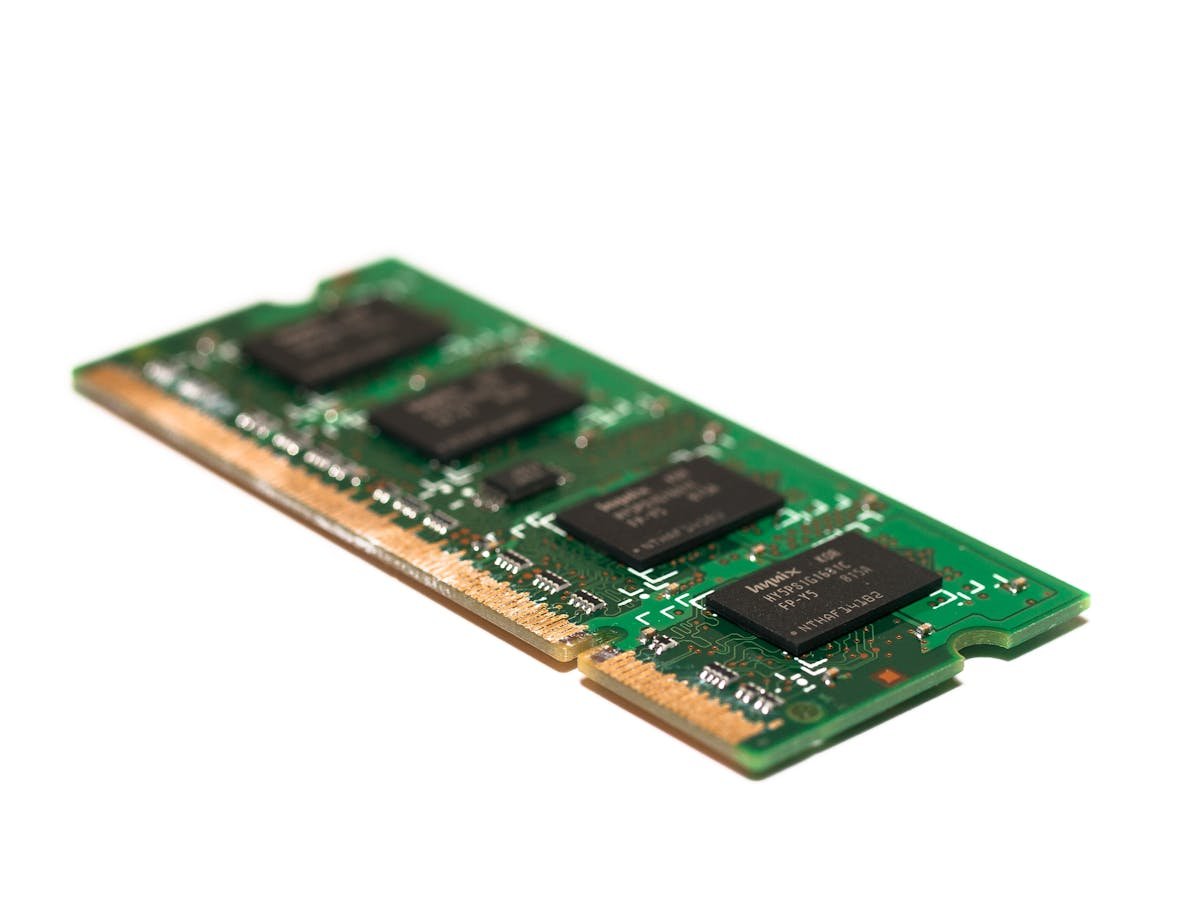
SO-DIMM is the traditional laptop RAM form factor. It’s a small, rectangular module about 2.6 inches long and 1 inch wide—roughly the size of a chewing gum stick. These modules slide vertically into dedicated slots on the motherboard, held in place by spring clips on each end.
The key advantage of SO-DIMM is upgradeability. You can pop the access panel on your laptop, locate the memory slots, and swap in newer or higher-capacity modules whenever you want. Millions of laptops have been upgraded this way—from 8GB to 16GB, or DDR4 to DDR5.
SO-DIMM comes in several generations:
- DDR4 SO-DIMM: Older standard, still common on budget and mid-range laptops. Maximum capacity typically 32GB per module (64GB in a dual-slot system).
- DDR5 SO-DIMM: Newer, faster, more power-efficient. Faster speeds (5,600 MHz and higher) and higher capacities (48GB per module available from some brands).
You’ll find SO-DIMM slots on most ThinkPads, HP EliteBooks, mid-range Dell Inspirons, Lenovo Legions, and gaming laptops. If upgradeability matters to you—and you want to add RAM in two years—SO-DIMM is what you need.
LPDDR Explained
LPDDR takes a completely different approach. Instead of removable modules, the RAM is soldered directly to the motherboard—or, in the latest designs (like Intel’s Lunar Lake), integrated into the CPU itself. Once the laptop leaves the factory, you can’t upgrade the RAM. Ever.
Why would manufacturers do this? Power efficiency and thinness. LPDDR modules consume less power than SO-DIMM—crucial for thin-and-light ultrabooks and MacBooks, where battery life is everything. By eliminating the connectors, traces, and slot mechanisms required by SO-DIMM, engineers can shave off millimetres and milliwatts.
LPDDR comes in several versions:
- LPDDR4X: Used in older premium ultrabooks and MacBooks (circa 2018–2021). 32GB maximum.
- LPDDR5: Current standard on most modern premium laptops. Up to 48GB per package.
- LPDDR5X: Latest generation, appearing on cutting-edge machines like the MacBook Pro M4 Pro. Faster speeds and lower power.
- LPDDR6X: Upcoming standard, not yet common.
The trade-off: you can’t upgrade it. If you buy a MacBook Air with 16GB of LPDDR5 soldered to the board, that’s your RAM forever. If you later need 32GB, you have to sell the MacBook and buy a new one with more RAM configured at purchase.
SO-DIMM vs LPDDR — Full Comparison
| Factor | SO-DIMM | LPDDR |
|---|---|---|
| Form Factor | Removable module, ~2.6″ × 1″ | Soldered to motherboard or CPU |
| Upgradeability | Fully user-upgradeable | Not upgradeable (soldered) |
| Power Consumption | Higher (4–6W per module) | Lower (2–3W per package) |
| Typical Max Capacity | 48–64GB (dual slots) | 48GB per package, 96GB possible |
| Typical Speed (DDR5/LPDDR5) | 5,600 MHz and above | 5,500 MHz and above |
| Cost per GB | Lower (competition, aftermarket) | Higher (soldered at factory) |
| Laptop Thinness | Thicker (slot takes up space) | Thinner (no slot needed) |
| Common In | ThinkPads, mid-range Dell, gaming, workstations | MacBooks, premium ultrabooks (XPS 13, ZenBook S) |
LPCAMM2 & CAMM2 — The New Standard
There’s a third option emerging: LPCAMM2 (Low Power Compression Attached Memory Module 2) and CAMM2 (Compression Attached Memory Module 2). These are new standards developed by Dell and later adopted by Framework and other manufacturers, designed to merge the benefits of both worlds.
LPCAMM2 offers LPDDR-like power efficiency and thinness, but with upgradeability built in. Instead of removable modules that stick out perpendicular to the board, LPCAMM2 memory attaches flush and doesn’t require dedicated slots. Dell’s latest Precision workstations and some XPS models now use LPCAMM2 instead of traditional SO-DIMM.
CAMM2 (non-low-power variant) is being adopted by gaming and creator laptops—it’s faster and uses standard DDR5 instead of LPDDR. Framework’s latest 13-inch and 16-inch laptops now ship with CAMM2 upgradeable modules.
However, LPCAMM2 and CAMM2 are still very rare. Most laptops you can buy today use either traditional SO-DIMM or soldered LPDDR. But this is the direction the industry is moving—the best of both worlds.
Which Type Does Your Laptop Have?
You can determine whether your laptop has SO-DIMM or soldered LPDDR with these methods:
1. Check Your Laptop’s Specifications Sheet
Visit the manufacturer’s official product page for your model. Look for “Memory Configuration,” “RAM Type,” or “Memory Upgradeable.” If it says “Upgradeable” or lists “SO-DIMM,” you’re safe. If it says “Soldered” or “Fixed,” or doesn’t mention upgradeability, it’s likely LPDDR.
2. Use Crucial’s Scanner Tool
Crucial maintains a free RAM scanner at crucial.com/upgrades/memory-selector. Download and run it—it will instantly tell you whether your laptop has upgradeable SO-DIMM slots and suggest compatible modules.
3. Check Windows Task Manager (PC)
Open Task Manager (Ctrl+Shift+Esc), go to the Performance tab, and click Memory. Look for the “Slots Used / Slots Available” line at the bottom. If it shows “2 of 2 Slots,” you have two upgradeable SO-DIMM slots (both full). If it says “1 of 2,” one is free. No slot information? Soldered LPDDR.
4. Check System Information (Mac)
On macOS, click the Apple menu, select About This Mac, then click Memory. If it lists individual memory modules and says “Upgradeable,” you likely have SO-DIMM. Apple Silicon Macs (M1 and newer) always show soldered LPDDR.
5. Physically Inspect (Advanced)
Power off, disconnect power, and remove the bottom panel if it’s removable. Look for small rectangular slots with spring clips on each end—those are SO-DIMM slots. If you see memory chips soldered flat to the board with no removable modules, that’s LPDDR.
How This Affects Your Buying Decision
If upgradeability is important to you, always buy a laptop with SO-DIMM slots. Here’s why: RAM needs change. A laptop you buy today with 8GB might need 32GB in five years—either because software demands more, or because you switch to more demanding work. SO-DIMM lets you make that upgrade for £30–50. Soldered LPDDR forces you to replace the entire laptop.
That said, LPDDR isn’t a bad choice if:
- You buy with maximum RAM configured at purchase (32GB or more)
- You typically replace laptops every 3–4 years anyway
- You prioritise battery life and thinness above all else
- Your work doesn’t demand heavy multitasking or memory-intensive tasks
For most professionals and power users, SO-DIMM is the safer choice. You get the flexibility to upgrade without being locked into a single configuration.
Laptops with SO-DIMM Slots (Upgradeable)
ThinkPad Series
- ThinkPad T14 (Intel and AMD versions)
- ThinkPad T16 (standard 16-inch business laptop)
- ThinkPad E-Series (budget line)
- ThinkPad P-Series (workstations)
- ThinkPad L-Series (most models)
HP / Hewlett-Packard
- HP EliteBook 840 G10 and later (business line)
- HP ProBook 440 G10 and later (mid-range)
- HP Pavilion (most 15″ and 17″ models)
- HP Omen gaming laptops (many models)
Dell
- Dell Inspiron (15 and 17 inch models)
- Dell Latitude (business line, most models)
- Dell Vostro (business-class budget)
- Dell G-Series gaming (many configurations)
- Dell Alienware (gaming, most models)
Lenovo (Legion / IdeaPad)
- Lenovo Legion 5 / 5 Pro (gaming line)
- Lenovo IdeaPad 5 (mid-range)
- Lenovo Yoga Book (hybrid, some models)
ASUS
- ASUS TUF Gaming series (most models)
- ASUS ROG (Republic of Gamers, gaming laptops)
- ASUS Vivobook Pro (creator laptops, many models)
Framework
- Framework 13 / 16 (original versions used SO-DIMM; newer CAMM2)
Rule of thumb: If you’re buying a laptop under £600–800, it almost certainly has SO-DIMM upgradeable slots. Premium ultrabooks under that threshold typically have upgradeable memory too.
Laptops with Soldered LPDDR (Not Upgradeable)
Apple
- MacBook Pro (all models, M1 and newer)
- MacBook Air (all M1 and M2 models)
- MacBook Air (M3 and later, including M4)
- Mac mini (M-series models)
- MacBook Pro 16 (all M-series)
Dell XPS / Premium Line
- Dell XPS 13 (Plus, OLED, FHD variants—modern generation)
- Dell XPS 14 (Intel Core Ultra)
- Dell XPS 15 (modern OLED models)
- Dell XPS 17 (most recent models)
ASUS Premium Ultrabooks
- ASUS ZenBook S (thin ultrabook, soldered LPDDR)
- ASUS ProArt StudioBook (some newer models)
Lenovo ThinkPad X1 / Premium Line
- ThinkPad X1 Carbon (models 11 onwards, soldered)
- ThinkPad X1 Yoga (modern generations)
- ThinkPad Nano (ultra-thin, soldered)
Lenovo IdeaPad Pro
- IdeaPad Pro 5 (recent AMD/Intel variants)
Microsoft Surface
- Surface Laptop 5 / 6 (all models, soldered)
- Surface Book (some newer models)
Rule of thumb: Most premium ultrabooks (under 1.4 kg, all-day battery, thin chassis) use soldered LPDDR. If a brand is selling “thin and light” as the key feature, the RAM is probably not upgradeable.
Recommended SO-DIMM RAM Modules
If your laptop has upgradeable SO-DIMM slots, here are the best-value modules to consider. Check your laptop’s specifications first to see whether it uses DDR4 or DDR5.
DDR4 SO-DIMM (For older laptops, budget builds)
Crucial 16GB DDR4 3200MHz SO-DIMM – Good value, widely compatible. If your laptop currently has 8GB, upgrading each module to 16GB will double your RAM to 32GB total.
Kingston FURY Beast 16GB DDR4 3200MHz SO-DIMM – Higher performance, same price point. Good for gaming and creative work.
Samsung 16GB DDR4 3200MHz SO-DIMM – Reliable, OEM-quality. Often used in business laptops.
DDR5 SO-DIMM (For new laptops, future-proof)
Crucial 16GB DDR5 5600MHz SO-DIMM – Fast, affordable, and widely compatible with modern Intel and AMD laptops. Buy two for 32GB total.
Kingston FURY Beast 32GB DDR5 5600MHz SO-DIMM – Premium option. A single 32GB module can be paired with another 32GB for 64GB total capacity.
Corsair VENGEANCE 16GB DDR5 5600MHz SO-DIMM – Excellent reliability and performance. Corsair offers a lifetime warranty.
Tips for Buying:
- Always check your laptop’s specifications or use Crucial’s scanner before buying. RAM compatibility is strict—wrong speed or generation won’t work.
- If upgrading from 8GB to 32GB, buy two matching modules (16GB each). Mismatched RAM can cause stability issues.
- Reputable brands: Crucial, Kingston, Corsair, Samsung. Avoid no-name brands.
- Read reviews on Amazon to see whether other users had compatibility success with your exact laptop model.
Frequently Asked Questions
Can I upgrade LPDDR RAM in my MacBook?
No. All Apple Silicon Macs (M1, M2, M3, M4) have LPDDR memory soldered to the logic board or integrated into the CPU. You cannot upgrade it. Buy with the maximum RAM you think you’ll need, or choose a different brand’s laptop.
What’s the difference between DDR4 and DDR5 SO-DIMM?
DDR5 is faster (5,600 MHz+ vs 3,200 MHz), more power-efficient, and supports higher capacities (48GB per module). However, DDR5 requires a newer laptop with a DDR5 motherboard. You cannot mix DDR4 and DDR5 in the same machine. Check your laptop’s manual to see which one it uses.
Is 16GB enough RAM, or should I upgrade to 32GB?
For most users (web browsing, Office, video calls), 16GB is sufficient. For creative professionals (video editing, 3D rendering, photogrammetry), designers, software developers, and heavy multitaskers, 32GB is becoming the standard. If you do any of that work, upgrade to 32GB if possible—especially since you’ll be living with it for several years.
How much does it cost to upgrade from 8GB to 32GB SO-DIMM?
Roughly £40–80 for two 16GB DDR5 modules. That’s far cheaper than buying a new laptop or maxing out LPDDR at purchase. This is why SO-DIMM upgradeability matters financially.
Will LPCAMM2 replace SO-DIMM?
Eventually, yes. LPCAMM2 and CAMM2 offer upgradeability, thinness, and power efficiency all at once—the best of both worlds. However, they’re still very rare (mainly Dell and Framework). It will take several years for the industry to standardise on these new modules. For now, SO-DIMM is still the mainstream upgradeable option.
What happens if I install the wrong RAM in my laptop?
It won’t work. The module simply won’t fit or won’t be recognised by the motherboard. You can’t damage anything by trying—the physical connector prevents wrong modules from being installed. Remove it, buy the correct generation (DDR4 or DDR5), and try again.
Recommended Products
These are the products we recommend based on this guide. All links go to Amazon where you can check current prices and availability.
| Product | Why We Recommend It | Amazon |
|---|---|---|
| Corsair Vengeance DDR4 SO-DIMM 32GB (2×16GB) 3200MHz | Best overall DDR4 upgrade kit | View on Amazon |
| Kingston Fury Impact DDR4 SO-DIMM 32GB (2×16GB) 3200MHz | Reliable alternative with tight latency | View on Amazon |
| Corsair Vengeance DDR5 SO-DIMM 32GB (2×16GB) 5600MHz | Top-rated DDR5 kit for gaming & productivity | View on Amazon |
| Kingston Fury Impact DDR5 SO-DIMM 32GB (2×16GB) 5600MHz | Excellent DDR5 alternative with XMP support | View on Amazon |
| Laptop Battery (OEM replacement) | Genuine replacement for extended lifespan | View on Amazon |
| Anker PowerCore III Elite 25600 87W | Portable laptop power bank for travel | View on Amazon |
| Baseus 65W Laptop Power Bank 20000mAh | Budget portable laptop charging | View on Amazon |
| Laptop Screen Replacement (IPS Full HD) | Upgrade from TN to IPS panel | View on Amazon |
Prices and availability may vary. As an Amazon Associate, we earn from qualifying purchases.
Related Guides
- Ram Compatibility
- 8Gb Vs 16Gb Vs 32Gb Laptop Ram
- How Much Ram Do You Need Laptop
- Best Ram For Lenovo Legion
- Best Ram For Asus Rog
Recommended upgrades
As an Amazon Associate we earn from qualifying purchases. Prices & availability shown on Amazon.
For laptops and mini PCs that use DDR5 SO-DIMM
For laptops and mini PCs that use DDR4 SO-DIMM
How we verify this guide
We cross-reference compatibility figures against manufacturer specifications where available, official service manuals, and the standards that govern fit — memory type and speed (DDR4 / DDR5 / LPDDR5), maximum supported capacity and slot count, SSD form factor and interface (M.2 2280, NVMe PCIe vs SATA, keying), and charger wattage and connector (USB-C Power Delivery, GaN). We’re explicit about soldered or non-upgradeable parts, prioritise primary sources over retailer listings, and re-verify the data on a regular cycle. More on our method →