Affiliate disclosure: this page contains affiliate links — if you buy through them we may earn a commission at no extra cost to you. As an Amazon Associate we earn from qualifying purchases.
Over the past decade, a concerning trend has swept through laptop manufacturing: the shift from user-upgradeable RAM to soldered memory. What was once a standard feature—the ability to swap out your laptop’s RAM sticks for faster or larger modules—has become a luxury reserved for business and gaming machines. If you’ve ever looked at your new MacBook or premium ultrabook and wondered why you can’t upgrade the RAM, the answer is likely soldered memory. This guide explains what soldered RAM is, why manufacturers love it, which laptops are affected, and how to make an informed purchase.
What Is Soldered RAM?
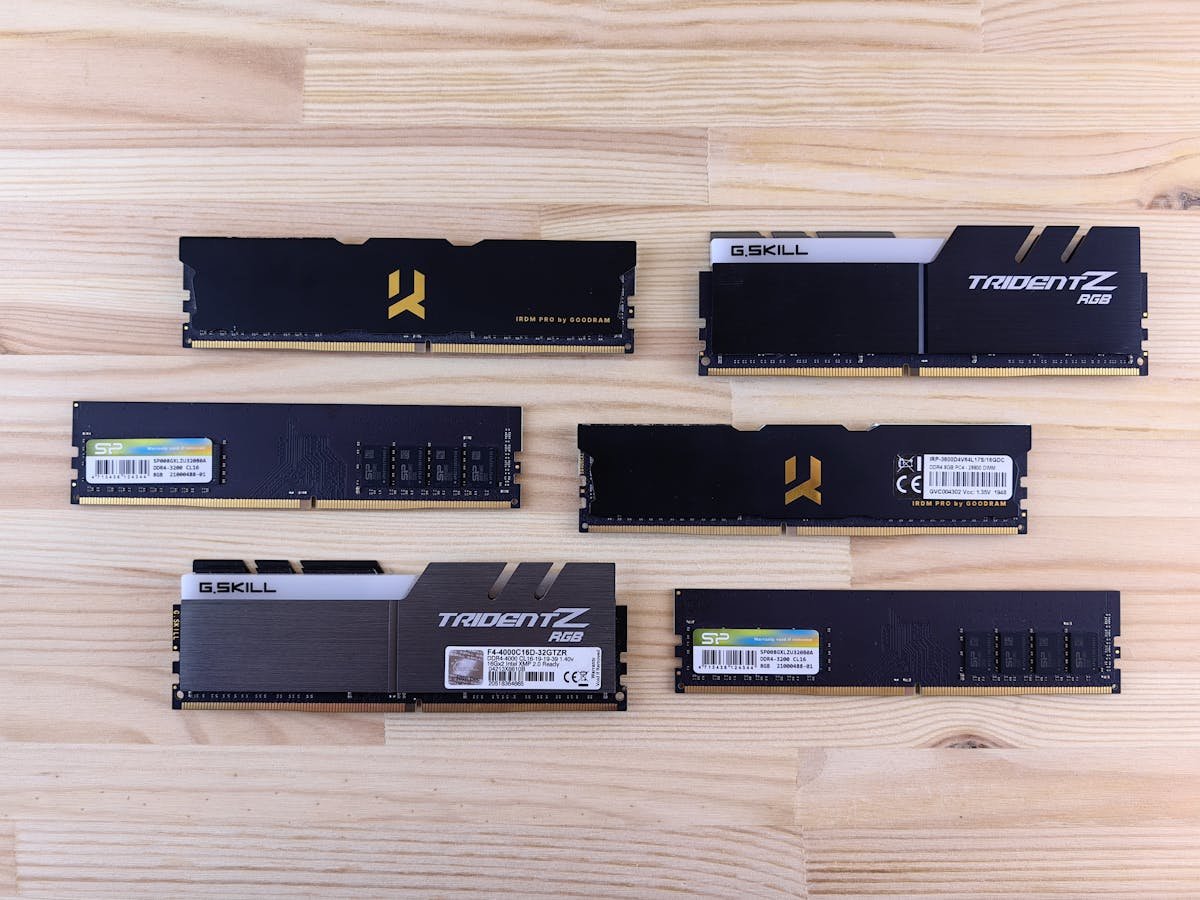
Soldered RAM is memory that has been permanently fused to the laptop’s motherboard during manufacturing. Unlike traditional removable RAM modules (SO-DIMM or SODIMM sticks), soldered memory cannot be removed, replaced, or upgraded without specialised equipment and significant technical skill.
When RAM is soldered, the chips are directly attached to the PCB (printed circuit board) using solder—a metal alloy that bonds the components together. This creates a single integrated unit. To upgrade or replace soldered RAM, you would need to:
- Use a hot air rework station to desolder the old chips
- Microsolder new chips in their place
- Risk damaging the motherboard in the process
In practical terms, this means soldered RAM cannot be upgraded by end users—and in many cases, not even by repair technicians without specialist equipment. When you buy a laptop with soldered RAM, the memory configuration is locked in for the device’s entire lifespan.
Soldered vs Removable RAM: Full Comparison
| Aspect | Soldered RAM | Removable RAM (SO-DIMM) |
|---|---|---|
| Upgradeability | Not upgradeable (requires microsoldering) | Fully user-upgradeable |
| Repairability | RAM failure = motherboard replacement (~£400–900) | RAM failure = RAM swap (~£60–200) |
| Power Consumption | 10–15% lower (integrated design) | Higher (module connectors add power draw) |
| Laptop Thickness | Thinner design possible (0.5–1mm thinner) | Requires SO-DIMM slots (adds height) |
| Laptop Weight | Slightly lighter (no module + connectors) | Negligibly heavier |
| Manufacturing Cost | Lower cost (fewer components, one assembly step) | Higher cost (slots, connectors, modules) |
| Latency | Slightly lower (direct connection to CPU) | Marginally higher (connector overhead) |
| Performance** | Equivalent when properly specced | Equivalent when properly specced |
| Device Lifespan Value | Lower (cannot adapt to future needs) | Higher (can upgrade as needs grow) |
The bottom line: soldered RAM is better for manufacturers (thinner, lighter, cheaper, lower power), but removable RAM is better for users (more flexible, more repairable, longer device lifespan).
Types of Soldered Memory
Modern soldered RAM comes in several variants. The type your laptop uses depends on its age and price point:
LPDDR4X (Older Standard)
Found in: flagship laptops (MacBook Air, Dell XPS) from 2018–2021. LPDDR4X runs at 4,266 MHz and uses ~3.5V. It was soldered primarily to achieve extreme thinness and weight. Modern equivalents have moved to faster standards, so LPDDR4X is now considered a budget option for soldered designs.
LPDDR5 (Current Standard for Thin Laptops)
Found in: most premium ultrabooks 2022–2023 (MacBook Pro 13″, Dell XPS 13, HP Spectre x360, ASUS ZenBook). LPDDR5 runs at 5,500 MHz and offers 20–30% better performance than LPDDR4X whilst using less power. This is the sweet spot for soldered RAM—fast enough for demanding users, efficient enough for all-day battery life.
LPDDR5X (Latest Standard)
Found in: latest flagship ultrabooks 2024+ (MacBook Pro 14″/16″ M4, Dell XPS 13 Plus, ASUS ZenBook S 13, Samsung Galaxy Book3 Ultra). LPDDR5X runs at 7,500 MHz and is 30–40% faster than LPDDR5. This is the fastest soldered memory available. However, it’s expensive and only makes a noticeable difference in heavily multithreaded workloads (video editing, 3D rendering, software development).
On-Package RAM (Intel Lunar Lake)
Found in: upcoming Intel Lunar Lake-based laptops (2024+). This is the extreme version of soldering—the RAM is literally built into the CPU package itself. This allows even thinner designs (~10mm) and lower power (integrated memory controller). The tradeoff: you cannot upgrade anything, and the CPU is soldered too.
Why Manufacturers Use Soldered RAM
Manufacturers don’t solder RAM to spite consumers. Several legitimate engineering and business reasons drive this trend:
1. Thinner and Lighter Designs
Removing the SO-DIMM slot saves 0.5–1.5mm in height and 20–40g in weight. For ultraportable laptops competing on thinness (MacBook Air at 13.3mm, Dell XPS 13 at 14.4mm), this matters for marketing and user perception. Consumers demand “the thinnest laptop,” so manufacturers respond by soldering.
2. Lower Power Consumption
Soldered RAM integrates directly with the CPU, eliminating connector overhead. This saves 5–15% of system power during memory operations. For battery-conscious laptops, this translates to 30–45 minutes of extra runtime per charge cycle.
3. Reduced Latency
The direct path from CPU to soldered RAM reduces memory access latency by 3–7 nanoseconds. In practice, this provides 1–3% performance gain compared to removable RAM. It’s measurable but not transformative for most users.
4. Cheaper Manufacturing
Soldered assembly is simpler: place the RAM chips during the initial motherboard manufacturing step. Removable RAM requires additional assembly (slots, connectors, testing for compatibility). Manufacturers save £3–8 per unit by soldering. This cost saving is rarely passed to consumers.
5. Planned Obsolescence (The Uncomfortable Truth)
When RAM cannot be upgraded, customers must buy a new laptop rather than refresh the old one. A 5-year-old MacBook with 8GB soldered RAM cannot become 16GB; it must be replaced. This drives repeat purchases. Cynical? Perhaps. But it’s a documented business strategy across the industry.
The Growing Trend: Which Brands Are Going Soldered
Soldered RAM is no longer the exception—it’s becoming the standard across premium laptops. Here’s the breakdown:
Apple (100% Soldered Since 2012)
All MacBooks: Every MacBook since 2012 has soldered RAM. MacBook Air, MacBook Pro 13″/14″/16″, MacBook Pro 14″ M4—all locked. No exceptions. This is Apple’s design philosophy: integrated, unserviceable, premium.
Dell (XPS, Inspiron Premium Lines Going Soldered)
XPS 13/15/17: 2024+ models have shifted to soldered LPDDR5X. Earlier XPS machines (2020–2023) still had SO-DIMM slots. This is a major shift—the XPS has historically been a business favourite with upgradeable RAM.
Inspiron 14/15 Plus: Premium variants increasingly feature soldered RAM to match MacBook thinness.
Latitude 7000 Series: Business-tier Latitude machines (7450, 7640) still offer SO-DIMM slots, but this is changing with newer generations.
Lenovo (AMD Variants Going Soldered, Intel Variants Still Mostly Removable)
ThinkPad X1 Carbon: Intel variants (2024+) have removable RAM. AMD variant (ThinkPad X1 Carbon with Ryzen) has soldered LPDDR5. Confusingly, the same product line has different RAM accessibility depending on processor choice.
ThinkPad L Series: Budget-tier machines still have SO-DIMM slots across the board.
ThinkPad T Series: Intel T-series (T440p, T460p, T470p, T480p, T14s) retain removable RAM. This is Lenovo’s last bastion of upgradeable business laptops.
HP (Spectre Going Soldered, EliteBook Holdout)
Spectre x360 (2024+): Premium consumer line now features soldered LPDDR5X in the thinnest variants.
EliteBook 840 G10/G11: Business line still offers SO-DIMM slots. This remains one of the few enterprise laptops with user-upgradeable RAM.
ASUS (ZenBook Going Soldered, ROG Still Mixed)
ZenBook S 13/14 OLED: Latest ultra-thin consumer machines feature soldered LPDDR5X.
ROG Zephyrus G14/16: Gaming line varies—some models have soldered LPDDR5, others retain SO-DIMM depending on the specific generation and market region.
TUF A17/F17: Budget gaming line still offers SO-DIMM slots for upgrade flexibility.
Microsoft Surface (100% Soldered)
All Surface Laptop, Surface Book, and Surface Pro devices feature soldered RAM with no upgrade path.
Which Laptops Still Have Upgradeable RAM?
If upgradeable RAM is important to you, options are shrinking—but they still exist. Here are the categories where you can still find removable SO-DIMM slots:
Business/Enterprise Laptops
Lenovo ThinkPad T Series: Intel variants (T14s, T15s, T16s) retain SO-DIMM slots. ThinkPad T14 Gen 12+ still supports user RAM upgrades.
HP EliteBook 840 / ProBook 640: Both lines still feature two SO-DIMM slots. EliteBook 840 G11 and ProBook 640 G10 are current-generation options.
Dell Latitude 5000/7000 Series: Certain Latitude models (5450, 5550) still have SO-DIMM slots, but verify each specific SKU before purchasing.
Gaming Laptops
Lenovo Legion 5 / Legion 7: Both lines offer SO-DIMM upgrades across most models. Check your specific configuration.
ASUS TUF A17 / F17: Mid-range gaming line includes SO-DIMM slots as standard.
MSI Bravo / Katana: Budget-to-mid gaming lines still feature user-upgradeable RAM.
Workstations
HP ZBook Firefly / G10: Mobile workstations prioritise repairability and upgradeability. Full SO-DIMM support.
Dell Precision 3000 / 5000 Series: Mobile workstations include SO-DIMM slots and are designed for field upgrades.
Lenovo ThinkPad P Series: Professional workstations (P1, P16, P14s) offer SO-DIMM upgradeability as standard.
Budget Laptops
Lenovo IdeaPad / ASUS VivoBook Budget Lines: Entry-level machines across brands still feature SO-DIMM slots because the cost of including them is negligible at this price point.
LPCAMM2: The Best of Both Worlds?
LPCAMM2 (Low Power Compact Memory Module 2) is an emerging standard that could bridge the gap between soldered efficiency and user upgradeability.
What makes it different:
- User-replaceable like SO-DIMM (modules plug in)
- Low-power like soldered LPDDR5X (integrated power management)
- Thinner than SO-DIMM slots (only 5.8mm tall vs 7.8mm for SO-DIMM)
- Faster with better latency than traditional SO-DIMM
Current adoption: Dell is the leading advocate, with LPCAMM2 appearing in upcoming Dell PowerEdge server modules. First consumer laptop implementations are expected in 2024–2025 on premium workstations and business machines. It’s not yet mainstream, but it represents the future: upgradeability without the performance or thickness penalties of traditional SO-DIMM.
If LPCAMM2 gains traction, it could reverse the soldering trend. However, adoption requires industry coordination, and manufacturers have little financial incentive to support it when soldering locks customers into replacement cycles.
How to Check Before You Buy
Before committing to a laptop purchase, verify the RAM situation:
1. Check the Specs Sheet
Manufacturer specs will typically state “upgradeable RAM” or list memory as “soldered LPDDR5.” Search the model name + “specs” on the official website. If upgradeability isn’t mentioned, it’s likely soldered.
2. Use Our Laptop Compatibility Database
Our laptop database includes RAM upgradeability for thousands of models. You can search by brand, model, or year.
3. Check Crucial’s System Scanner
Crucial offers a free system scanner that identifies your laptop model and shows whether RAM is upgradeable. Download the Crucial System Scanner (works on Windows and Mac) and run it on the specific laptop model you’re considering. It will show: current RAM, maximum RAM supported, and whether upgrades are possible.
4. Search Model + “Upgradeable RAM”
Search “[laptop model] upgradeable RAM” on Google or Reddit. Real users will quickly confirm whether a machine supports RAM upgrades.
What To Do If Your RAM Is Soldered
If you already own a laptop with soldered RAM (or are considering buying one), here are practical strategies:
1. Buy Enough RAM at Purchase
Spec your laptop to the maximum RAM you might need over its lifespan. If you plan to keep the machine 4–5 years, budget for 16GB minimum (32GB if you work with video, CAD, or virtual machines). It’s cheaper to add RAM upfront (£50–100) than to replace the entire laptop in 3 years.
2. Use External Storage and Cloud Computing
If you’re RAM-constrained, offload work to cloud services:
- Video editing: Use proxy editing on cloud platforms (Adobe Premiere Rush, DaVinci Resolve Cloud)
- CAD/3D work: Use cloud CAD services (Onshape, Fusion 360 cloud)
- Data analysis: Use Google Colab, AWS, or Azure notebooks
- Software development: Use cloud IDEs (GitHub Codespaces, Replit)
3. Optimise Your Operating System
If your soldered RAM feels insufficient:
- Disable unnecessary background services (Windows) or login items (Mac)
- Close browser tabs ruthlessly—Chrome alone can consume 2–4GB with 20+ tabs open
- Use lightweight alternatives (Brave instead of Chrome, Visual Studio Code instead of JetBrains IDEs)
- Increase virtual memory / page file size (trades disk speed for RAM availability)
4. Plan for Replacement
Accept that a soldered-RAM laptop has a defined lifespan. When the time comes to upgrade, expect to replace the entire machine—budget accordingly into your technology roadmap.
Recommended Laptops with Upgradeable RAM
If upgradeability is non-negotiable, here are top recommendations across different use cases:
Best Business Laptop: Lenovo ThinkPad T16s (Intel)
16″ 2.5K display, Intel Core Ultra, two SO-DIMM slots (upgrade to 32GB), 13-hour battery, legendary keyboard. £1,200–1,600 depending on configuration.
Best Mid-Range Gaming Laptop: ASUS TUF A16 Flip (Removable RAM Variants)
16″ 165Hz display, Intel Core i7/i9, RTX 4060/4070, two SO-DIMM slots, excellent build quality, 7–9 hour battery. £1,000–1,400 for configurations with upgradeable RAM.
Best Budget Option: Lenovo IdeaPad 3 (15″ Intel)
15″ FHD display, Intel Core i5/i7, integrated graphics, two SO-DIMM slots, good for students and light work. £400–700.
Best Professional Workstation: HP ZBook Firefly 15 G8
15″ 1080p or 4K display, Intel Xeon or Core i7, RTX graphics, upgradeable RAM, colour-accurate for creative work. £1,500–2,200.
Check our full list of laptops with upgradeable RAM for more options across price points and use cases.
Frequently Asked Questions
Can you upgrade soldered RAM?
Not practically. Soldered RAM is fused to the motherboard during manufacturing. Upgrading requires specialised microsoldering equipment (£500–5,000+) and carries high risk of motherboard damage. For consumer purposes, soldered RAM is permanent and non-upgradeable.
Is soldered RAM slower than removable RAM?
No. Soldered LPDDR5 and LPDDR5X are actually faster than traditional SO-DIMM RAM because of reduced latency and integrated power management. Performance is equivalent or slightly better when properly specced.
Why do all MacBooks have soldered RAM?
Apple’s philosophy is to design integrated, premium products without user-serviceable parts. This allows thinner designs, lower power consumption, and optimised performance. It also encourages hardware refresh cycles when RAM needs exceed the fixed configuration—a profitable business model.
Is 8GB soldered RAM enough for a laptop?
For basic browsing, email, and document work: yes. For multitasking, video editing, software development, or running virtual machines: no. 16GB is the modern standard; 32GB is recommended if you plan to keep the laptop 4+ years. With soldered RAM, you cannot upgrade later, so buy sufficient capacity upfront.
Should I buy a MacBook if I can’t upgrade the RAM?
If you’ll keep the MacBook 3–4 years and can afford to spec it with 16GB at purchase, yes. MacBooks offer excellent performance, build quality, and software integration for that timeframe. If you want 5+ years of use or need future upgradeability, choose a Windows laptop with removable RAM.
What’s the difference between LPDDR5 and LPDDR5X soldered RAM?
LPDDR5X is 30–40% faster than LPDDR5 (7,500 MHz vs 5,500 MHz) and uses slightly less power. In practice, both are fast enough for 99% of users. LPDDR5X only matters if you’re doing 4K video editing, compiling large codebases, or running AI models. For general use, the difference is negligible.
Recommended Products
These are the products we recommend based on this guide. All links go to Amazon where you can check current prices and availability.
| Product | Why We Recommend It | Amazon |
|---|---|---|
| Corsair Vengeance DDR4 SO-DIMM 32GB (2×16GB) 3200MHz | Best overall DDR4 upgrade kit | View on Amazon |
| Kingston Fury Impact DDR4 SO-DIMM 32GB (2×16GB) 3200MHz | Reliable alternative with tight latency | View on Amazon |
| Corsair Vengeance DDR5 SO-DIMM 32GB (2×16GB) 5600MHz | Top-rated DDR5 kit for gaming & productivity | View on Amazon |
| Kingston Fury Impact DDR5 SO-DIMM 32GB (2×16GB) 5600MHz | Excellent DDR5 alternative with XMP support | View on Amazon |
| Samsung 990 Pro 2TB NVMe M.2 2280 | Fastest consumer NVMe — ideal for gaming & editing | View on Amazon |
| WD Black SN850X 2TB NVMe | Excellent Gen4 speed with heatsink option | View on Amazon |
| Crucial P5 Plus 1TB NVMe | Great value Gen4 SSD | View on Amazon |
| Kingston NV2 1TB NVMe | Budget-friendly with solid reliability | View on Amazon |
Prices and availability may vary. As an Amazon Associate, we earn from qualifying purchases.
Related Guides
- Ram Compatibility
- Sodimm Vs Lpddr Laptop Ram
- 8Gb Vs 16Gb Vs 32Gb Laptop Ram
- Best Ram For Lenovo Legion
- Best Ram For Asus Rog
Recommended upgrades
As an Amazon Associate we earn from qualifying purchases. Prices & availability shown on Amazon.
For laptops and mini PCs that use DDR5 SO-DIMM
For laptops and mini PCs that use DDR4 SO-DIMM
How we verify this guide
We cross-reference compatibility figures against manufacturer specifications where available, official service manuals, and the standards that govern fit — memory type and speed (DDR4 / DDR5 / LPDDR5), maximum supported capacity and slot count, SSD form factor and interface (M.2 2280, NVMe PCIe vs SATA, keying), and charger wattage and connector (USB-C Power Delivery, GaN). We’re explicit about soldered or non-upgradeable parts, prioritise primary sources over retailer listings, and re-verify the data on a regular cycle. More on our method →