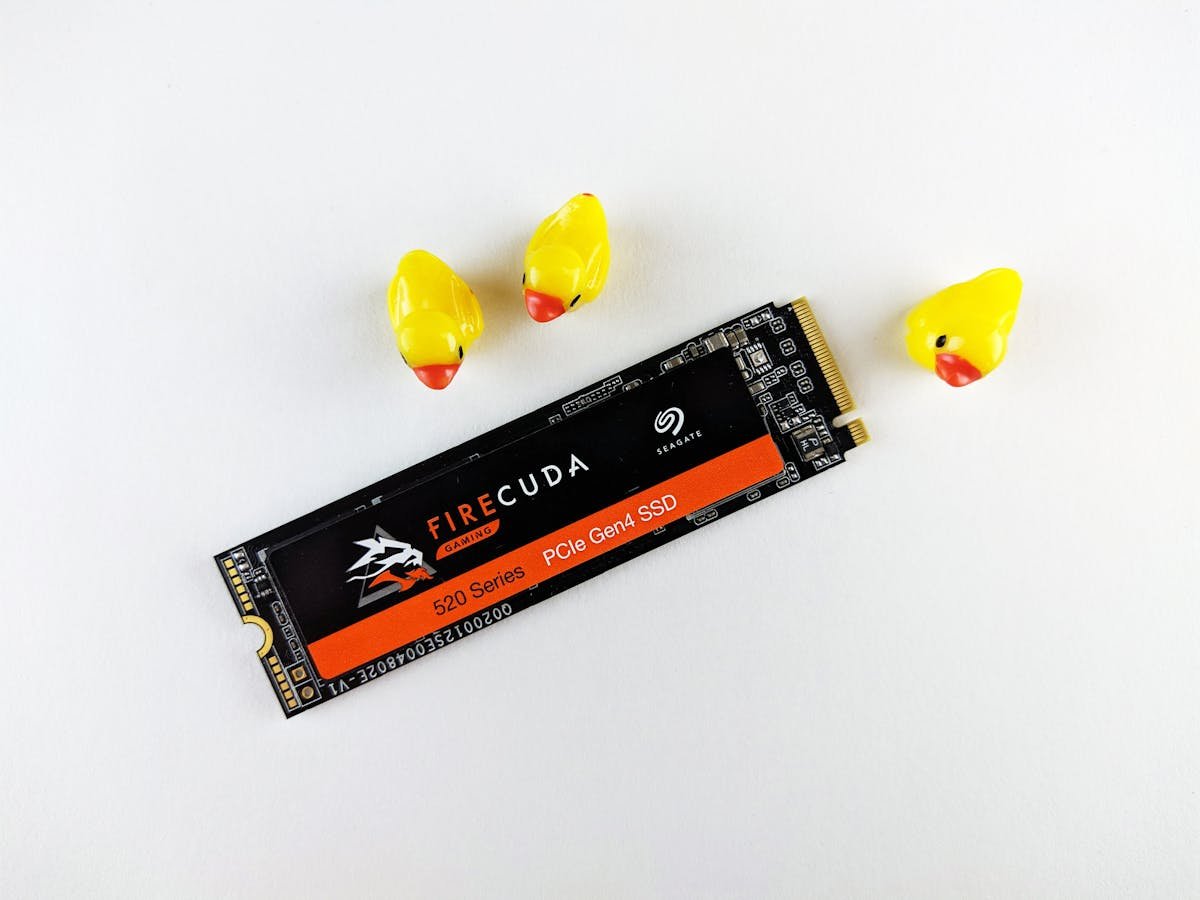
The Samsung 990 EVO and WD SN770 are two of the most popular mid-range NVMe SSDs for laptop upgrades. Both deliver solid PCIe 4.0 performance at competitive prices, but they differ in speed profiles, thermal management, and target use cases. This guide helps you pick the right SSD for your laptop.
Overview Comparison Table
| Specification | Samsung 990 EVO | WD SN770 |
|---|---|---|
| Interface | PCIe 5.0 NVMe | PCIe 4.0 NVMe |
| Read Speed | Up to 5,000 MB/s | Up to 4,050 MB/s |
| Write Speed | Up to 4,200 MB/s | Up to 3,950 MB/s |
| Form Factor | M.2 2280 | M.2 2280 |
| Capacity Options | 256GB–4TB | 250GB–2TB |
| DRAM | With DRAM (supports HMB) | DRAM-less (HMB support) |
| Warranty | 5 years | 5 years |
| Price Tier | Mid-range | Budget-friendly |
Samsung 990 EVO — Future-Proof Performance
The Samsung 990 EVO is Samsung’s newest generation NVMe SSD, featuring PCIe 5.0 interface support. Even though most laptops only support PCIe 4.0, the 990 EVO is backward compatible and delivers impressive performance. The drive includes onboard DRAM for cache operations, improving sustained write performance.
Key advantages: PCIe 5.0 support ensures future compatibility if you upgrade to a PCIe 5.0-enabled laptop. DRAM cache provides stable write speeds for large file operations. Up to 5,000 MB/s read speed significantly faster than WD SN770. Excellent reliability track record with Samsung’s reputation. Available in capacities up to 4TB, ideal for content creators.
Best for: Video editing, 3D modeling, photography workflows, users who plan to upgrade laptops frequently, anyone prioritizing cutting-edge performance.
WD SN770 — Best Budget Choice
The WD SN770 is Western Digital’s mainstream PCIe 4.0 SSD, designed for users who want solid performance without premium pricing. The SN770 doesn’t include onboard DRAM but supports Host Memory Buffer (HMB), which uses system RAM as cache.
Key advantages: Lowest price among comparable drives, making it excellent for budget upgrades. 4,050 MB/s read speed is still very fast for everyday use. NAND flash quality is excellent, typical of WD’s manufacturing standards. Supports HMB for efficient cache management. 5-year warranty provides peace of mind. Widely available and well-reviewed.
Best for: Budget-conscious upgrades, office work, gaming, general computing, anyone prioritizing value over cutting-edge specs.
Head-to-Head Performance Comparison
| Category | Samsung 990 EVO | WD SN770 | Winner |
|---|---|---|---|
| Sequential Read Speed | 5,000 MB/s | 4,050 MB/s | Samsung (+23%) |
| Sequential Write Speed | 4,200 MB/s | 3,950 MB/s | Samsung (+6%) |
| Random Read (IOPS) | ~500K | ~450K | Samsung |
| Cache Performance | Onboard DRAM | HMB (system RAM) | Samsung |
| Real-World Boot/Load Times | ~5-10% faster | Very fast | Samsung |
| Price Value | Premium | Best value | WD |
| Thermal Performance | Good | Good | Tie |
| Future-Proofing | PCIe 5.0 ready | PCIe 4.0 only | Samsung |
Which Should You Choose?
Choose Samsung 990 EVO if: You work with large video files, 3D models, or photography workflows. You want the absolute best performance and don’t mind paying for it. You plan to keep your laptop for 5+ years and want forward compatibility with PCIe 5.0. You need capacities above 2TB. You prefer Samsung’s ecosystem and warranty support.
Choose WD SN770 if: Budget is your primary concern. Your laptop only supports PCIe 4.0 anyway (most current laptops). You use your laptop for general computing, gaming, and office work. You want proven reliability at the best possible price. You don’t need capacities above 2TB.
The verdict: For value-conscious buyers, the WD SN770 is the smarter choice — it delivers 80% of the performance at 60% of the cost. For professionals and content creators who benefit from faster speeds, the Samsung 990 EVO’s superior performance and DRAM cache justify the premium. Both are reliable, well-reviewed drives.
Frequently Asked Questions
Will the Samsung 990 EVO work in older laptops?
Yes, absolutely. PCIe 5.0 is backward compatible with PCIe 4.0 and earlier. Your laptop will recognize the 990 EVO and run it at PCIe 4.0 speeds if that’s all your system supports. You get future-proofing at no performance cost.
Is the 23% speed difference noticeable in real use?
Not for most users. Booting is marginally faster (5-10% difference). For large file operations and video editing, the difference is measurable but not dramatic. For gaming and everyday computing, both drives feel equally fast.
What’s the difference between DRAM and HMB?
DRAM on the SSD itself provides dedicated cache for fast operations. HMB uses your laptop’s system RAM as cache instead, which is slightly slower but saves cost. Both work well; DRAM is more consistent.
How much capacity do I need?
For most users: 512GB minimum (OS + programs). For creators: 1TB–2TB. The 990 EVO’s 4TB option is overkill for most laptops; 1TB is the sweet spot for performance and value.
Recommended NVMe SSDs
| Drive | Capacity | Speed | Price Range | Link |
|---|---|---|---|---|
| Samsung 990 EVO | 1TB | PCIe 5.0 | Premium | View on Amazon UK |
| WD SN770 | 1TB | PCIe 4.0 | Budget-friendly | View on Amazon UK |
| Samsung 990 EVO | 2TB | PCIe 5.0 | Premium | View on Amazon UK |
| WD SN770 | 2TB | PCIe 4.0 | Budget-friendly | View on Amazon UK |
Related SSD Guides
- Laptop SSD Compatibility Guide (2026) — NVMe, SATA, M.2 Sizes Explained
- Laptop RAM Compatibility Guide (2026) — DDR4, DDR5 & LPDDR5
- Laptop Upgrade Hardware Guide
Shop Compatible Upgrades at PCHub.UK
Prices updated automatically from PCHub.UK — click to view full specs and buy

Prices from PCHub.UK via ComputersDeal. As an affiliate, we may earn from qualifying purchases. Prices updated 2026-04-10 13:15:58.