Affiliate disclosure: this page contains affiliate links — if you buy through them we may earn a commission at no extra cost to you. As an Amazon Associate we earn from qualifying purchases.
HP’s ZBook series represents professional-grade workstations built for demanding creative and technical workflows. Unlike consumer laptops, ZBook models support ECC (Error-Correcting Code) memory, fast storage configurations, and premium components. The ZBook Fury (high-end), ZBook Studio (mid-range), and ZBook Power (entry professional) offer varying upgrade paths suited to different professional needs. This guide covers recent ZBook models, detailing ECC RAM compatibility, dual M.2 configurations, and professional-focused upgrades.
HP ZBook Compatibility Master Table
The table below lists popular ZBook models across three lines, showing ECC support and storage options.
| Model | RAM Type | Max RAM | ECC Support | SSD Slots | Max Storage |
|---|---|---|---|---|---|
| HP ZBook Fury 16 Gen 5 | DDR5 SODIMM | 96GB (2×48) | ECC Compatible | 2x M.2 NVMe | 4TB |
| HP ZBook Fury 15 Gen 5 | DDR5 SODIMM | 96GB (2×48) | ECC Compatible | 2x M.2 NVMe | 4TB |
| HP ZBook Studio 16 Gen 6 | DDR5 SODIMM | 96GB (2×48) | ECC Compatible | 2x M.2 NVMe | 4TB |
| HP ZBook Studio Pro 16 Gen 6 | DDR5 SODIMM | 96GB (2×48) | ECC Compatible | 2x M.2 NVMe | 4TB |
| HP ZBook Power 15 Gen 5 | DDR5 SODIMM | 32GB (2×16) | ECC Compatible | 1x M.2 NVMe | 1TB |
ECC RAM Upgrade for Professional Workloads
Understanding ECC in ZBook Systems
All ZBook models support ECC SODIMM RAM, which detects and corrects single-bit errors in real-time. This is critical for professional workflows where data corruption can waste hours of work or produce unusable output. While non-ECC RAM technically works, ECC is strongly recommended for professional use.
Cost difference: ECC modules cost £15–30 more per module than equivalent non-ECC RAM, a worthwhile investment for professional stability and data integrity.
ZBook Fury and Studio (DDR5 ECC)
High-end ZBook models support up to 96GB DDR5 ECC (2x48GB). Most ship with 32GB or 64GB, leaving upgrade potential. ZBook Studio typically maxes at 64GB in base configurations but can be maxed to 96GB via upgrade.
Upgrade recommendation: For video editing, 3D rendering, or scientific computing:
- 32GB to 64GB: Add a single 32GB ECC module (£100–150)
- 64GB to 96GB: Replace both with 48GB modules (£300–400 for the pair)
Professional DDR5 ECC options:
- Kingston DDR5 ECC SODIMM 32GB/48GB — Enterprise-grade, widely compatible with ZBook
- Crucial DDR5 ECC SODIMM 32GB — Reliable professional choice
- Micron DDR5 ECC SODIMM 48GB — When available, highest capacity option
Note: DDR5 ECC SODIMM modules in large capacities (32GB+) are less widely available than DDR4 ECC. Check stock before planning major upgrades.
ZBook Power (DDR5 ECC, Entry Professional)
The ZBook Power 15 is the entry-level professional ZBook, supporting up to 32GB DDR5 ECC (2x16GB). It’s suitable for technical professionals who don’t need the extreme performance of higher-end ZBooks.
Upgrade recommendation: Upgrade from 16GB to 32GB by adding a single 16GB ECC module (£50–70). This is the practical maximum for Power series and provides solid professional capability.
Dual M.2 SSD Configuration
ZBook Fury and Studio (Dual M.2)
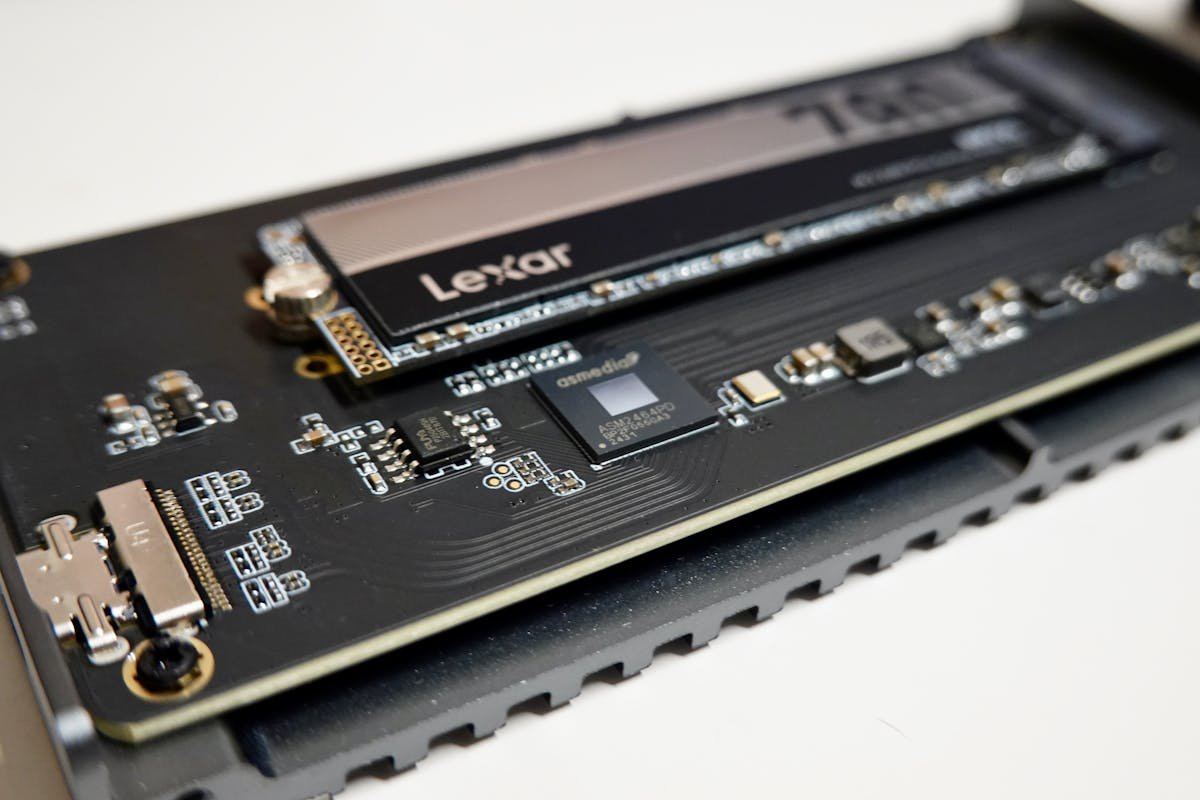
High-end ZBooks feature two M.2 NVMe slots, supporting up to 4TB total storage. Professional users commonly configure these as:
- OS + Applications: 500GB–1TB fast NVMe on primary slot
- Projects/Media: 1TB–2TB on secondary slot for large files
- Backup/Archive: Both slots populated for redundancy in critical work
Recommended storage strategy: For video editors handling 4K/8K footage, 1TB primary (OS/cache) + 2TB secondary (media files) = 3TB total. For 3D modelers or CAD professionals, 500GB primary + 1TB secondary is often sufficient.
ZBook Power (Single M.2)
The entry ZBook Power has one M.2 slot, typically populated with 512GB. Upgrading to 1TB costs £40–70 and is the maximum for this line.
Professional-Grade SSD Recommendations
Enterprise-grade SSDs prioritize reliability and sustained performance over raw speed. These are ideal for all-day professional work.
- Samsung 990 Pro 1TB/2TB (PCIe 4.0) — Premium workstation drive, excellent reliability
- Crucial P5 Plus 1TB/2TB (PCIe 4.0) — Solid professional choice
- WD Red Pro SN850NX (PCIe 4.0) — Data-center grade, highest reliability
- SK Hynix Platinum P41 (PCIe 4.0) — Enterprise reliability, low power draw
Professional Workload-Specific Upgrades
Video Editing Path: £300–500
For 4K/6K video work, upgrade ZBook Studio to 64GB ECC RAM and configure 1TB + 2TB dual M.2 drives. Total: 64GB RAM, 3TB storage.
3D/CAD Path: £250–400
For complex 3D modeling, upgrade ZBook Fury to 96GB ECC RAM (maximum) and add a secondary 2TB SSD. This supports large assemblies and real-time rendering with minimal cache limitations.
Data Science Path: £400–600
For machine learning and large datasets, max ZBook Fury to 96GB ECC RAM and populate dual 2TB NVMe drives (4TB total). This handles large training datasets and prevents I/O bottlenecks.
Portable Professional Path (ZBook Power): £100–150
For consultants and technical professionals on the go, upgrade Power to 32GB ECC RAM and add a 1TB SSD. This is the maximum practical upgrade for the entry ZBook and provides solid professional capability in a lighter package.
Thermal Considerations
ZBooks are engineered for sustained professional workloads with robust cooling. When upgrading SSDs, ensure proper thermal pads and spacing:
- Thermal management: Use Thermal Grizzly Minus Pads between secondary SSD and heatsink
- Charger: ZBooks use 135W–240W chargers; ensure you’re using the correct wattage to avoid throttling during sustained workloads
- Regular maintenance: Repaste CPU/GPU every 12–18 months of heavy use to maintain thermal efficiency
Frequently Asked Questions
Is ECC RAM required for professional work on ZBook?
Not strictly required, but highly recommended. ECC detects and corrects single-bit errors, critical when mistakes cost hours of rendering or analysis. For professional studios, ECC is standard. For individual freelancers, non-ECC is acceptable if reliability risks are understood.
Can I mix ECC and non-ECC RAM in a ZBook?
Technically yes, but not recommended. Mixing RAM types can lead to unpredictable behavior. It’s better to populate both slots with matching ECC modules or skip the mixed approach. If upgrading from non-ECC to ECC, replace all modules at once.
How much RAM do I need for 4K video editing?
64GB is the professional standard for 4K timeline editing (Adobe Premiere, DaVinci Resolve). 96GB provides headroom for complex effects and color grading. Below 64GB, you’ll experience frequent cache dumps and timeline stuttering.
Which ZBook should I buy for professional work?
ZBook Fury for video/3D work (maximum performance), ZBook Studio for balanced creative work, ZBook Power for CAD/technical work on a budget. Fury and Studio have dual SSD slots; Power has one. Consider dual storage carefully if you plan large media projects.
Can I use a ZBook as a gaming laptop?
Yes, though it’s overkill. ZBooks have professional GPUs (NVIDIA RTX/A series) which excel at gaming. However, you’re paying for workstation features you won’t use. Consider an HP Omen if gaming is your primary use case.
Recommended Products
These are the products we recommend based on this guide. All links go to Amazon where you can check current prices and availability.
| Product | Why We Recommend It | Amazon |
|---|---|---|
| Corsair Vengeance DDR4 SO-DIMM 32GB (2×16GB) 3200MHz | Best overall DDR4 upgrade kit | View on Amazon |
| Kingston Fury Impact DDR4 SO-DIMM 32GB (2×16GB) 3200MHz | Reliable alternative with tight latency | View on Amazon |
| Corsair Vengeance DDR5 SO-DIMM 32GB (2×16GB) 5600MHz | Top-rated DDR5 kit for gaming & productivity | View on Amazon |
| Kingston Fury Impact DDR5 SO-DIMM 32GB (2×16GB) 5600MHz | Excellent DDR5 alternative with XMP support | View on Amazon |
| Samsung 990 Pro 2TB NVMe M.2 2280 | Fastest consumer NVMe — ideal for gaming & editing | View on Amazon |
| WD Black SN850X 2TB NVMe | Excellent Gen4 speed with heatsink option | View on Amazon |
| Crucial P5 Plus 1TB NVMe | Great value Gen4 SSD | View on Amazon |
| Kingston NV2 1TB NVMe | Budget-friendly with solid reliability | View on Amazon |
Prices and availability may vary. As an Amazon Associate, we earn from qualifying purchases.
Related HP Upgrade Guides
- HP Battery Replacement: EliteBook, Pavilion & OMEN Step-by-Step
- Best RAM for HP Laptops in 2026
- HP ProLiant DL365 Gen11 RAM & SSD Upgrade Guide (2023)
- HP ProLiant ML30 Gen11 RAM & SSD Upgrade Guide (2023)
- HP ProLiant DL385 Gen10 Plus RAM & SSD Upgrade Guide (2020)
- HP Upgrade Guide
Not sure what fits? Use our free Compatibility Checker covering 3,195+ models.
Helpful Guides
Related Resources
- Laptop Upgrade Compatibility Checker — Check RAM, SSD & charger compatibility for 3,195+ models
- RAM Compatibility Guide — DDR4, DDR5 & LPDDR5 explained
- SSD Compatibility Guide — NVMe, SATA & M.2 sizes
- Charger Compatibility Guide — USB-C, Power Delivery & GaN
- Docking Station Compatibility Guide — Thunderbolt, USB-C & DisplayLink