Affiliate disclosure: this page contains affiliate links — if you buy through them we may earn a commission at no extra cost to you. As an Amazon Associate we earn from qualifying purchases.
You’re shopping for RAM and you see two options that look similar at first glance. Both are DDR5-5600, but one says CL32 and the other says CL46. Which is better? And what do these numbers actually mean?
RAM timings describe the delays (measured in clock cycles) between RAM operations. They’re the fine print nobody reads, but they silently affect your system’s performance. The problem: comparing timings between different speeds is confusing. A DDR5 drive with CL46 might actually be faster than a DDR4 drive with CL16, and most buyers don’t realise it.
In this guide, we’ll explain what RAM timings really mean, show you how to compare them fairly across different speeds, and help you decide whether timing matters for your workload.
What Are RAM Timings? The Basics
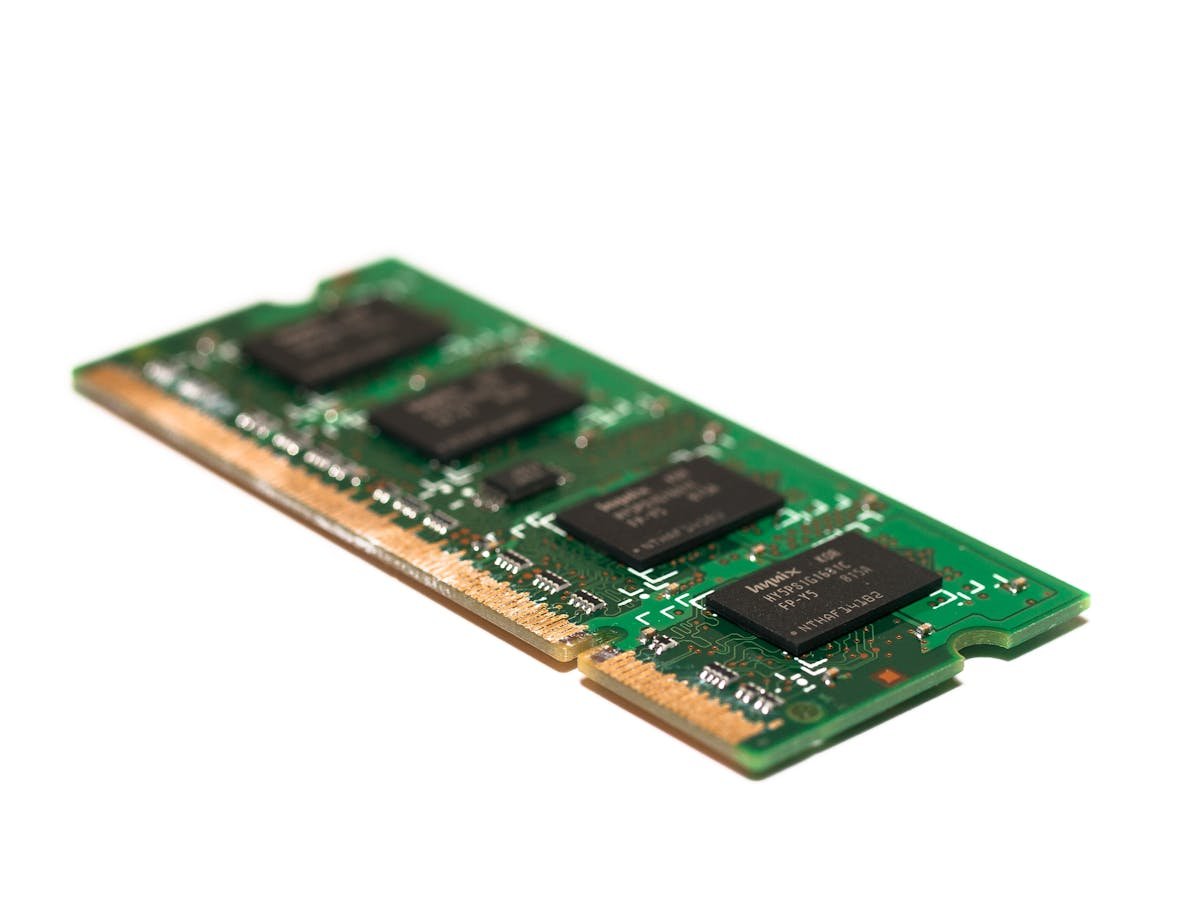
RAM doesn’t respond instantly when your CPU asks for data. There’s a delay — latency — measured in clock cycles. RAM timings quantify these delays for common operations.
Think of it like a library: your CPU is the patron, RAM is the library, and timings are the steps it takes to get a book:
- Walk to the shelf (CAS Latency)
- Find the row (tRCD)
- Grab the book and return (tRP)
- Reshelve and close the section (tRAS)
Each step takes time. Faster timings = shorter delays = slightly snappier performance. But here’s the catch: a single clock cycle is faster in faster RAM. DDR5-5600 cycles happen twice as fast as DDR4-2800, so a CL46 number on DDR5 might actually represent less actual waiting time than a CL23 on DDR4.
The Four Primary RAM Timings Explained
Timings are always written as a string like CL16-18-18-36. Here’s what each number means:
CAS Latency (CL) — The Most Important Timing
CAS = Column Address Strobe. This is the delay between when the CPU requests data from a specific column and when the RAM begins to provide it. Measured in clock cycles.
- Lower is faster: CL16 is faster than CL18
- Typical values: DDR4 is CL16–20; DDR5 is CL32–48
- Real-world example: On DDR4-3200, one cycle = 0.625 nanoseconds. CL16 = 10 nanoseconds of latency. On DDR5-5600, one cycle = 0.357 nanoseconds. CL36 = 12.9 nanoseconds. So DDR5 CL36 is actually slower in real nanoseconds, even though it’s a higher number.
tRCD (Row to Column Delay)
tRCD is the delay between opening a row in RAM and accessing a column within that row. Measured in clock cycles.
- Typical values: 16–22 for DDR4; 32–48 for DDR5
- Why it matters: Faster tRCD slightly improves random access performance (important for gaming and single-threaded work)
tRP (Row Precharge Time)
tRP is the delay needed to close one row and prepare for opening another. Measured in clock cycles.
- Typical values: 16–22 for DDR4; 32–48 for DDR5
- Why it matters: Faster tRP helps when accessing data across multiple rows
tRAS (Row Active Time)
tRAS is the total time a row can remain open before it must be refreshed. Measured in clock cycles.
- Typical values: 32–52 for DDR4; 68–96 for DDR5
- Why it matters: Less critical than the others; mostly affects server workloads
How to Read RAM Timing Notation
When you see DDR4-3200 CL16-18-18-36, you’re reading:
- DDR4-3200: Memory type and speed (3200 megahertz)
- CL16: CAS Latency = 16 cycles
- 18: tRCD = 18 cycles
- 18: tRP = 18 cycles
- 36: tRAS = 36 cycles
Some manufacturers add extra numbers: DDR4-3200 CL16-18-18-36-54 includes tRC (Row Cycle Time). More numbers = more precision, but the first four are the main ones.
True Latency — The Formula You Need to Know
Here’s the critical insight that catches most people: CAS Latency numbers alone don’t tell you which RAM is actually faster. You need to convert to real time (nanoseconds).
Formula:
True Latency (ns) = (CAS Latency ÷ Speed in MT/s) × 2000
Let’s compare three real-world examples:
| RAM Module | CAS Latency | Speed (MT/s) | True Latency (ns) | Verdict |
|---|---|---|---|---|
| DDR4-3200 CL16 | 16 | 3200 | (16 ÷ 3200) × 2000 = 10.0 ns | Fast |
| DDR5-5600 CL36 | 36 | 5600 | (36 ÷ 5600) × 2000 = 12.9 ns | Slower than DDR4-3200 CL16 |
| DDR5-5600 CL28 | 28 | 5600 | (28 ÷ 5600) × 2000 = 10.0 ns | Same as DDR4-3200 CL16 |
| DDR5-6400 CL32 | 32 | 6400 | (32 ÷ 6400) × 2000 = 10.0 ns | Same as DDR4-3200 CL16 |
This is why DDR5 CL46 doesn’t mean DDR5 is slower than DDR4: The higher numbers reflect faster clock speeds, not slower response times.
First Word Latency vs Bandwidth — Which Matters More?
RAM performance is driven by two separate factors:
Latency (First Word Latency)
This is the delay to fetch the first piece of data from RAM. Measured in nanoseconds. Lower is better.
Latency matters most for:
- Gaming: Sensitive to single-threaded latency (CPU waiting for one data point)
- Web browsing: Many small random accesses
- Productivity apps: Excel calculations, text editing
Bandwidth (Data Throughput)
This is how much data RAM can transfer per second, measured in GB/s. Higher is better.
Bandwidth matters most for:
- Video editing: Moving large files in and out of RAM
- 3D rendering: Processing large texture and mesh data
- Machine learning: Feeding massive datasets to the GPU
- Multi-threaded workloads: Many CPU cores accessing RAM simultaneously
Real-world numbers:
| Type | DDR4-3200 | DDR5-5600 | DDR5-6400 |
|---|---|---|---|
| True Latency (ns) | 10 ns | 12.9 ns | 10 ns |
| Bandwidth (GB/s) | 51.2 GB/s | 89.6 GB/s | 102.4 GB/s |
Practical implication: DDR5 sacrifices a tiny bit of latency to gain massive bandwidth. For gaming, this trade-off barely matters (a few nanoseconds won’t change your frame rate). For video editing, the extra bandwidth is a significant win.
Tight vs Loose Timings — What It Means in Practice
Tight timings refer to lower cycle numbers (e.g., CL16, tRCD18). Loose timings are higher numbers (e.g., CL20, tRCD22).
On paper, tight is better. But in real-world performance:
- Tight timings (CL16–18): A few percentage points faster in latency-sensitive tasks (gaming, single-threaded benchmarks). Real-world difference: ~5–10% FPS improvement at best
- Loose timings (CL20–22): Slightly faster clocks possible (DDR4-3600 CL22 vs DDR4-3200 CL18). Bandwidth gain often outweighs latency penalty
Don’t obsess over timings. Speed matters more. DDR4-3600 CL20 will outperform DDR4-3200 CL16 in most workloads because the extra 400 MHz bandwidth gain is larger than the latency penalty.
How to Check Your Current RAM Timings
Want to know what timings your system is using? Use one of these tools:
CPU-Z (Free, Windows/Linux)
Download from cpuid.com. Open the Memory tab — you’ll see current speed, CAS Latency, tRCD, tRP, and tRAS.
HWiNFO64 (Free, Windows)
Download from hwinfo.com. Shows extensive RAM details including timing, voltage, and temperature.
BIOS (Built-in, All Systems)
Restart and enter BIOS (Delete, F2, or F12). Navigate to Advanced → Memory Settings. Timings will be listed there.
Windows Command Line
Open Command Prompt (admin) and type:
wmic memorychip get speed,configureclockspeed
This shows basic speed but not detailed timings.
Comparing DDR4 and DDR5 Timings — The Fair Way
A common question: “Is DDR5-5600 CL36 better than DDR4-3200 CL16?”
Quick answer: Not for latency. DDR5-5600 CL36 is slower in true nanosecond latency (12.9 ns vs 10 ns). But DDR5 wins on bandwidth, making it overall faster for most modern workloads.
The fair comparison:
- For pure latency: DDR4-3200 CL16 ≈ DDR5-5600 CL28 ≈ DDR5-6400 CL32 (all ~10 ns)
- For bandwidth: DDR5 is a clear winner (nearly 2× DDR4 at the same timing)
- Real-world winner for gaming: DDR5-6400 CL32 > DDR4-3600 CL18 (faster speed wins)
Don’t buy DDR5 CL46. It’s cheaper, but CL36 or CL32 offer better value. The extra latency only helps manufacturers hit aggressive price points.
Should You Prioritise Speed or Latency When Buying RAM?
Prioritise speed. Always. Here’s why:
- Speed scales performance: A 400 MHz jump (DDR4-3200 to DDR4-3600) is a noticeable bandwidth increase
- Tight timings are rare without tight budgets: DDR4-3600 CL18 might cost the same as DDR4-3200 CL16. Choose the 3600 MHz kit
- Latency differences are small in practice: Going from CL16 to CL20 might lose 2–3% performance in gaming. Gaining 400 MHz gains 3–5%
Decision matrix:
| Scenario | Buy This | Not This | Why |
|---|---|---|---|
| Gaming PC, £150–200 budget | DDR4-3600 CL20 | DDR4-3200 CL16 | Speed gain outweighs timing loss |
| Content creation, unlimited budget | DDR5-6400 CL32 | DDR5-5600 CL36 | Both bandwidth and latency improve |
| Budget PC, tight budget | DDR4-3200 CL16 | DDR4-2666 CL18 | Speed is still king; take the 3200 |
| Laptop upgrade | Fastest JEDEC (DDR5-5600) | Any DDR4 | Most laptops don’t support XMP anyway; use stock speeds |
Can You Change RAM Timings on a Laptop?
Short answer: Almost never.
Most laptops have locked BIOS, preventing you from adjusting memory timings. Even if you could access BIOS, the RAM is soldered to the motherboard on many models, making physical upgrades impossible.
The few gaming laptops with unlocked BIOS (ASUS ROG, MSI) theoretically allow timing adjustments, but it’s risky and rarely worth it. One wrong value and the system won’t boot. Warranty is voided if the manufacturer detects manual overclocking.
For laptops, accept the timings that ship with the system. Focus on choosing a model with fast factory-configured RAM (DDR5-5600 JEDEC or DDR5-6400 XMP if supported).
Recommended Products — Quality RAM with Good Timing Profiles
| Product | Speed & Timing | True Latency | Best For |
|---|---|---|---|
| Corsair Vengeance DDR5-6400 CL32 | 6400 MHz, CL32 | ~10 ns | High performance, excellent value |
| Kingston Fury Impact DDR4-3200 CL16 | 3200 MHz, CL16 | 10 ns | Gaming, mainstream value |
| G.Skill Ripjaws S5 DDR5-5600 CL28 | 5600 MHz, CL28 | ~10 ns | Balanced speed and latency |
| Crucial Pro DDR5-5600 | 5600 MHz, CL46 | ~16.4 ns | Budget DDR5, acceptable for productivity |
Prices and availability may vary. As an Amazon Associate, we earn from qualifying purchases.
FAQ — RAM Timings and Latency Questions
Does CAS latency matter for gaming?
It matters, but not hugely. Reducing CAS Latency from CL20 to CL16 might improve gaming FPS by 2–5% in latency-sensitive scenarios (esports titles like CS:GO, Valorant). For AAA games, the impact is minimal. Prioritise speed (DDR4-3600 vs DDR4-3200) before obsessing over CL numbers.
Is CL16 better than CL18?
Yes, CL16 is technically faster, but the real-world difference depends on speed. DDR4-3600 CL18 is likely faster overall than DDR4-3200 CL16 because the bandwidth advantage outweighs the latency loss. Always compare true latency in nanoseconds, not just the CL number.
Why does DDR5 have higher latency numbers than DDR4?
DDR5 runs at higher clock speeds. A higher CL number (e.g., CL46) at DDR5-5600 can represent the same or better true latency (nanoseconds) as a lower CL number at DDR4-3200. The numbers aren’t directly comparable across speeds — convert to nanoseconds first.
What is the best CAS latency for DDR5?
Aim for CL28–CL36. CL32 is the sweet spot for DDR5-6400. CL46 is budget territory — it works, but true latency is noticeably higher (16+ ns). CL28 is premium but offers the tightest timings available for consumer DDR5.
Can I manually adjust RAM timings in BIOS for better performance?
Yes, but don’t unless you know what you’re doing. Manual timing adjustments can cause instability and void your warranty. If you want tighter timings, buy faster RAM with tighter factory profiles. It’s safer and often cheaper than manual overclocking.
Do RAM timings affect productivity work like video editing or 3D rendering?
Less than you’d expect. These tasks are bandwidth-sensitive, not latency-sensitive. A DDR5-5600 system with loose timings will perform better than DDR4-3200 with tight timings because the extra bandwidth matters more. Focus on total RAM speed, not timing precision.
Related Guides
- Laptop RAM Speed Compatibility — What Speed Does Your Laptop Actually Support?
- DDR4 vs DDR5 Laptop RAM — Generational Differences Explained
- Dual-Channel RAM Explained — Why You Need Two Sticks
- Laptop RAM Compatibility Guide — DDR4, DDR5 & LPDDR5
- How to Check Laptop RAM Compatibility Before Buying
Recommended upgrades
As an Amazon Associate we earn from qualifying purchases. Prices & availability shown on Amazon.
For laptops and mini PCs that use DDR5 SO-DIMM
For laptops and mini PCs that use DDR4 SO-DIMM
How we verify this guide
We cross-reference compatibility figures against manufacturer specifications where available, official service manuals, and the standards that govern fit — memory type and speed (DDR4 / DDR5 / LPDDR5), maximum supported capacity and slot count, SSD form factor and interface (M.2 2280, NVMe PCIe vs SATA, keying), and charger wattage and connector (USB-C Power Delivery, GaN). We’re explicit about soldered or non-upgradeable parts, prioritise primary sources over retailer listings, and re-verify the data on a regular cycle. More on our method →