
Affiliate disclosure: this page contains affiliate links — if you buy through them we may earn a commission at no extra cost to you. As an Amazon Associate we earn from qualifying purchases.
3D rendering and CAD software are among the most memory-intensive applications. Scene complexity, polygon count, texture resolution, and rendering method all affect how much RAM you need. This guide covers requirements for every major 3D application.
RAM by 3D Software
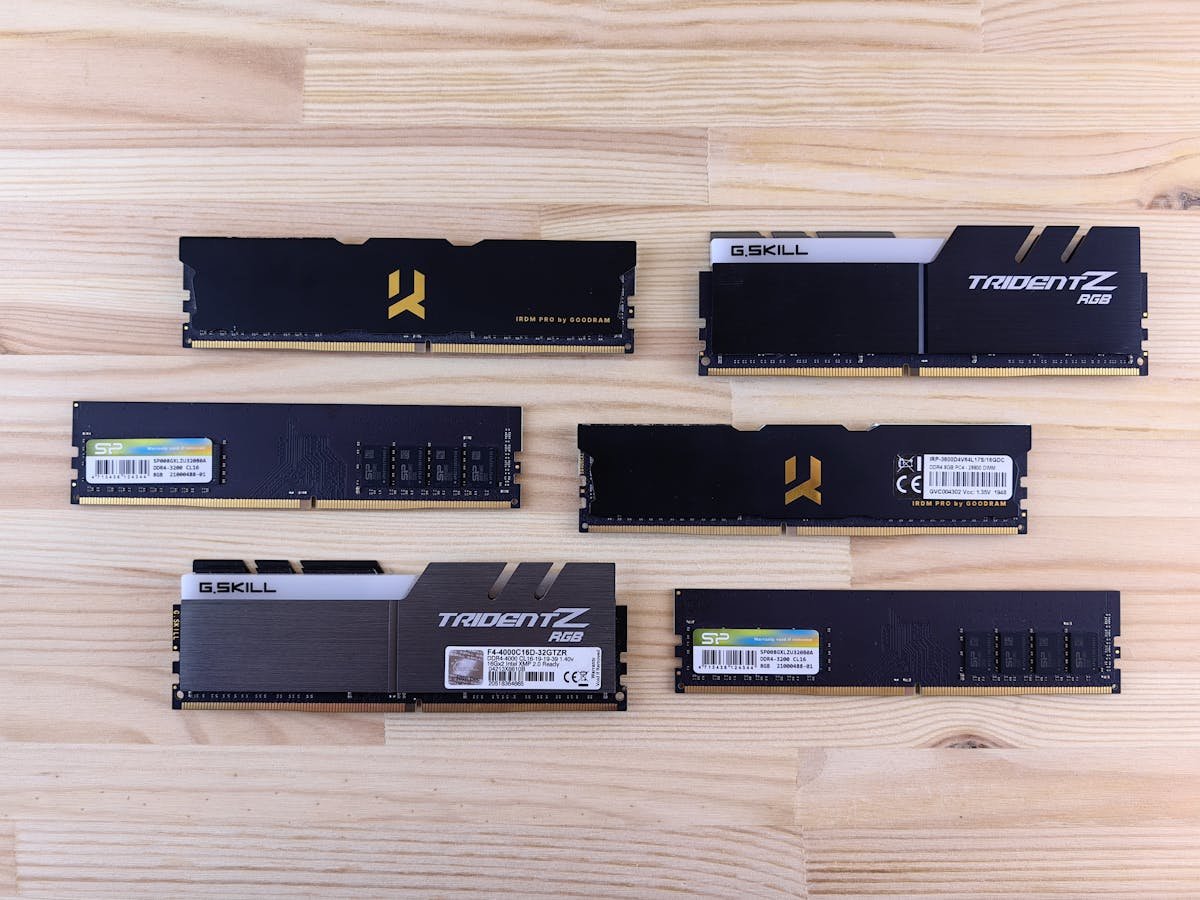
Each application has different memory demands:
| Software | Minimum | Recommended | Heavy Use |
|---|---|---|---|
| Blender | 16GB | 32GB | 64GB+ (large scenes, Cycles) |
| AutoCAD | 16GB | 32GB | 32GB (2D is lighter) |
| SolidWorks | 16GB | 32GB | 64GB (large assemblies) |
| Maya | 16GB | 32GB | 64GB+ (complex rigs, simulations) |
| 3ds Max | 16GB | 32GB | 64GB+ (V-Ray, large scenes) |
| Cinema 4D | 16GB | 32GB | 64GB (Redshift, complex scenes) |
| Fusion 360 | 8GB | 16GB | 32GB (generative design) |
| Revit | 16GB | 32GB | 64GB (large building models) |
| ZBrush | 16GB | 32GB | 64GB (high polycount sculpts) |
How 3D Rendering Uses RAM
Understanding memory usage helps you plan:
- Scene geometry: Each polygon consumes memory. A 10M poly scene may use 2-4GB just for mesh data
- Textures: 4K textures use ~64MB each. A scene with 50 4K textures consumes ~3.2GB of RAM
- Render buckets: CPU rendering loads scene data per-thread. More threads = more RAM needed
- GPU rendering (CUDA/OptiX/HIP): Scene must fit in VRAM, but system RAM is used for loading and preparation
- Simulations (fluid, particles, cloth): Simulation caches can consume enormous RAM — 10-50GB for complex simulations
- Instancing: Properly instanced objects share memory. 1000 instanced trees use far less RAM than 1000 unique trees
ECC vs Non-ECC for 3D Work
Should you use ECC memory for 3D rendering?
- Non-ECC is fine for: Most freelance and studio rendering work. A corrupted frame is re-rendered, not catastrophic
- ECC is recommended for: Render farms running unattended 24/7 where a memory error could corrupt an entire batch
- ECC is required for: Professional workstations running simulation-critical work (engineering, structural analysis)
- AMD Ryzen supports ECC: Unofficial ECC UDIMM support on many AM4/AM5 boards — good for budget workstations
- Intel Xeon W: Official ECC support for professional workstations
Recommended Products
64GB for serious 3D work. Handles complex Blender scenes and V-Ray rendering.
Check Price on Amazon
64GB DDR4 for existing workstations. Great value for SolidWorks and AutoCAD.
Check Price on Amazon
Large NVMe for project files, textures, and render output. Fast sequential speeds for scene loading.
Check Price on Amazon
Frequently Asked Questions
Is 16GB enough for Blender?
For simple scenes and learning, yes. For production work with complex geometry, multiple 4K textures, and Cycles rendering, you will quickly run out of memory. 32GB is the practical minimum for professional Blender use, with 64GB recommended.
Does RAM speed matter for rendering?
Moderately. CPU rendering benefits from memory bandwidth, especially with many threads. DDR5-5600 provides measurable improvement over DDR4-2666 in render times (5-15%). However, capacity matters more — always prioritise having enough RAM over having fast RAM.
GPU rendering — does system RAM matter?
Yes. Even with GPU rendering, the scene must be loaded into system RAM first, then transferred to VRAM. If your scene does not fit in VRAM, some renderers (Blender Cycles) fall back to system RAM at much slower speeds. Enough system RAM prevents out-of-memory crashes.
How much RAM for architectural visualisation?
32GB minimum, 64GB recommended. Architectural scenes with detailed interiors, landscape, and high-resolution materials are memory-intensive. Revit models imported into rendering software often expand significantly in memory usage.
Recommended Laptop RAM Upgrades
As an Amazon Associate we earn from qualifying purchases. Prices & availability shown on Amazon.