Affiliate disclosure: this page contains affiliate links — if you buy through them we may earn a commission at no extra cost to you. As an Amazon Associate we earn from qualifying purchases.
SSD vs HDD — Which Storage Drive Should You Choose in 2026? — this comprehensive guide covers everything you need to know about choosing between solid-state drives and traditional hard disk drives for your computer. Whether you’re upgrading a laptop or building a desktop, understanding the key differences will help you make the right choice.
SSD vs HDD: Key Differences
| Feature | SSD | HDD |
|---|---|---|
| Speed | 500-7000 MB/s | 80-160 MB/s |
| Durability | No moving parts | Spinning platters (fragile) |
| Noise | Silent | Audible spinning/clicking |
| Power | 2-5W | 6-15W |
| Price/TB | Higher | Lower |
| Best For | Boot drive, apps, gaming | Mass storage, backups |
When to Choose an SSD
SSDs are the clear winner for your primary boot drive and applications. The speed improvement is transformative — boot times drop from minutes to seconds, applications launch instantly, and file transfers are dramatically faster. Browse NVMe SSDs on Amazon.
When to Choose an HDD
HDDs still make sense for bulk storage where speed is less critical: NAS devices, backup drives, media archives, and secondary storage. The cost per terabyte is significantly lower, making HDDs ideal when you need 4TB+ of storage. Browse NAS hard drives on Amazon.
Types of SSDs
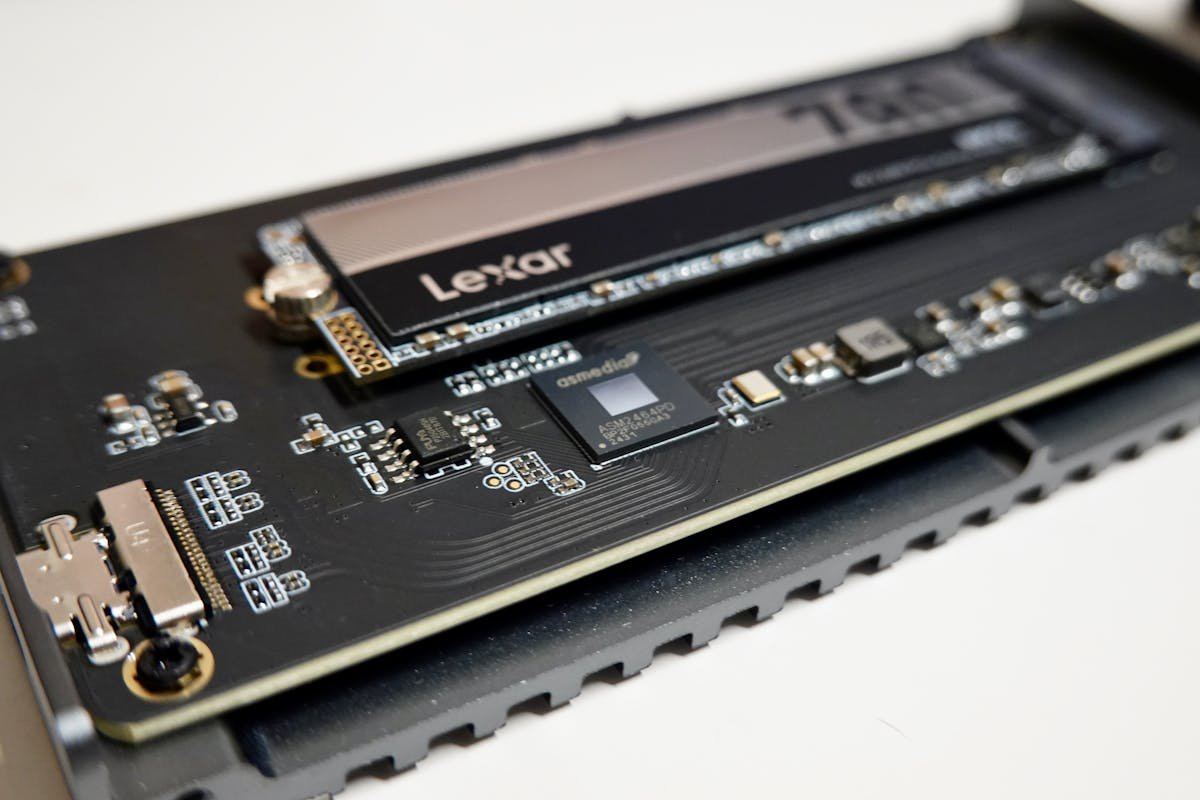
NVMe M.2: The fastest option (up to 7,000 MB/s). Uses the M.2 slot on modern motherboards and laptops. Browse NVMe SSDs.
SATA SSD: Slower than NVMe (up to 550 MB/s) but compatible with older systems. Available in 2.5″ form factor. Browse SATA SSDs.
Frequently Asked Questions
Is an SSD worth the upgrade from an HDD?
Absolutely. Upgrading from an HDD to an SSD is the single most impactful upgrade you can make to any computer. Boot times, application loading, and overall responsiveness improve dramatically.
How long do SSDs last?
Modern SSDs last 5-10 years under normal use. Enterprise SSDs with higher endurance ratings can last even longer. TBW (Terabytes Written) ratings indicate the expected lifespan.
Can I use both SSD and HDD in the same computer?
Yes, a popular strategy is to use an SSD for your operating system and applications, and an HDD for mass storage like photos, videos, and backups.
What size SSD do I need?
For a boot drive, 500GB is the minimum we recommend. 1TB provides a good balance of space and value. 2TB+ is ideal for gaming or creative work.
Recommended Products
- Samsung 990 EVO 1TB — Best all-round NVMe SSD
- WD Blue SA510 1TB — Best SATA SSD value
- Seagate Barracuda 4TB — Best budget bulk storage
Related Guides
Recommended upgrades
As an Amazon Associate we earn from qualifying purchases. Prices & availability shown on Amazon.
M.2 2280 NVMe SSDs
How we verify this guide
We cross-reference compatibility figures against manufacturer specifications where available, official service manuals, and the standards that govern fit — memory type and speed (DDR4 / DDR5 / LPDDR5), maximum supported capacity and slot count, SSD form factor and interface (M.2 2280, NVMe PCIe vs SATA, keying), and charger wattage and connector (USB-C Power Delivery, GaN). We’re explicit about soldered or non-upgradeable parts, prioritise primary sources over retailer listings, and re-verify the data on a regular cycle. More on our method →