Affiliate disclosure: this page contains affiliate links — if you buy through them we may earn a commission at no extra cost to you. As an Amazon Associate we earn from qualifying purchases.
Yes, dual-channel RAM is significantly faster than single-channel. When you install two matched RAM sticks, they operate in parallel, doubling bandwidth. A single RAM stick runs in single-channel mode, capping bandwidth at half that of dual-channel. Real-world performance difference is 15-40% depending on the workload—gaming, video editing, and multi-threaded applications see the largest gains. If your laptop has two RAM slots, always install two matched sticks rather than one large stick for better performance.
Single-Channel vs Dual-Channel Explained
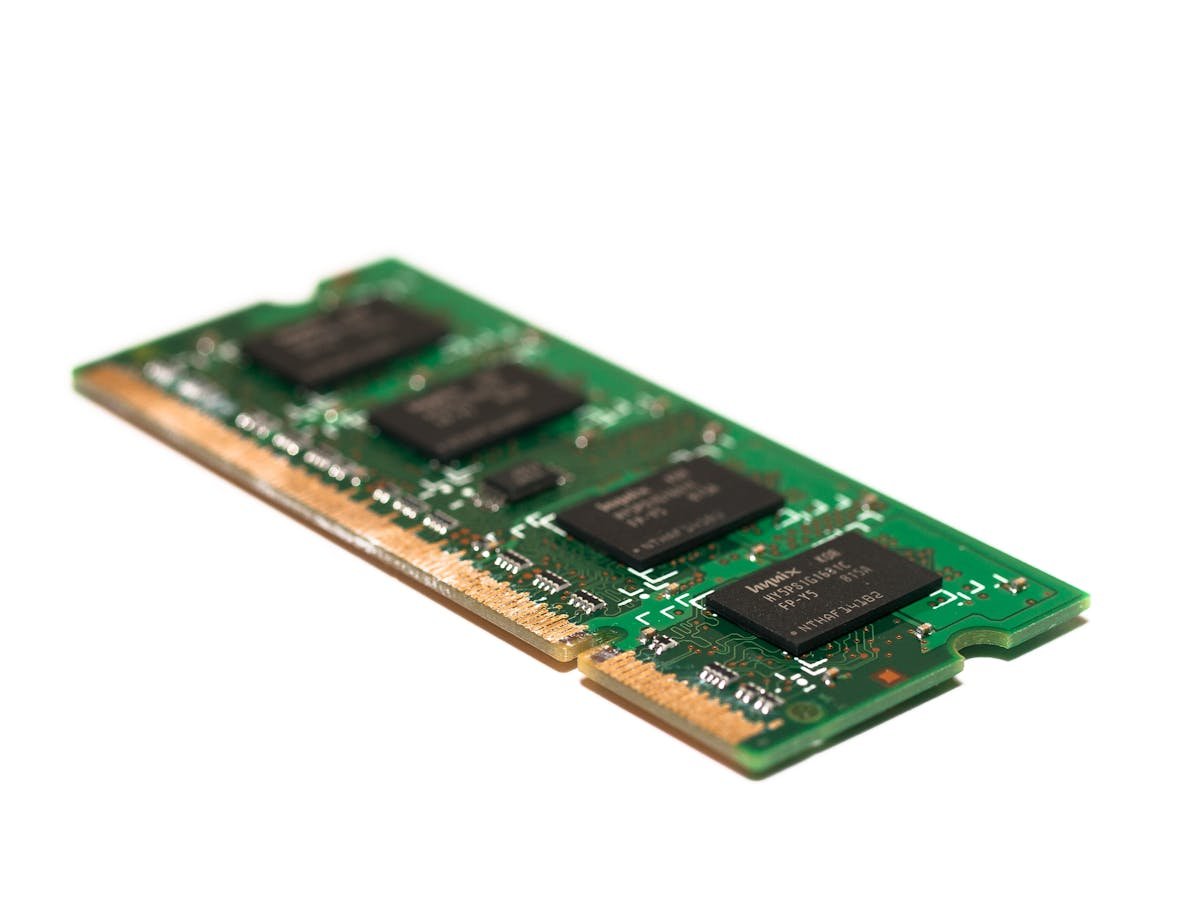
Single-channel RAM: One RAM stick occupies one slot. The memory controller processes requests sequentially through one pathway. Bandwidth is limited to the single stick’s maximum (e.g., DDR4-3200 provides ~51 GB/s).
Dual-channel RAM: Two matched RAM sticks occupy both slots. The memory controller splits requests across both sticks, processing data in parallel. Bandwidth effectively doubles (e.g., two DDR4-3200 sticks together provide ~102 GB/s).
Visual analogy: Single-channel is one highway lane carrying traffic. Dual-channel is two lanes side-by-side, each carrying traffic simultaneously. Same cars, but twice as many can move through at once.
Performance Impact by Workload
Gaming: 15-30% FPS improvement in demanding titles. Dual-channel reduces frame dips and stutters because the GPU and CPU have sufficient bandwidth for fast data transfers. Examples: a 60 FPS experience on single-channel becomes 70-75 FPS on dual-channel.
Video editing and rendering: 20-40% faster export times. Video software repeatedly transfers large chunks of data between CPU and RAM. Dual-channel’s doubled bandwidth significantly accelerates this.
3D rendering (Blender, Maya): 25-35% faster render times. Rendering engines loop through RAM millions of times per second. Dual-channel’s bandwidth advantage compounds over long render jobs.
Productivity tasks (office, browsing, email): Minimal difference (5-10%). These tasks rarely stress RAM bandwidth. Single-channel remains responsive for everyday use.
Programming and code compilation: 15-25% faster compile times on large projects. Dual-channel accelerates reading and writing large source files from RAM.
Data science and machine learning: 20-35% faster data loading and model training. Large neural networks shuffle terabytes of data through RAM. Dual-channel bandwidth is essential for performance.
Real-World Example: 16GB Single vs Dual
Scenario 1 — Single-channel (8GB max): You have one 16GB DDR4-3200 stick installed in a laptop with two slots. One slot is populated, one is empty. Actual bandwidth: ~51 GB/s (limited to single-channel).
Scenario 2 — Dual-channel (8GB each): You have two 8GB DDR4-3200 sticks, each in its own slot. Both slots are populated. Actual bandwidth: ~102 GB/s (doubled).
Capacity note: Both scenarios have 16GB total RAM. Same size, different performance. Dual-channel is 2x faster despite identical capacity.
Lesson: For 16GB, buy two 8GB sticks (dual-channel) instead of one 16GB stick (single-channel), if your laptop has two slots.
When Does Dual-Channel Matter Most?
Critical for: Gaming, video editing, 3D rendering, machine learning, large data analysis. Anything processor-intensive with frequent RAM access.
Minimal impact for: Office work, email, web browsing, document editing. These tasks rarely saturate RAM bandwidth.
MacBooks with integrated memory: No advantage. Apple Silicon Macs (M1-M4) have RAM soldered to the CPU die, so single vs dual-channel concepts don’t apply. All memory is integrated.
Gaming laptops: Dual-channel is critical. Modern games load textures and assets at high speeds. Dual-channel provides the bandwidth needed for 60+ FPS.
How to Configure Your Laptop for Dual-Channel
Before buying RAM: Confirm your laptop has two SODIMM slots. Check the service manual or search “[model] teardown” on YouTube. Some ultrabooks have only one slot.
Buy matched pairs: Purchase two identical RAM sticks (same brand, speed, capacity, latency). Matching RAM is essential for dual-channel operation. Mismatched sticks may run single-channel or cause instability.
Install correctly: Populate both slots with one stick each. Don’t install a single large stick in one slot—this wastes the second slot and forces single-channel operation.
Verify in BIOS: After installation, restart and enter BIOS (usually F2, F10, or Del). Confirm both RAM sticks are detected. If BIOS shows only one stick, they’re not configured correctly.
Verify in Windows: Open Task Manager → Performance → Memory. If it says “Slots Used: 2 of 2,” you’re in dual-channel. If it says “Slots Used: 1 of 2,” investigate why the second slot isn’t recognized.
Frequently Asked Questions
Does dual-channel RAM improve FPS in games?
Yes. Gaming is one of the most bandwidth-intensive workloads. Dual-channel provides 15-30% FPS improvement in demanding titles by supplying faster data to the GPU and CPU.
Is one 16GB stick or two 8GB sticks better?
Two 8GB sticks (dual-channel) are faster. Same 16GB capacity, but double the bandwidth. For gaming and demanding work, dual-channel is superior.
Can I run dual-channel with mismatched RAM?
Possibly, but not recommended. Mismatched speed, latency, or voltage may disable dual-channel, causing both sticks to run single-channel. Or one stick becomes invisible. Use matched pairs.
What if my laptop has only one RAM slot?
You cannot use dual-channel. You’re limited to single-channel performance. Buy the largest capacity stick your slot supports (typically up to 32GB) for maximum memory. Dual-channel is unavailable on single-slot laptops.
How much faster is dual-channel for video editing?
20-40% faster export times and timeline responsiveness. Video editing repeatedly transfers 4K footage (hundreds of MB/s) through RAM. Dual-channel’s doubled bandwidth is critical for smooth editing.
Do Macs benefit from dual-channel RAM?
No. Apple Silicon Macs (M1-M4) have memory soldered to the CPU die. Single vs dual-channel concepts don’t apply—all memory is integrated and optimized. Performance is determined by total capacity, not channel configuration.
Where to Buy
Looking for compatible components? Check current prices and availability:
Recommended Products
These are the products we recommend based on this guide. All links go to Amazon where you can check current prices and availability.
| Product | Why We Recommend It | Amazon |
|---|---|---|
| Corsair Vengeance DDR4 SO-DIMM 32GB (2×16GB) 3200MHz | Best overall DDR4 upgrade kit | View on Amazon |
| Kingston Fury Impact DDR4 SO-DIMM 32GB (2×16GB) 3200MHz | Reliable alternative with tight latency | View on Amazon |
| Crucial DDR4 SO-DIMM 16GB 3200MHz | Budget single-stick upgrade | View on Amazon |
| Samsung DDR4 SO-DIMM 32GB 3200MHz | OEM-quality for business laptops | View on Amazon |
| Samsung 990 Pro 2TB NVMe M.2 2280 | Fastest consumer NVMe — ideal for gaming & editing | View on Amazon |
| WD Black SN850X 2TB NVMe | Excellent Gen4 speed with heatsink option | View on Amazon |
| Crucial P5 Plus 1TB NVMe | Great value Gen4 SSD | View on Amazon |
| Kingston NV2 1TB NVMe | Budget-friendly with solid reliability | View on Amazon |
Prices and availability may vary. As an Amazon Associate, we earn from qualifying purchases.
Related Guides
- Ram Compatibility
- Ssd Compatibility
- Charger Compatibility
- How To Upgrade Surface Laptop Ssd
- How To Upgrade Dell Xps Ssd
Recommended upgrades
As an Amazon Associate we earn from qualifying purchases. Prices & availability shown on Amazon.
For laptops and mini PCs that use DDR5 SO-DIMM
For laptops and mini PCs that use DDR4 SO-DIMM
How we verify this guide
We cross-reference compatibility figures against manufacturer specifications where available, official service manuals, and the standards that govern fit — memory type and speed (DDR4 / DDR5 / LPDDR5), maximum supported capacity and slot count, SSD form factor and interface (M.2 2280, NVMe PCIe vs SATA, keying), and charger wattage and connector (USB-C Power Delivery, GaN). We’re explicit about soldered or non-upgradeable parts, prioritise primary sources over retailer listings, and re-verify the data on a regular cycle. More on our method →